
Two Mobile Brothers Arrested in Armed Robbery Cases; One Charged With Attempted Murder in Fatal Gas Station Shooting
Deanta and Jamarcus Dubose face first-degree robbery charges in Mobile. One brother is accused of attempted murder in a fatal gas station shooting.
Mobile police have taken two brothers into custody after weeks of searching for the pair, who each faced robbery charges along with a stack of other warrants. Officers arrested 19-year-old Deanta Dubose and his brother Jamarcus Dubose on a Wednesday afternoon. Both men are charged with two counts of first-degree robbery, and each was also booked on multiple outstanding warrants as investigators sorted through a list of allegations spanning several incidents across the city. The arrests ended a manhunt the department had publicized in appeals to residents, and they pulled two open case files toward resolution at once.
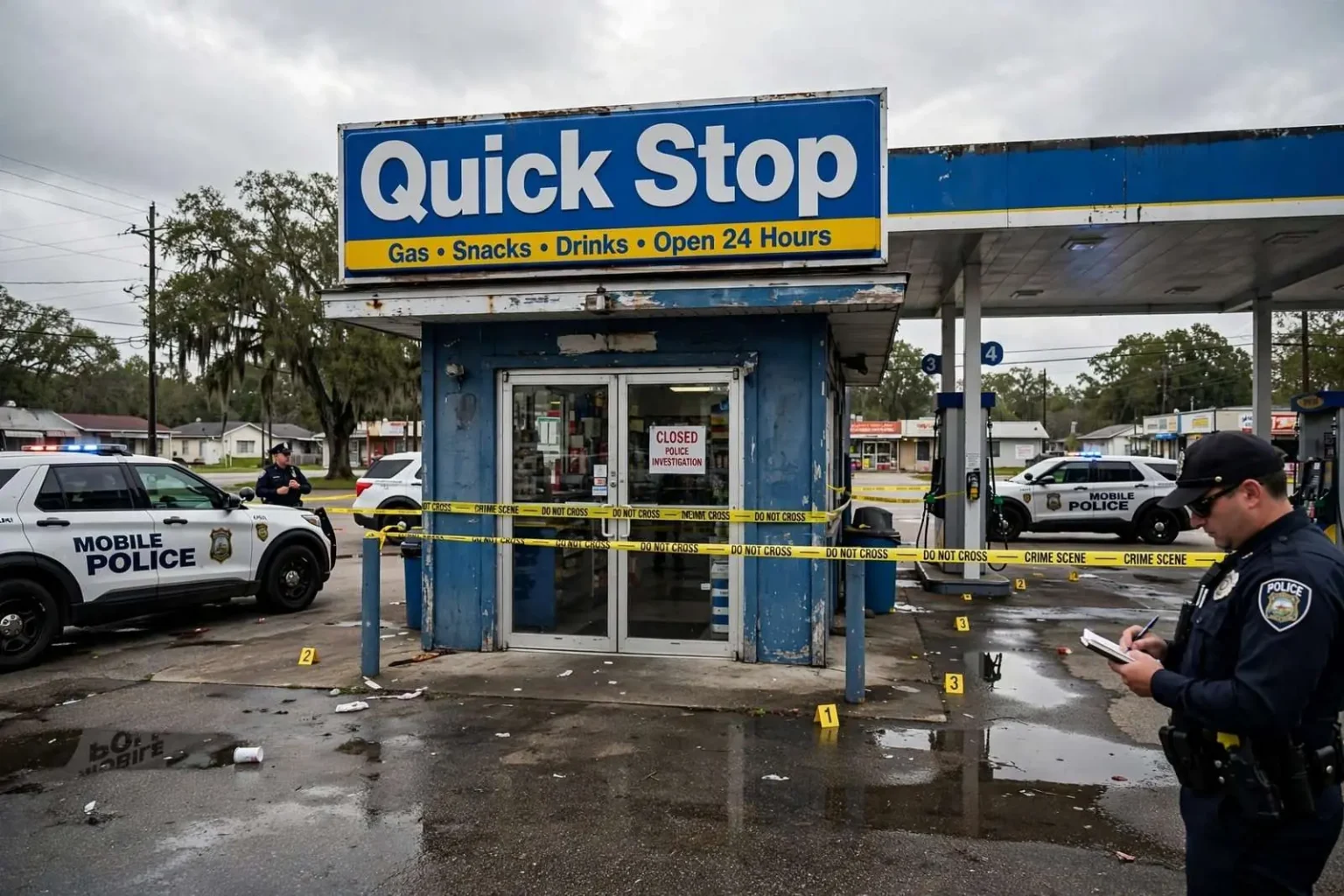
March Shooting at Quick Stop Gas Station
The most serious allegations center on Deanta Dubose. Investigators accuse him of shooting and wounding a 20-year-old man during an altercation at the Quick Stop Gas Station on March 11. Police said that same shooting killed 19-year-old Willie Thomas Jr. and left two other people injured, making it one of the more violent incidents reported at a Mobile service station in recent months. The case was investigated by the department’s major crimes unit, which handles shootings where a death or critical injury occurs. Gas station shootings occupy a troubling category for Mobile investigators: the locations are open to the street, busy at all hours, and frequently equipped with cameras whose footage becomes central evidence.
When Deanta Dubose was taken into custody, officers were executing warrants charging attempted murder, carrying a pistol without a license, unlawful breaking and entering of a vehicle, attempting to elude, and the two first-degree robbery counts. The attempted murder charge stems from the wounded victim in the March shooting, while the homicide case remains under review as prosecutors weigh formal charges, which in Alabama typically follow a grand jury indictment. First-degree robbery under Alabama law involves the use or threatened use of a dangerous weapon and carries sentences of up to life in prison. The weapons charge — carrying a pistol without a license — is among the most common gun-related filings in Mobile County courts and reflects Alabama’s permit requirement for carrying a handgun in public.
Separate Charges for Each Brother
Jamarcus Dubose faces his own list of warrants, distinct from his brother’s: driving on a suspended license, domestic violence, two counts of first-degree robbery, and attempting to elude. The robbery counts mirror his brother’s charges, and police have not detailed whether the alleged robberies were jointly committed or separate incidents. Attempting to elude, the charge tied to fleeing from law enforcement, has become an increasingly common add-on in Mobile-area arrests as officers report more vehicle pursuits. Domestic violence warrants are handled under Alabama’s domestic violence statutes, which cover offenses between household or family members and carry their own sentencing provisions and no-contact conditions.
The Mobile Police Department had publicly asked for the public’s help locating the brothers before the arrests but released few details about the investigation, citing the ongoing cases. Public appeals like the one in this case typically circulate through the department’s social media accounts and local news outlets, and investigators have credited tips from residents with resolving similar manhunts in the past. The department has emphasized that violent crime suppression remains a stated priority, with units focused on repeat offenders and illegal firearm possession. Detectives also work closely with regional agencies, because suspects facing open warrants frequently move between jurisdictions along the Gulf Coast while evading arrest.
Next Steps in the Court Process
Both men were scheduled to appear in court Friday morning for a bond hearing, where a district judge would set bail amounts and conditions. Under Alabama court procedures, first-degree robbery and attempted murder are among the charges that can carry high bonds, and judges weigh the seriousness of the allegations, criminal history, and flight risk when setting them. Prosecutors with the Mobile County District Attorney’s Office will present evidence to a grand jury for indictment, a process that can take weeks or months depending on the docket. Defense attorneys, whether retained or appointed, will begin reviewing evidence — police reports, surveillance footage, and witness statements — as the cases move forward.
The arrests close a weeks-long search but open a longer legal process for the two brothers and the families affected by the March shooting. Investigators continue to ask anyone with information about the Quick Stop Gas Station shooting to contact Mobile police or Crime Stoppers, where tips can be submitted anonymously. For the neighborhood around the gas station and the city at large, the case adds to a persistent debate about youth violence, firearm access, and the resources available to intervene before disputes escalate into shootings. Mobile, like cities across the region, has struggled in recent years with gun violence among young adults, and each high-profile arrest renews public conversation about enforcement, prevention, and the young people caught on both sides of the violence.
Warrant executions like Wednesday’s arrests are a routine but resource-intensive part of police work. When a suspect is identified but not in custody, detectives coordinate with patrol units, and depending on the risk assessment, specialized units may assist. Officers making an arrest on a stack of warrants must account for each charge at booking, and the jail intake process documents every count so that prosecutors and judges see the full picture. The fact that both brothers were located and arrested on the same afternoon, after weeks of appeals, suggests investigative work had narrowed their whereabouts — a result detectives often attribute to sustained follow-up and community cooperation rather than a single lucky break.
The Wider Context of Gun Violence in Mobile
Mobile’s police leadership has pointed to a combination of enforcement and prevention programs as the department’s response to gun violence, including focused attention on the small number of individuals involved in repeated incidents and partnerships with community organizations working to interrupt retaliation cycles. The Quick Stop Gas Station shooting, with one teenager killed, a second wounded, and two others injured in a single altercation, illustrates the pattern that officials describe: disputes that escalate quickly, weapons that turn arguments fatal, and victims and defendants who are often close in age.
For the court system, cases like this one move through several checkpoints: district court for initial appearances and bond, a grand jury review for indictment, and then circuit court for trial proceedings or plea negotiations. Robbery and attempted murder prosecutions can take a year or more to reach resolution, and witnesses’ continued cooperation is often decisive. Authorities encourage anyone with knowledge of the March shooting to come forward, noting that anonymous tips through Crime Stoppers can qualify for cash rewards. As the Dubose brothers’ cases enter the courts, the department’s public message has remained consistent — that locating and arresting violent suspects is only the first step, and that convictions depend on the community’s willingness to testify about what happened.
Legal observers note that the distinction between the brothers’ cases will matter at every stage. Though both face the two first-degree robbery counts, Deanta Dubose’s attempted murder charge ties him directly to the March shooting, while Jamarcus Dubose’s docket — suspended license, domestic violence, robbery, and eluding — reads like a separate track. Courts handle co-defendants carefully when charges diverge, and defense attorneys may move to sever the cases if evidence from one brother’s alleged conduct would prejudice a jury against the other. Prosecutors, for their part, often prefer to try related defendants separately for the same reason.
What the Charges Carry
Under Alabama law, first-degree robbery is a Class A felony, the state’s most serious category short of capital offenses, punishable by 10 years to life in prison. Attempted murder likewise carries decades in prison if it results in a conviction, and a firearms enhancement can add time when a gun was used in a violent offense. The misdemeanor and lower-level felony counts — the license violation, the breaking and entering of a vehicle, the eluding charge — matter chiefly as context in bond hearings and sentencing, where a pattern of offenses influences judicial decisions. Domestic violence convictions carry their own consequences, including protective orders and restrictions on firearm possession under federal law.
For the family of Willie Thomas Jr., the arrest of a suspect marks a milestone in a grieving process that began in March, but not the end of the road. Homicide cases in Mobile County routinely take more than a year from arrest to trial, and plea agreements or dismissals can alter outcomes late in the process. Victim advocates with the district attorney’s office keep families informed through each stage, and Alabama’s crime victims’ compensation programs can assist with funeral and counseling costs. As Friday’s bond hearing approached, the case stood where many do in Mobile’s courts — at the beginning of a long legal process that began with a burst of gunfire at a neighborhood gas station and now moves, one hearing at a time, toward an answer for everyone it touched.


