The University of Mobile Will Open a New Missions Hub on Campus in Time for the Fall Semester
The University of Mobile is launching the Tom Elliff Center for Missions on Aug. 28, just ahead of the fall semester. It will serve as a hub for missionary training, mobilization and international student services.
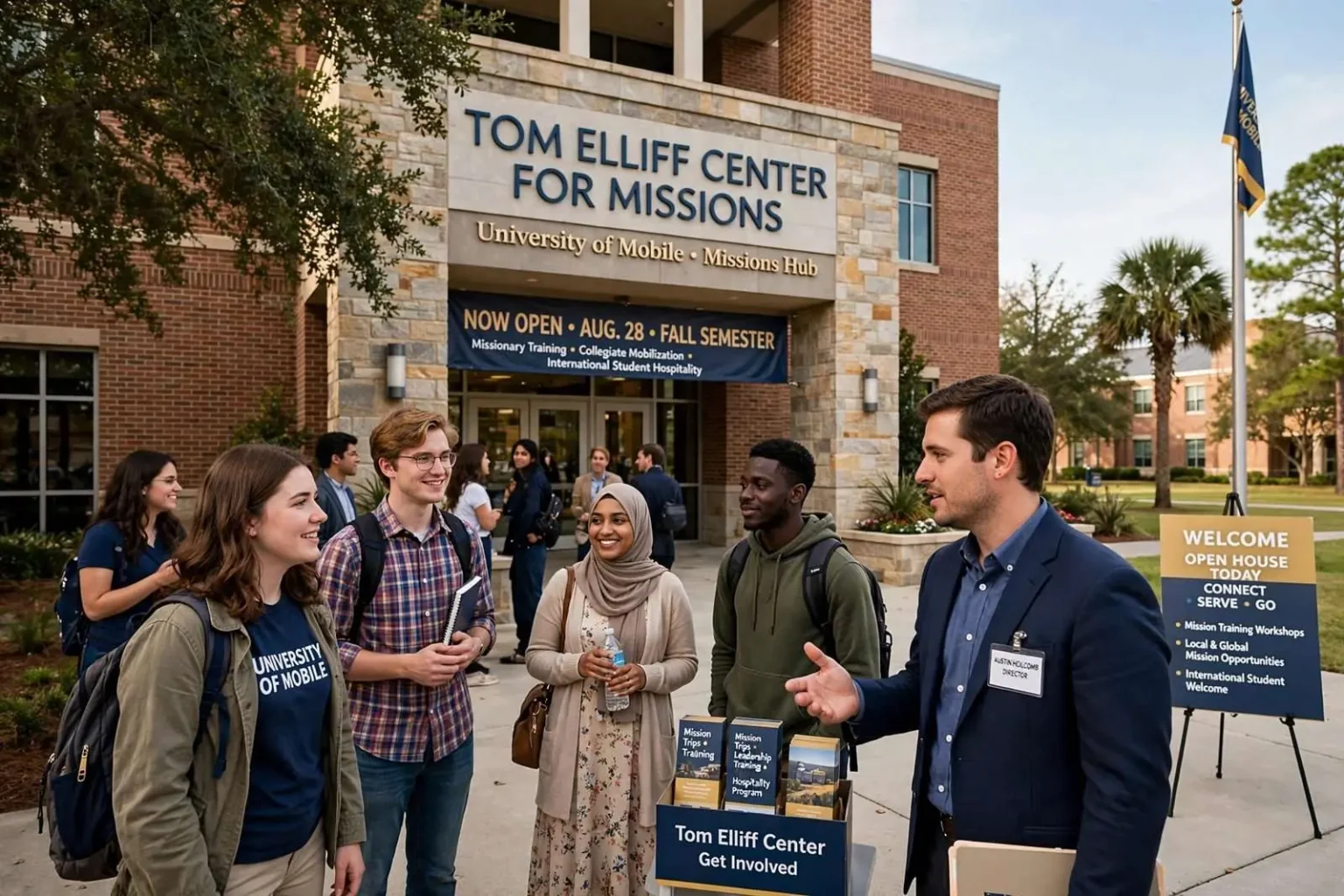
The University of Mobile is adding a new center to campus, and it is being built around a question that a certain kind of student arrives already asking: what do I actually do with this? The university has announced the launch of the Tom Elliff Center for Missions, set to open on Aug. 28 — timed to land just before the start of the fall semester.
The timing is deliberate. Students who feel called to ministry or mission work often spend their early semesters searching for a place to channel that calling, and university leaders wanted the center open and operating from the first weeks of the new academic year rather than mid-stream. Opening before the fall semester begins means the center can connect with incoming students during orientation-season activities, when clubs, programs and service organizations make their pitches for involvement.
The center is named for Tom Elliff, a figure whose career in Southern Baptist life spans decades of pastoral ministry and denominational leadership, including service as a missionary and in top mission-mobilization roles. Lending his name to the facility signals the university’s intent: this is not a passive display space but a working hub meant to move students from interest to action.
What the Center Will Do
According to the university, the center will function as a campus hub with three main areas of focus:
- Missionary training for students preparing for field work
- Collegiate mobilization, connecting students to service opportunities
- International student hospitality and services, building a community experience for students coming to Mobile from abroad
The three strands are designed to reinforce one another. Students preparing for long-term mission field work need training, mentoring and practical experience; students who may never move overseas still need pathways to serve locally and short-term; and international students on campus represent both an audience for hospitality and, in the university’s framing, part of the mission field itself, arriving in south Alabama from around the world.
Over the course of the school year, students will be able to take part in mission work, leadership training, and workshops led by pastors and missionaries. The center will also organize local and international mission experiences and provide a gathering point for students with shared interests.
That gathering-point role may prove as important as the programming. Campus ministries and mission-minded student groups often operate in separate silos — a choir tour here, a spring break trip there, a local food pantry volunteer shift somewhere else. A single physical hub gives those efforts a shared home, a staff presence and a calendar, which is exactly the model that has worked at larger institutions with established mission centers.
The Director’s Framing
Austin Holcomb, director of the Tom Elliff Center for Missions and assistant professor of missions, described the center’s aim in terms of practical next steps rather than abstractions.
“Our goal is to provide biblical training and create opportunities that help every student take meaningful next steps to go and make disciples of all nations. Whether that means serving on a mission trip, building friendships across cultures, learning from experienced missionaries or discovering how their profession can be used for the Kingdom, we want students to graduate prepared to serve as ambassadors of the gospel wherever God leads them.”
Holcomb’s language reflects a deliberately broad approach. The reference to discovering how a student’s profession can be used is aimed at the majority of the student body who will not become vocational missionaries — future nurses, teachers, business owners and engineers who, in this framework, carry their faith into secular workplaces. That broader vision widens the center’s potential reach well beyond the handful of students who enroll with ministry as a stated career goal.
The combination of Holcomb’s dual role — administrator of the center and classroom professor — is also by design. It ties the center’s programming directly into the university’s academic offerings in Christian ministry and missions, so that students can move between coursework and practical experience without the gap that often separates classroom learning from field application.
A Local Institution Expanding Its Footprint
The University of Mobile is a private Christian university in Mobile County with a long association with the Alabama Baptist State Convention. Founded in the early 1960s, the institution has grown into a campus of a few thousand students offering undergraduate and graduate programs, and its Baptist identity shapes both its curriculum and its campus culture.
Programs like the new center reflect a broader trend among small private universities: building distinct, identity-focused centers and institutes that give the institution a recognizable niche in a crowded higher-education market. For faith-based schools in particular, specialized centers for missions, worship arts, biblical studies or service learning serve double duty — they deepen the institution’s mission for current students and they offer a concrete recruiting story for prospective students who want their college years to connect to purpose.
The Mobile-area context matters as well. South Alabama’s religious landscape is dense with churches, ministries and faith-based nonprofits, and the region sits within easy reach of both deep-need local communities and international ports of call through the Port of Mobile. A missions hub at a Mobile university can draw on that ecosystem for local service placements, visiting speakers and partnerships that a similar program in a less connected region would struggle to replicate.
Why the Aug. 28 Opening Matters for Students
For students returning to campus this fall, the center’s first semester will set the pattern for what it becomes. Universities that launch centers mid-year often struggle to build momentum, because the natural rhythm of student involvement forms in the opening weeks — at involvement fairs, in first-week gatherings, and in the early conversations that determine how freshmen spend their free time.
An opening ahead of the fall semester lets the Tom Elliff Center participate in that formative window from day one. Students who find the center early can plan their year around its trips, workshops and training opportunities; those who discover it later still encounter an established schedule rather than a blank slate. The center’s staff will also be able to recruit for international mission experiences during the fall, when students are planning their spring and summer, rather than scrambling to fill trips after plans are already made.
International Student Hospitality in Practice
The center’s third focus area — hospitality and services for international students — addresses a practical reality of small-college life. Students arriving from abroad face a familiar set of hurdles: transportation, banking, cultural adjustment, homesickness and the search for community during holidays when campus empties out. Programs that assign local hosts, organize shared meals and connect international students with campus ministries can make the difference between isolation and belonging.
For the university, that hospitality work also enriches campus culture for domestic students, exposing them to peers from other countries and cultures without leaving Mobile. In the center’s framing, those friendships across cultures are themselves part of the preparation for mission work — practice in building relationships with people whose background and worldview differ from one’s own.
The Economics of a Missions Hub
There is a practical dimension to the investment as well. Small private universities operate in a competitive environment where tuition revenue depends on enrollment, and distinctive programs are among the most effective recruiting tools available. A family evaluating Christian colleges in the Gulf South will compare chapel programs, ministry degrees and service opportunities side by side; a named missions center with a dedicated director, a physical space and a published calendar of trips and training gives the University of Mobile a concrete answer to that comparison.
Centers of this kind also tend to multiply the impact of existing campus ministries rather than replace them. Local church partnerships, denominational mission boards and alumni who serve in the field all have a natural institutional point of contact, and visiting missionaries gain a standing venue for speaking engagements that double as classroom enrichment. Over time, that network becomes part of the university’s reputation — graduates placed in mission fields and ministries carry the institution’s name with them.
For now, the university’s announcement emphasizes preparation: students who graduate ready to serve, whether across the street or across an ocean. The center’s opening on Aug. 28 puts that promise on a calendar, and the first cohort of students to pass through its doors will be the first test of how well the model works in Mobile.
What Comes Next
The center opens Aug. 28, and the university has indicated its calendar of mission work, leadership training and workshops will unfold across the school year. Students interested in any of the three focus areas — missionary training, collegiate mobilization or international student services — will be able to connect with the center directly on campus.
For a university that has long woven faith into its academic identity, the Tom Elliff Center for Missions represents a consolidation of that identity into a single visible institution on campus. Whether it becomes the recruiting draw and student-formation engine its planners envision will show itself over the coming semesters, beginning with the one that starts this fall in Mobile.