UPDATE: Missing Endangered Mobile Man Edward Coburn Found Safe
Mobile police say Edward Brooks Coburn, 33, has been found safe and returned home after being reported missing near Airport Boulevard and Cody Road.
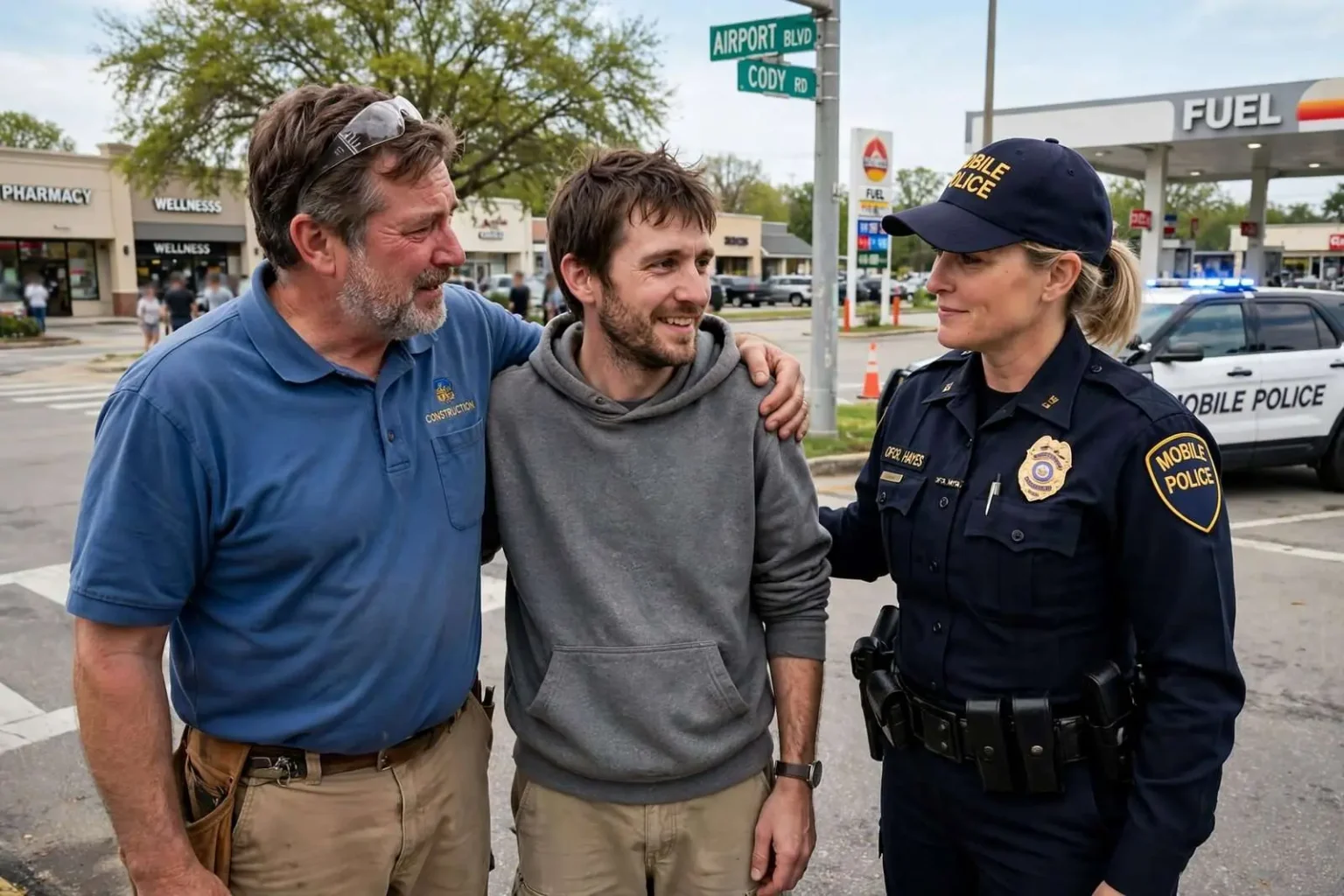
Mobile police say 33-year-old Edward Brooks Coburn has been located and returned home safely after being reported missing earlier this week. Coburn was last seen Wednesday, April 21, in the area of Airport Boulevard and Cody Road, a busy commercial corridor in west Mobile where restaurants, shops and offices sit along one of the city’s main east-west thoroughfares. His father told police Coburn walked away from a job site where the two were working together, and the disappearance set off an urgent search for a man whose family says cannot safely navigate the city alone.
According to his father, Coburn has the mental capacity of a 6-year-old and did not have a phone, identification or money with him when he walked away. That combination — a limited ability to ask for help, no way to make contact, and no resources to buy food or transportation — is what pushed investigators to treat the case as an endangered missing person rather than a routine adult disappearance. Adults have the legal right to leave home, so police typically cannot force an able-bodied adult to return; in Coburn’s case, his cognitive condition made clear that he could not care for himself on the street.
The Mobile Police Department asked for the public’s help locating the endangered man, putting out descriptions of Coburn and the clothing he was believed to be wearing and asking anyone who spotted him to call. Officers later confirmed he had been found and reunited with his family. Police credited tips from the community with helping bring the search to a safe conclusion, a reminder that in missing-person cases the eyes of thousands of residents often matter as much as the work of the detectives assigned to the file.
How the search unfolded
The sequence in Coburn’s case follows the pattern the Mobile Police Department uses for endangered missing adults. A family member — here, the father — reports the person missing and provides the last known location, the time last seen, and a description of the person’s physical and mental condition. Dispatchers relay that information to patrol officers, who begin checking the area around the last known sighting while detectives open a case and begin gathering anything that can narrow the search: surveillance video from nearby businesses, sightings reported by residents, and information from people who work along the corridor where the person disappeared.
Because Coburn was last seen at a job site, investigators had a relatively tight geographic area to work from. Searches that begin from a workplace or a family member’s last contact tend to focus first on nearby streets, drainage routes, wooded tracts and businesses within walking distance, since a person without a car, phone or money usually does not get far. In west Mobile, that means an interlocking grid of commercial parking lots, service roads behind Airport Boulevard, and residential neighborhoods that branch off Cody Road.
Public appeals are the other half of the effort. When police ask residents to watch for a specific person, the department is effectively converting the entire city into a search grid. Every delivery driver, cashier, jogger and commuter who has seen the bulletin becomes another set of eyes. That is why investigators repeatedly stress that people should call in even partial sightings — a man matching the description crossing a parking lot, buying nothing, or appearing confused — rather than assuming someone else has already reported it.
Why endangered adult cases move so fast
Police categorize some missing-person cases as endangered for specific reasons: the person has a cognitive impairment, a medical condition that requires medication, is young or elderly, or went missing in dangerous weather or terrain. Each of those factors shortens the window in which the person can realistically survive unharmed. A man with the mental capacity of a young child cannot read street signs well enough to find his way back, may not recognize when he is in danger, and may approach strangers or traffic without caution.
South Alabama’s climate adds its own pressure. Even in April, days in Mobile are hot and humid, and afternoons routinely bring thunderstorms. A person without water, shelter or a sense of direction can become dehydrated quickly, and heavy rain can push someone into drainage ditches or flooding low spots. For adults with developmental disabilities, the risk is compounded by an inability to explain who they are or where they live if they do encounter someone who wants to help — no identification and no phone means a Good Samaritan cannot easily connect them with family.
That is also why law enforcement agencies across Alabama have built relationships with media outlets and community organizations that amplify missing-person bulletins. A description shared at midday can produce a sighting call within the hour, and in cases like this one the difference between a recovery and a tragedy is often measured in hours rather than days.
The area where Coburn was last seen
Airport Boulevard and Cody Road is one of west Mobile’s busiest intersections, anchored by shopping centers, fuel stations, medical offices and a steady flow of commuter traffic heading between western Mobile County and the city center. The corridor is walkable in the sense that sidewalks and crosswalks exist along much of it, but it is also a high-traffic area where a disoriented pedestrian faces real danger from vehicles moving quickly on a wide roadway.
For searchers, a location like that cuts both ways. Heavy traffic means more potential witnesses — someone almost certainly saw a man walking alone along the boulevard. But it also means more hazards, more ground to cover, and more businesses whose security footage has to be requested and reviewed. Detectives working a case like this typically canvass in widening rings: the job site first, then the immediate streets, then the commercial strip, then the neighborhoods beyond.
The fact that Coburn’s father was working with him when he walked away matters as well. Job sites bring together coworkers, equipment noise and activity that can overwhelm a person with cognitive disabilities, and it only takes a moment of distraction for someone to slip past supervision. Families in similar situations often describe the constant tension between wanting a loved one to work, socialize and stay active, and knowing that every public setting carries the risk of a momentary disappearance.
What happens when a missing person is found
Once Coburn was located, officers’ first priorities were the same as they would be for anyone found after days on the street: confirm his identity, check him for injuries, get him food and water, and arrange for him to be reunited with his family. In endangered adult cases, a medical evaluation is standard even when the person appears fine, because dehydration, exposure and medication lapses can cause problems that are not immediately obvious.
The reunion itself closed out the emergency, but it does not necessarily close out every question. Families of missing people with cognitive disabilities often use a safe recovery as a moment to reassess — adding identification cards to clothing, enrolling in alert programs, adjusting supervision at work, or setting up routines that reduce the chance of another walk-away. Advocates for people with developmental disabilities in the Mobile area have long emphasized that wandering is one of the most common and most preventable risks, and that simple tools like ID bracelets and caregiver notification plans save lives.
For the broader community, the case is a familiar story in a growing metro area. Mobile police handle dozens of missing-person reports in a typical year, and the overwhelming majority are resolved quickly — many within hours. The cases that linger are usually the ones involving medical vulnerability, which is exactly why the department asks the public to treat every bulletin about an endangered person as urgent rather than routine.
The role community tips played
Mobile police specifically credited tips from the community with helping bring the search to a safe conclusion. That credit is more than a formality. In missing-person work, the gap between “last seen here” and “found there” is usually bridged by a civilian who recognized the person from a bulletin and made a phone call. Surveillance cameras help, but coverage is spotty across a city as spread out as Mobile, and human eyes remain the most reliable detection network the department has.
The department’s appeal for public help in this case ran through the channels residents have come to expect — news coverage, social media posts, and word of mouth among neighbors and coworkers. Each channel reaches a different slice of the population. Commuters see the news; people who live near Airport Boulevard see the neighborhood groups; coworkers at job sites hear through word of mouth. Together they cover the ground that patrol cars and detectives cannot.
Officials also use cases like this to remind residents of the right way to respond. If someone spots a person who matches a missing-person description, the correct move is to call police rather than approach, restrain or chase the person — especially someone who may be frightened or confused. A witness location, a direction of travel, and a description of what the person is wearing are the details that let officers close the distance quickly and safely.
A reminder for families and caregivers
Situations like Coburn’s unfold across the Gulf Coast more often than most residents realize. Caregivers of adults with cognitive disabilities — whether from developmental conditions, brain injuries or dementia — face a balancing act between independence and safety, and Mobile County’s service providers offer a growing set of tools to help manage it. Identification cards that can be sewn into clothing or worn on a lanyard, medical-alert bracelets, and GPS trackers designed for people with special needs all give searchers a head start when someone wanders.
Local advocates also encourage families to keep current photographs and a written description of a loved one’s condition, daily routine and favorite destinations on hand. In the first hours of a search, investigators build their plan from exactly that information — where the person tends to walk, what attracts their attention, whether they respond to their name. A family that can produce those details immediately saves investigators an hour of phone calls and follow-up visits.
For employers and coworkers, the lesson is simpler: know the people on your crew. A work site where supervisors understand that a colleague may wander and need gentle redirection is a safer work site, and a quick headcount after a break can catch a disappearance before the person gets beyond the property line. In Coburn’s case, his father was alongside him at the job site, and the disappearance still happened in a moment — a reminder that even attentive supervision has gaps.
What residents should take from this case
The safe outcome here is worth pausing on. A man with the mind of a small child spent days on the streets of a city of nearly 190,000 people, with no phone, no money and no identification, and came home. That result required three things working together: a family that reported the disappearance immediately and gave police the details that made the case urgent; a police department that treated an adult missing-person report with the seriousness of an endangered-child case; and hundreds of residents who read a bulletin, kept their eyes open, and called in what they saw.
It is the same combination that resolves endangered missing-person cases across Alabama, from Huntsville to the Florida line. The state’s law enforcement agencies do not have the manpower to canvas every neighborhood and review every camera themselves, and they have never pretended otherwise. The public appeal is not a courtesy statement — it is the actual mechanism of the search.
Edward Brooks Coburn is home. The tips came in, officers found him, and a family was spared the worst outcome that can follow a walk-away disappearance. For everyone who shared his photo or made a call, the case is a concrete example of what those small actions accomplish, and a reason to treat the next bulletin about an endangered neighbor with the same urgency.