Viral Video of Daphne Revival Attendee’s Claimed Healing Tops 140,000 Views
A video from a Daphne-hosted revival at the Mobile Convention Center, showing a paralyzed church member appearing to walk, has topped 140,000 online views.
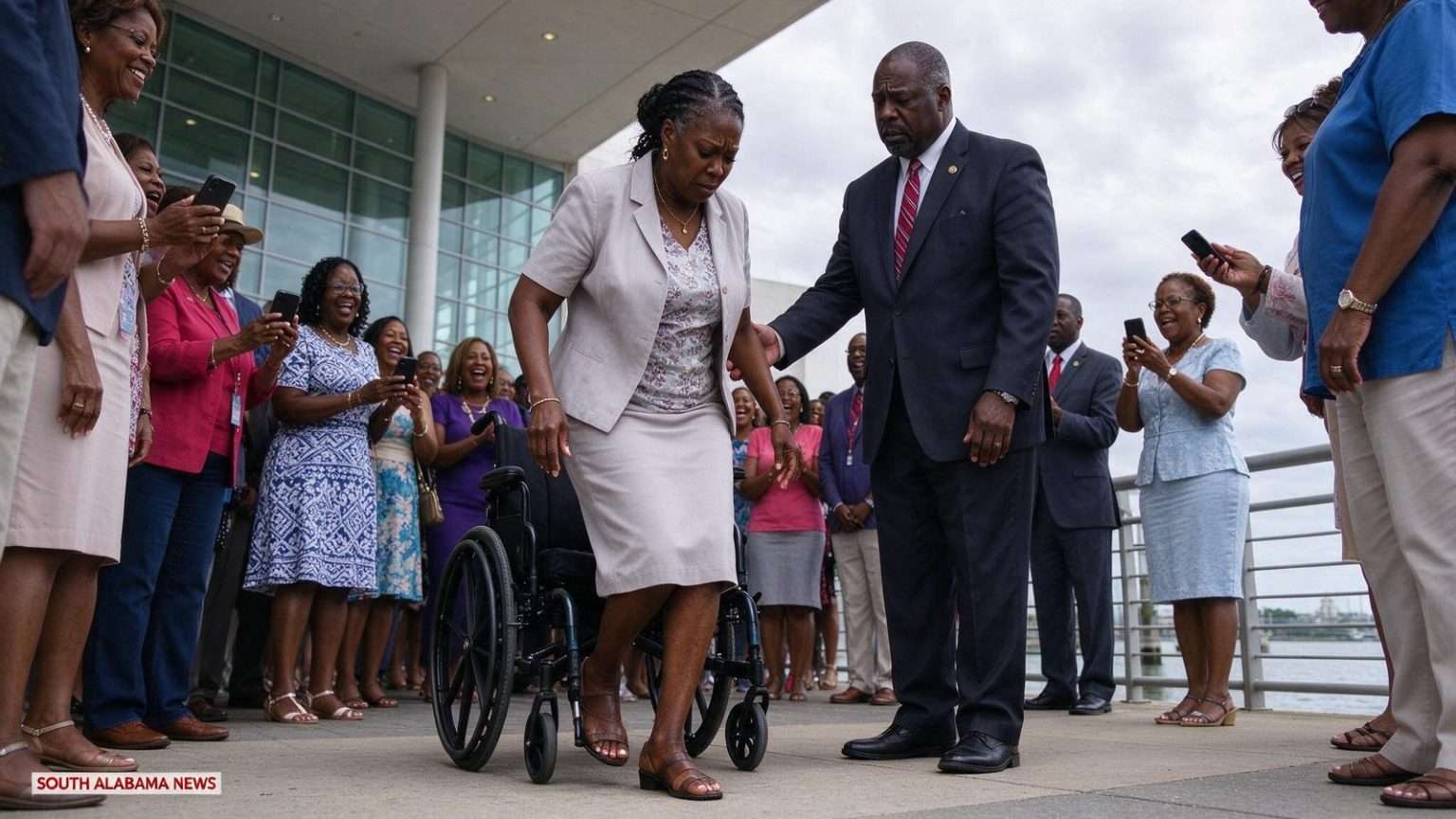
A video clip from a religious revival held at the Mobile Convention Center has drawn more than 140,000 views online, driven largely by a moment in which a Daphne church member who has used a wheelchair since a 1987 car accident appears to walk. The footage’s rapid spread has turned a revival service on Mobile’s waterfront into one of the region’s most-discussed religious stories, and it has drawn both celebration and skepticism from the audiences watching it circulate.
The footage circulated after Bishop Levy Knox and his wife, Delia, of Living Word Christian Center on Government Street in Mobile, attended the “Bay of the Holy Spirit Revival” at the convention center. The revival was hosted by Church of His Presence, a Daphne congregation led by Pastor John Kilpatrick, whose services have drawn regional attention for years and whose name carries weight in the Pentecostal and charismatic circles that such revivals travel through.
Delia Knox has been paralyzed since a car accident in 1987. The video that has spread online purports to show her standing and walking during the service, a moment organizers and attendees describe as a healing. The clip’s passage through social media has been rapid, pushed by shares from believers across the Gulf Coast and beyond and by the sheer improbability of the moment it appears to document.
What the Video Shows and What Remains Unverified
South Alabama News has not independently verified the claim, and the video’s rapid spread online has fueled debate among viewers about what the footage actually shows. Claims of healing at revival services occupy contested ground between faith and medicine, and the history of such claims includes both documented medical recoveries that defy easy explanation and cases that collapsed under scrutiny. The distinction matters to the families who travel to such services hoping for their own miracles, and responsible reporting on the phenomenon requires saying plainly that the claim remains a claim.
What can be said is what the footage depicts and who is vouching for it. The Revival’s organizers, attendees, and the Knoxes’ own congregation describe the moment as a healing, and the video shows Delia Knox standing and moving in a way she has not publicly done since the accident that paralyzed her more than two decades ago. Whether the movement represents a medical change, a partial recovery, or something else is a question that medical documentation alone could answer, and none has been offered publicly.
The debate the video has generated follows a familiar pattern. Believers share the clip as evidence of divine intervention, skeptics point to the limits of internet video and the absence of medical verification, and the truth, whatever it is, remains with the woman at the center of the footage and the physicians who have treated her over the decades since her accident.
The Bay of the Holy Spirit Revival
The revival drew attendees from across the Mobile and Baldwin County area, reflecting the reach of Church of His Presence and its pastor, who has led high-profile revival services in the past. Kilpatrick’s congregation in Daphne has hosted extended revival meetings before, and the church’s network extends through the Pentecostal and charismatic ministries of the Gulf Coast, a region where such services draw deeply engaged followings.
The Mobile Convention Center, the venue for the revival, sits on Mobile’s downtown waterfront and hosts events from trade shows to graduations, and its use for a religious gathering of this scale speaks to the crowds the revival was expected to draw. Attendees came from Mobile County, Baldwin County, and beyond for services that combined music, preaching, and the prayer for healing that gave the event its name and its viral moment.
The “Bay of the Holy Spirit Revival” name invokes the regional identity of the Gulf Coast’s charismatic community, and the event’s organizers positioned it as a continuation of the revival tradition that has periodically swept through South Alabama’s churches, drawing multi-night crowds and generating the testimonies that circulate through religious broadcasting and social media afterward.
Living Word Christian Center
Living Word Christian Center, where the Knoxes are members, is a longtime congregation on Mobile’s Government Street. The church has been a fixture of Mobile’s African American religious community for decades, and Bishop Levy Knox’s leadership there has made the family names familiar to believers across the region. Delia Knox’s ministry in music and worship has its own following, which helps explain the intensity of the response to the video’s circulation.
The congregation’s members describe the moment shown in the video in the language of faith, and the church community has celebrated the footage as an answered prayer decades in the making. For a woman who has lived with paralysis since 1987, the years of prayer and expectation that preceded the service form the context that believers cite, and the emotional weight of the moment is visible in the footage itself.
Whatever viewers make of the footage, its viral spread has put a local revival service in front of a national online audience, turning what began as a single evening event in downtown Mobile into a widely shared piece of video. The clip’s journey from the convention center stage to hundreds of thousands of screens is itself a story about how religious moments now travel, propelled by social media past the boundaries of the congregations and communities that witnessed them.
The reach of the video extends well beyond the Gulf Coast’s religious community. Clips of claimed healings circulate through social media with a velocity that older forms of religious broadcasting never achieved, and the audiences that encounter them include skeptics, the curious, and the desperate families who watch such footage and plan trips to the next revival. The responsibility that comes with that reach falls on both the organizers who share the footage and the viewers who amplify it.
Healing Claims and Medical Verification
The gap between a viral video and a verified healing is the space where most debates about revival footage occur. Medical verification of a healing claim would involve physician documentation of a condition before and after, imaging or testing that confirms the change, and the willingness of treating physicians to discuss the case. None of that has accompanied the footage of Delia Knox, and until it does, the claim rests on the testimony of those who were present and the belief of those who share it.
That standard is not unique to this case. Faith healing claims have been examined by medical researchers and journalists for over a century, and the documented cases of unexplained recovery are rare and contested, while the claims that collapse under scrutiny are common. Believers answer that God does not submit to peer review, and skeptics answer that extraordinary claims require extraordinary evidence. The debate is not resolvable in a news article, and the honest accounting is to report what is claimed, what is shown, and what remains unverified.
What the video has done, regardless of its ultimate assessment, is draw attention to the revival itself, to Church of His Presence and Pastor John Kilpatrick, and to the two-decade story of a Daphne woman’s paralysis and her community’s prayer. That attention will continue as the footage circulates, and the revival’s organizers will have larger audiences for their remaining services than they might otherwise have drawn.
The Knox Family and the Region’s Response
Bishop Levy Knox and Delia Knox have spent decades in Mobile’s religious community, and the response to the video has been shaped by the standing they hold. Congregants and fellow ministers have celebrated the footage across social media, and the couple’s own silence or testimony in the days ahead will shape how the story develops. Families who have followed Delia Knox’s music ministry describe the moment in deeply personal terms, and the region’s churches have begun referencing it in their own services.
The story has also traveled through Baldwin County’s Daphne community, where Church of His Presence anchors the revival and where the convention center event drew many of its attendees. The revival’s continuation, and any further moments that occur there, will be watched by an audience far larger than the one that filled the convention center on the night the video was recorded.
For now, the facts are these: a video from a Mobile revival has drawn more than 140,000 views, it shows a woman who has used a wheelchair since 1987 appearing to stand and walk, the moment is described as a healing by the event’s organizers and attendees, and no independent medical verification has been offered. The Gulf Coast’s believers are celebrating, its skeptics are unconvinced, and the footage’s journey through the internet has made a Daphne woman and a downtown Mobile revival the center of a conversation that is only beginning.