University of South Alabama Mobile
Williamson High Seniors Ready to Wear the Gold, Look Toward College
Williamson High School seniors in Mobile shared their college plans, favorite classes and advice for freshmen as their final school year got underway.
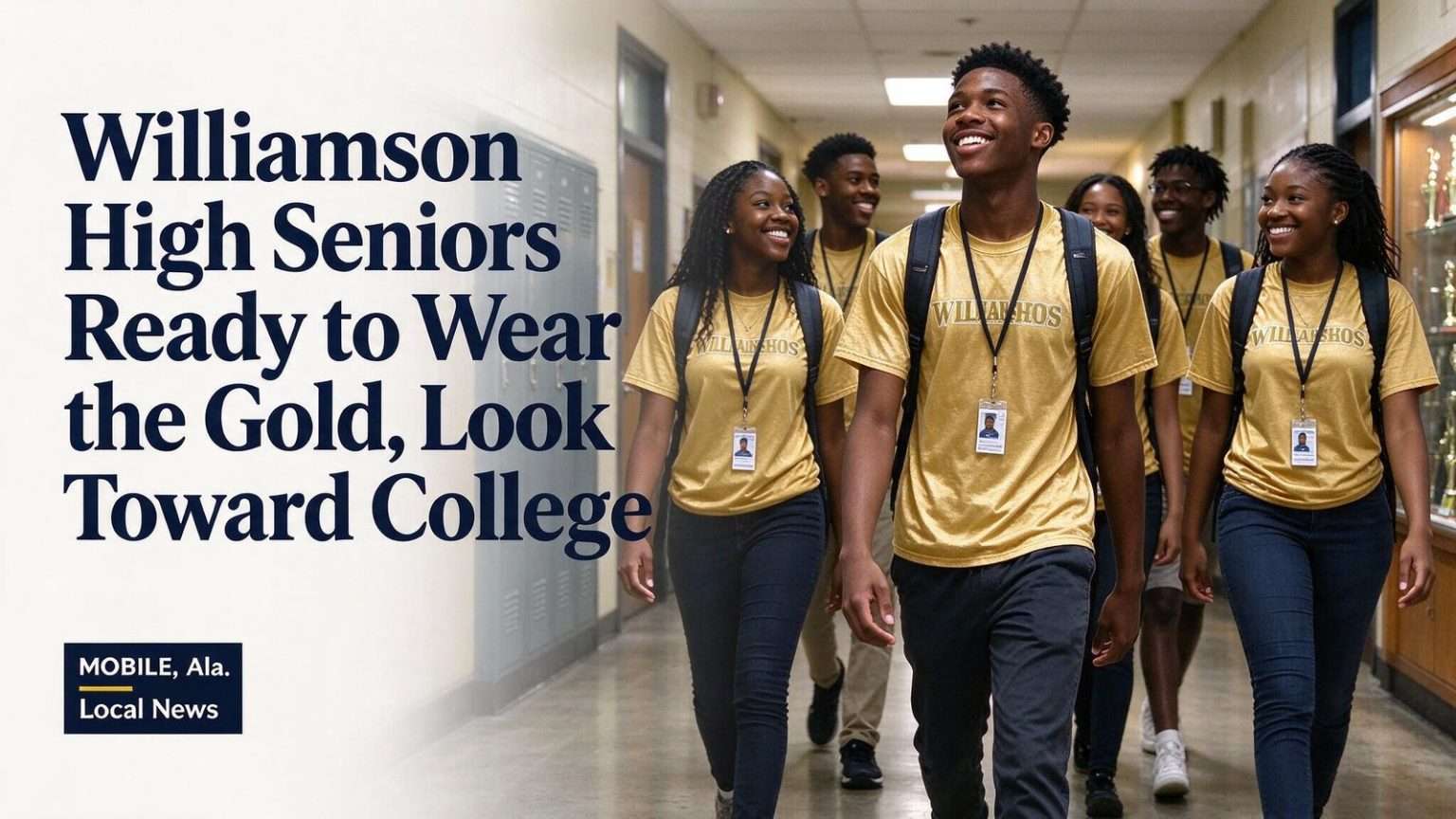
MOBILE, Alabama — Classes began this month at Williamson High School, part of the Mobile County school system, and the incoming senior class wasted no time settling into the traditions that come with being the oldest students in the building, from claiming the gold class shirt to counting down toward graduation. For the students walking the halls as seniors for the first time, the year ahead carries a mix of celebration, pressure and big decisions about what comes after the final bell in May.
Senior year at any high school is a hinge between two worlds, and at Williamson that transition is marked by customs the underclassmen watch and wait for. The gold class shirt is one of them — a visible marker of seniority that members of the graduating class wear with pride from the opening weeks of the fall semester until commencement.
A milestone year, and a mix of excitement and dread
Several seniors said the year ahead means senior trips, prom and, eventually, scholarship offers, though almost all of them named the ACT as the part of the year they were dreading most. The college admissions exam looms over the final year for students across Alabama, where scores can determine not only admission but eligibility for state and institutional scholarship money.
One student active in choir and softball said her focus this year is locking in scholarship money and finishing strong in her AP coursework, while planning to study sociology at the University of West Alabama after graduation. Her plan reflects a path many Williamson graduates have taken, heading west along Interstate 20 to the Livingston campus, where the university draws students from across the Black Belt and south Alabama.
Another senior, who is involved in JROTC and several honor societies, said she is most looking forward to spring college visits and hopes to study nursing at the University of South Alabama. The university’s nursing program has become one of the region’s most competitive destinations for Mobile-area graduates, feeding hospitals and clinics across the Gulf Coast as demand for nurses continues to grow.
The balance those two seniors described — coursework and activities now, applications and visits later — is the rhythm of a modern senior fall. Between ACT dates, scholarship deadlines and the day-to-day demands of Advanced Placement classes, the first semester of senior year has become, for many students, the busiest stretch of their entire school career.
Culinary arts, football and a familiar refrain: don’t slack off
One senior with a passion for culinary classes and reading said she plans to study culinary arts and business at a university in Colorado, and her advice to freshmen was blunt: the workload eventually catches up with everyone, so it pays to stay ahead of it early. Her combination of kitchen skills and business coursework points to the way culinary programs have evolved, treating restaurant careers as enterprises that require accounting, management and marketing as much as technique.
A senior who plays defensive end on the football team said he is looking forward to homecoming and Honors Day this year, and is hoping to continue playing football in college while eventually training as a massage therapist. His two-track plan — athletics now, a hands-on health career after — mirrors the path of many student-athletes who know that a college roster spot and a professional goal can, and should, coexist.
He warned incoming freshmen against sleeping through class, saying it only takes a short lapse to fall a week behind. It is advice nearly every senior offers eventually, and it comes from experience: in a school year built on cumulative courses and standardized testing, the first missed assignments of September have a way of resurfacing in the grade book at the worst possible moment, right when scholarship applications and transcript requests are due.
Homecoming itself remains one of the anchors of the fall semester, with the week of themed dress-up days, the parade, the alumni returning to the campus and the Friday night game drawing the largest crowd of the season. Honors Day in the spring gives the same community a second gathering, this time centered on academic achievement rather than the scoreboard.
Band, volleyball and getting ready for what’s next
Another senior, involved in band and volleyball and a regular volunteer at concession stands during University of South Alabama football games, said wearing the senior class’s gold shirt this year feels like a reward for years of work, even though she admits standardized testing is not her strong suit. Her concession-stand volunteering connects the school to the college programs across town, where student groups earn money for trips and supplies by working Jaguars home games in the fall.
Band members spend their summers in rehearsals and their early mornings on the practice field learning drill before the school year even starts, and volleyball players are no different, with tryouts and preseason scrimmages filling the last weeks of summer. By the time classes begin, those students are already deep into their activity calendars, layering practices and games on top of a full academic load.
For students juggling that combination, senior year becomes an exercise in time management as much as academics. Counselors at Williamson and across the Mobile County system spend the fall walking seniors through application season: transcript requests, fee waivers for the ACT, financial aid workshops for parents and the campus visits that help students decide whether a university hundreds of miles away is the right fit.
Williamson’s place in the county system
Williamson High School sits within the Mobile County Public School System, the largest school district in Alabama and one of the largest in the region, serving tens of thousands of students across the city, the county and its suburban communities. Schools in the system range from long-established city campuses to newer suburban institutions, and each graduating class across the district sends students to the University of Alabama, Auburn, South Alabama and historically black universities across the state and region.
For the Williamson campus, the senior class carries a particular role. As the oldest students in the building, they set the tone for the underclassmen — in the hallways, in the bleachers and in the classrooms where freshmen are still learning the expectations that the seniors have spent three years absorbing. The traditions they claim in August, from the class shirt to the first pep rally of the fall, are the same ones they were watching from the back of the gym only a few years earlier.
The school’s activity programs, from the marching band to athletics to organizations like JROTC, form the backbone of that culture. Beyond school spirit, they offer the kind of structure that colleges and employers look for: leadership roles, attendance records, service hours and the discipline of showing up every day for a team or an ensemble.
The countdown to May
The months ahead for the class follow a familiar arc. Fall brings the ACT dates that most seniors treat as their last best chances to lift a score, along with homecoming and the first round of application deadlines. Winter brings financial aid season, scholarship interviews and the midyear transcripts colleges request. Spring delivers the college visits, the Honors Day recognition, prom, final exams and, at the end of it, commencement.
The seniors’ plans — sociology, nursing, culinary arts and business, football and massage therapy — sketch the variety of directions a single graduating class takes. Some will stay close to home at campuses in Mobile; others will head to Livingston or across the country to Colorado. What they share is the calendar in front of them, the gold shirt in the closet and the same counsel for the freshmen watching them: stay ahead of the work, because the year moves faster than it looks.
Inside the classroom, the year’s work is already underway
While the social calendar fills, the academic work of senior year starts immediately. Advanced Placement courses that began in August run on college-board schedules, with exams in May that arrive only days before graduation, and teachers of those courses spend the opening weeks moving quickly to cover material. Seniors in AP classes often describe the first nine weeks as the hardest of the year precisely because the pace starts before the novelty of being a senior wears off.
Elective programs carry weight in the schedule as well. Culinary students split time between kitchen labs and written coursework, learning food safety and cost control alongside technique, while JROTC cadets balance leadership positions, drills and community service obligations with their academic classes. Honor societies add service-hour requirements that many seniors fulfill through the same volunteering they already do at school events and college games.
Guidance counselors urge seniors to treat the first semester as though graduation depends on it, because in practical terms it does. Colleges condition admission offers on final transcripts, and scholarship committees review senior-year grades as closely as junior-year ones. A strong start in August, counselors say, is worth more than any rescue effort in April.
By the time the gold shirts are retired and caps and gowns replace them, the class will have added its own chapter to the school’s traditions. The underclassmen watching now will inherit the customs, the warnings about sleeping through class and the countdown itself, just as every class at Williamson has done before them.