Seniors at Murphy, Saraland and MGM High Schools Reflect on Final Year
Seniors from Murphy, Saraland and Mary G. Montgomery high schools shared what they are most looking forward to in their last year of classes.
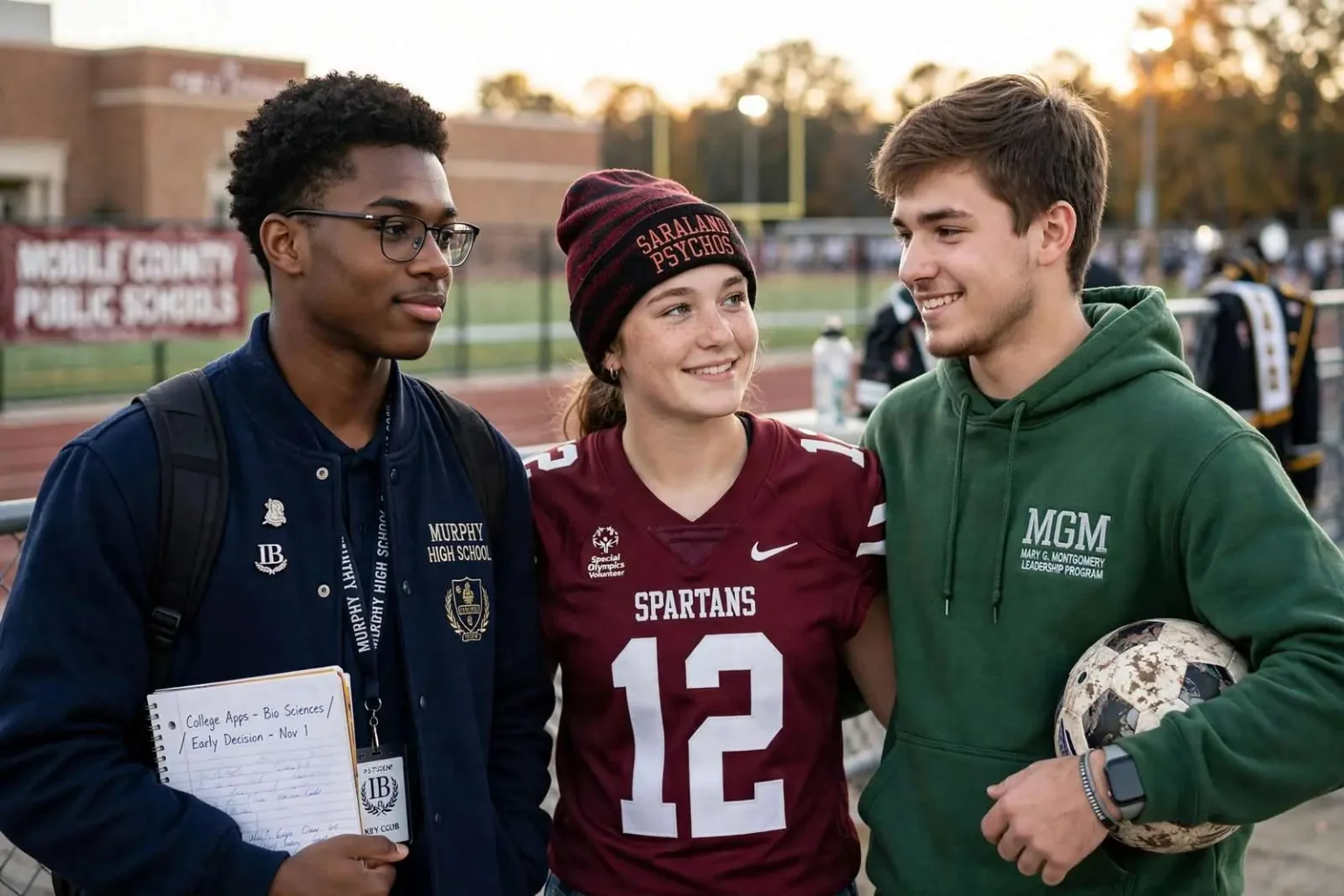
MOBILE COUNTY, Alabama — With the Mobile County school system’s dozen high schools back in session and Saraland City Schools following close behind, seniors across the area are settling into a final year filled with leadership roles, marching band responsibilities, football season and, for many, the first serious steps toward choosing a college. The class of the moment carries the everyday weight of capstone coursework and college applications alongside the traditions that make senior year the year students remember.
Theirs is also a year of firsts and lasts running in parallel: the last first football game, the last homecoming, the first round of campus visits and application deadlines. In interviews across three school communities, seniors described the same mix of anticipation and awareness that the clock is running.
Murphy High School’s IB Seniors Eye Ivy League and Beyond
At Murphy High School’s International Baccalaureate program, one senior said he is most looking forward to finally seeing four years of hard work pay off, along with the small perk of leaving campus early during the last week of school. Active in Key Club, band, tennis and student government, he is hoping for admission to a Northeastern university and plans to study biological sciences.
A classmate who serves as brass captain in the marching band said her focus this year is leading fellow section members while also managing her own nerves about leaving home for college, where she hopes to study neurology and pathology at a West Coast or Colorado school. Both said staying organized and avoiding procrastination were the best advice they had for incoming freshmen.
The IB program, Murphy’s most demanding academic track, asks students to balance college-level coursework across multiple disciplines, an extended essay and community service requirements on top of the usual extracurricular load. For seniors in the program, the fall semester is the pressure point: applications, recommendation letters and early deadlines land at the same time as the heaviest course load of their high school careers.
Murphy itself is one of Mobile County’s flagship campuses, a school with a long history in midtown Mobile and a student body drawn from across the city for its specialty programs. Its marching band, Key Club chapter and athletic teams have been fixtures of the city’s school culture for generations, and seniors in each of them step into leadership roles this year that underclassmen will inherit next fall.
Saraland’s Psychos and Spartans Savor One Last Season
At Saraland High School, part of the separate Saraland City Schools district, one senior said cheering with the school’s rowdy student fan section, known as the Saraland Psychos, at football games ranks among her favorite parts of senior year, even as she gets emotional about eventually leaving teachers she has grown close to. She plans to study education for the deaf after discovering the field while volunteering with Special Olympics athletes.
A football teammate, a safety on the Spartans squad, said he is most looking forward to the traditional senior dinner and a strong final season, and hopes to earn a scholarship to study sports medicine in college.
Saraland’s school story is one of the youngest in the area. The city broke away from the Mobile County system to form its own city school district, and its high school has since built a reputation — and a fan base — that packs the stands on Friday nights. The Saraland Psychos, the student section at the center of that atmosphere, are as much a part of the program’s identity as the team itself, and seniors hold the front rows and the loudest chants by tradition.
MGM Senior Points to Leadership Program and Homecoming Week
At Mary G. Montgomery High School, a senior involved in soccer, cross-country and a local youth soccer club said he is most excited about the school’s student leadership program, which has seniors design and carry out their own community service projects, along with the theme days and parade that come with homecoming week. He plans to study physical therapy and athletic training in college and encouraged incoming freshmen to talk with teachers and counselors early to find clubs and activities that fit their interests.
The leadership program’s structure puts seniors in charge in a way most school activities do not: conceiving a project, recruiting helpers, managing the work and answering for the result. For a student planning a career in physical therapy and athletic training, the experience of organizing and serving others doubles as a preview of work that is, at its core, about helping people recover and perform.
Mary G. Montgomery, in the Semmes area of western Mobile County, has grown along with its community, and its seniors this year step into a campus culture that leans on student leaders to run traditions from homecoming week’s theme days and parade to service projects that reach beyond the school’s walls.
A Shared Season of Transition
Across the three school communities, the seniors described this year with a similar mix of pride and nerves: eagerness for long-awaited leadership roles and traditions, paired with real anxiety about leaving behind the friends, teachers and routines that have defined their high school years. Several urged younger students not to take their remaining time for granted, saying the freedom and responsibility of senior year is worth working toward from day one.
The common threads are striking given how different the three campuses are. Murphy’s IB seniors are racing toward selective universities; Saraland’s Spartans are soaking up one more season of Friday night stands; MGM’s leaders are designing service projects and planning health-care careers. In every case, the same emotions surface: gratitude for the teachers and classmates who shaped them, and the first real weight of leaving.
Advice the Class Leaves Behind
The advice seniors offered to younger students converged on a few themes. Organization and avoidance of procrastination topped the list from Murphy’s IB veterans, whose coursework punishes falling behind like nothing else in high school. MGM’s senior urged freshmen to talk early with teachers and counselors about clubs and activities, arguing that the students who thrive are the ones who find their groups in the first weeks rather than the last. Saraland’s seniors pointed to the intangibles — show up for the games, sit in the student section, savor the traditions that will be gone before graduation is processed.
Underneath the specifics sits the same message: senior year’s rewards are the compounding interest of four years of involvement, and the students who wait until their final year to engage find the roles and traditions already claimed by classmates who started earlier.
What Comes After the Last First Day
The months ahead hold the rituals that mark the class’s exit: homecoming weeks and parades, senior nights at stadiums and gymnasiums, the last concerts and exhibitions, and the run of spring ceremonies that ends with caps and gowns. Between those landmarks sit the quieter milestones — the final application submitted, the acceptance letter opened, the scholarship signed — that decide where each student’s next chapter begins.
For the Mobile County area’s seniors, the destination list is long and varied: Northeastern campuses for the biological sciences, West Coast and Colorado programs for neurology and pathology, sports medicine programs waiting on a Friday-night performance, education degrees aimed at teaching the deaf, physical therapy and athletic training tracks. Each represents a family’s investment, a school community’s pride and a student’s bet on the future — made in the fall of a year that is still, for a few more months, about Friday nights and homecoming halls.
The class will leave behind empty leadership chairs in Key Clubs, marching band sections, student sections and service programs — chairs that underclassmen are already circling. That handoff is the quiet work of every school year’s end, and it is why the advice this year’s seniors leave behind matters: next year’s brass captains, fan-section leaders and project organizers are in the crowd now, taking notes.
The College Search in a Senior’s Fall
For many of the area’s seniors, the defining work of the fall happens away from the football field: campus visits, application essays and the financial aid forms that determine which futures are affordable. Seniors aiming at selective programs describe a calendar that compresses everything — early application deadlines, standardized test retakes, scholarship interviews — into the same weeks as marching season and homecoming.
Counselors across the three districts push the same timeline: applications finished before Thanksgiving, financial aid paperwork as early as possible in the new year, and campus visits scheduled before the spring, when acceptance decisions rather than applications dominate. The seniors who spoke about their plans — biological sciences in the Northeast, neurology and pathology out west, sports medicine on a hoped-for scholarship, education for the deaf, physical therapy and athletic training — each described a path that started not in senior year but in the earlier choices the class says younger students should make now.
Three Districts, One Milestone
The three schools sit in three different systems. Murphy belongs to the Mobile County Public School System, the state’s largest, whose dozen high schools span the county from Citronelle to Theodore. Saraland’s high school belongs to the Saraland City Schools, one of the newer city systems in Alabama, formed when the city separated from the county district. Mary G. Montgomery serves the Semmes area under the county umbrella, anchoring the western side of the county.
That the senior experience rhymes across three systems — the leadership roles, the fan sections, the college jitters, the advice to underclassmen — says something about what senior year is: a shared American milestone with local accents. Whatever paths this year’s classes take, they will carry the same landmarks with them, and their schools will mark the handoff to the next class the following August.