

The Alabama High School Athletic Association has finalized its two-year classification and alignment plan for winter sports, setting the area, region and section lineups that will govern basketball, indoor track and field, bowling and wrestling competition for the 2022-23 and 2023-24 school years.
The new alignments, which the AHSAA calculates using a combination of school enrollment and a competitive balance factor, touch nearly every public and private school across Mobile, Baldwin, Escambia, Clarke and Washington counties. Private schools are also subject to an additional multiplier under the association’s formula, a step the AHSAA has used in recent cycles to account for enrollment drawn from outside traditional zoning lines.
The multiplier is the mechanism behind many of the cycle’s most-noticed changes. Because private and city schools draw students beyond fixed attendance zones, the association counts a percentage of enrollment beyond the school’s raw figures, which can bump a program up one or more classes. The stated aim is competitive balance — keeping schools whose reach extends county-wide from dominating classifications built around neighborhood enrollments — and it means some private schools on the list compete a class above where their raw count alone would place them.
For the schools of the five-county area, the winter sports alignments complete a realignment that the association has rolled out sport by sport over the course of the cycle, with football, volleyball and cross country and the spring sports already assigned under the same enrollment math. Athletic directors now have the full two-year map.
Basketball areas
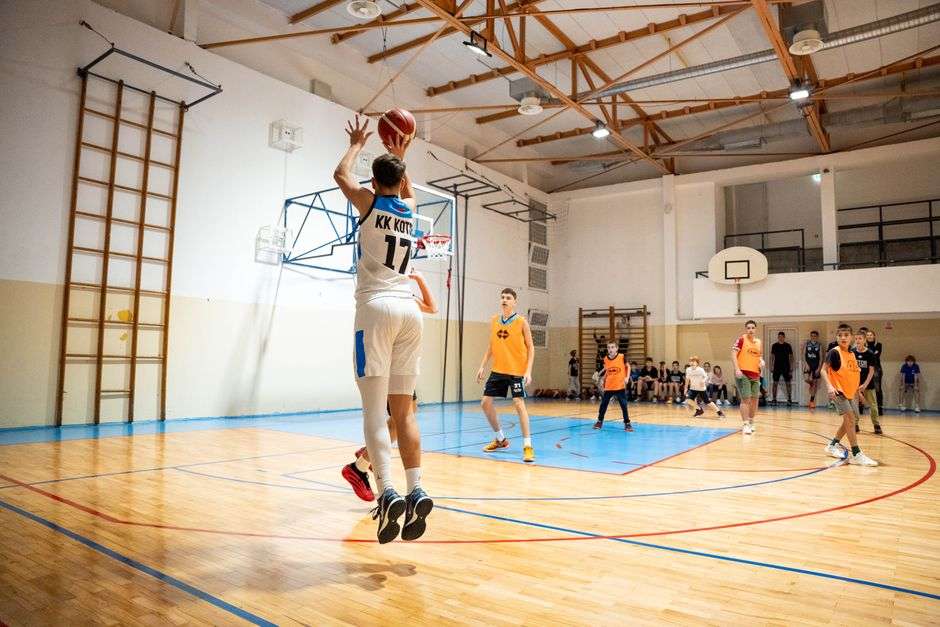
In basketball, the classification shakeup groups Chickasaw, St. Luke’s, Clarke County, J.U. Blacksher and Washington County together in Class 2A, Area 1. Class 3A, Area 1 pairs Cottage Hill Christian, Mobile Christian and Flomaton, while Class 4A splits the region into two areas: Bayside Academy, Orange Beach, St. Michael and UMS-Wright in Area 1, and Satsuma, Jackson, Escambia County and T.R. Miller in Area 2.
Class 5A basketball is likewise split into two areas, with B.C. Rain, Gulf Shores, Williamson and Elberta forming Area 1 and Faith Academy, LeFlore, St. Paul’s, Vigor and Citronelle rounding out Area 2. In Class 6A, Blount, Murphy, Saraland and Theodore make up Area 1, while Baldwin County, McGill-Toolen, Robertsdale and Spanish Fort will battle in Area 2. The area’s largest schools, competing in Class 7A, are divided into Alma Bryant, Baker, Davidson and Mary G. Montgomery in Area 1, with Daphne, Fairhope and Foley forming Area 2.
The geography tells the story of the classifications. The smallest-school areas knit together towns across Clarke, Washington and Monroe-county line country with Mobile’s small private programs, requiring long bus rides for a Tuesday area game. The upper classifications, by contrast, are almost entirely urban-suburban: the 6A and 7A areas group the region’s largest enrollments into four- and five-school areas whose members can play each other with little travel, and whose area tournaments double as round-robin rematches of familiar rivalries.
Basketball areas carry the heaviest competitive weight of the winter assignments. In Alabama’s postseason structure, the area tournament is the first gate of the state playoffs, with the area’s top finishers advancing to regional competition and, ultimately, the state finals in Birmingham. A school’s two-year fate in basketball — who it must beat to reach a regional, and which rivals it cannot meet until later rounds — is largely settled by the area lines in this document.
Indoor track and field
Indoor track and field follows a similar but not identical framework. The smallest classification grouping, 1A-3A, brings together Chickasaw, Cottage Hill Christian and St. Luke’s, while the 4A-5A grouping includes Elberta, Faith Academy, Gulf Shores, Mobile Christian, Satsuma, Vigor and Williamson. The Class 6A field spans Baldwin County, Bayside Academy, Blount, McGill-Toolen, Murphy, Robertsdale, Spanish Fort, St. Paul’s, Theodore and UMS-Wright, and the Class 7A field includes Alma Bryant, Baker, Daphne, Fairhope, Foley and Mary G. Montgomery.
Because indoor track in Alabama is contested as a championship meet rather than a head-to-head area season, the groupings function as the classification fields for the state meet — broader than the four- and five-school basketball areas, and pulling in schools from across the coastal counties that basketball assignments keep apart. A distance runner at a 4A school and a sprinter at a 5A school compete in the same 4A-5A grouping, which compresses the classifications and makes qualifying spots tighter.
Bowling regions
Bowling, which the AHSAA organizes by broader multi-classification regions rather than single-class areas, places ACCEL Academy Mobile, LeFlore, Satsuma, UMS-Wright and Vigor together in Class 1A-5A, Region 1. Region 2 in that same grouping brings together Bayshore Christian, Elberta, Gulf Shores, Orange Beach, St. Michael, Houston Academy and Slocumb — a lineup that stretches the competition beyond the immediate coastal counties into the Wiregrass area.
The larger-school bowling regions pair Alma Bryant, Baker, Davidson, Mary G. Montgomery, Blount, McGill-Toolen, Murphy, Saraland and Theodore in Class 6A-7A, Region 1, while Baldwin County, Daphne, Fairhope, Foley, Spanish Fort and Dothan will compete in Region 2.
The region structure reflects the sport’s footprint. Bowling remains a young sport in the AHSAA calendar, with far fewer programs than basketball or track, so the association groups classifications together to produce regions large enough to justify a season. The result is the widest travel radius of any winter sport — the 1A-5A Region 2 grouping sends Baldwin County schools on trips to Dothan and the Wiregrass, and the 6A-7A regions likewise bridge the bay to reach enough teams.
Wrestling sections
Wrestling sections were also finalized under the new cycle. Bayshore Christian, Orange Beach and Satsuma will wrestle in the Class 1A-4A, Section 1 grouping. Elberta and Gulf Shores make up Class 5A, Section 1, while Baldwin County, Saraland, Spanish Fort and Robertsdale are grouped in the Class 6A, Section 1. The area’s Class 7A wrestling section brings together Baker, Daphne, Davidson, Fairhope, Foley and Mary G. Montgomery.
The section structure mirrors the sport’s format, in which wrestlers advance through a sectional tournament by weight class rather than through a season-long area schedule. A small-school grouping that folds four classifications together — as in the 1A-4A section — exists because wrestling programs at the smallest schools are few; a wrestler at Orange Beach or Satsuma finds his sectional path running through programs of every size, with the state tournament bracket assembled from the top finishers in each weight class.
Wrestling sections also concentrate the region’s established programs. The Class 7A section — Baker, Daphne, Davidson, Fairhope, Foley and Mary G. Montgomery — gathers the area’s largest schools into one six-team sectional, meaning the coast’s best 7A wrestlers meet each other before the state tournament rather than after qualifying from separate sections.
What the two-year map means
Because the alignments cover two full school years, athletic directors and coaches across the area will use the new area, region and section assignments to build non-region schedules and plan for postseason travel well ahead of the 2022-23 winter sports season.
Scheduling is the immediate task. A school that knows its area opponents fills the rest of its calendar with tournaments and non-area games that fit its classification and travel tolerance, and a two-year cycle lets a coach build relationships — home-and-home series, holiday tournament invitations — that hold for twenty-four months rather than being renegotiated annually.
The AHSAA reclassifies its member schools every two years, adjusting groupings as enrollment shifts and new members join the association, and the winter sports plan follows similar realignments the association has already released for football, volleyball and cross country as well as spring sports such as baseball, softball and track.
School administrators in the affected counties said the new lineups will factor into travel budgets and scheduling decisions in the coming months, particularly for smaller schools now grouped with programs a greater distance away.
Travel is the quiet cost of every realignment. A small school moved into an area with a rival an hour away drives that distance twice a season in basketball — home and away — and again in the area tournament, and the bus mileage shows up in a budget where transportation competes with officials’ fees and equipment. For schools in Clarke and Washington counties grouped with Mobile-area programs, or Baldwin County schools assigned toward the Wiregrass in bowling, the classification line is, in dollars, a mileage line.
Enrollment shifts between cycles are what drive the map’s changes. Baldwin County’s fast-growing suburbs, the opening of new schools, declining enrollment at some city programs and the private-school multiplier all move schools across classification borders every two years, and each move reshapes the areas around it: one school’s bump from 6A to 7A turns a five-school area into a four-school area and rewrites two schools’ schedules.
Postseason tournament sites and seeding procedures will be set separately by the AHSAA closer to each season based on the final area, region and section standings under the new alignments.
For coaches, the separating of sites from standings means the competitive map is now fixed but the road through it is not: who hosts an area tournament, where a sectional is wrestled and how regional brackets seed will be decided as the seasons approach. For the next two winters, though, the who-plays-whom questions across Mobile, Baldwin, Escambia, Clarke and Washington counties have their answer in this document, and the gym calendars of five counties are being built around it.