

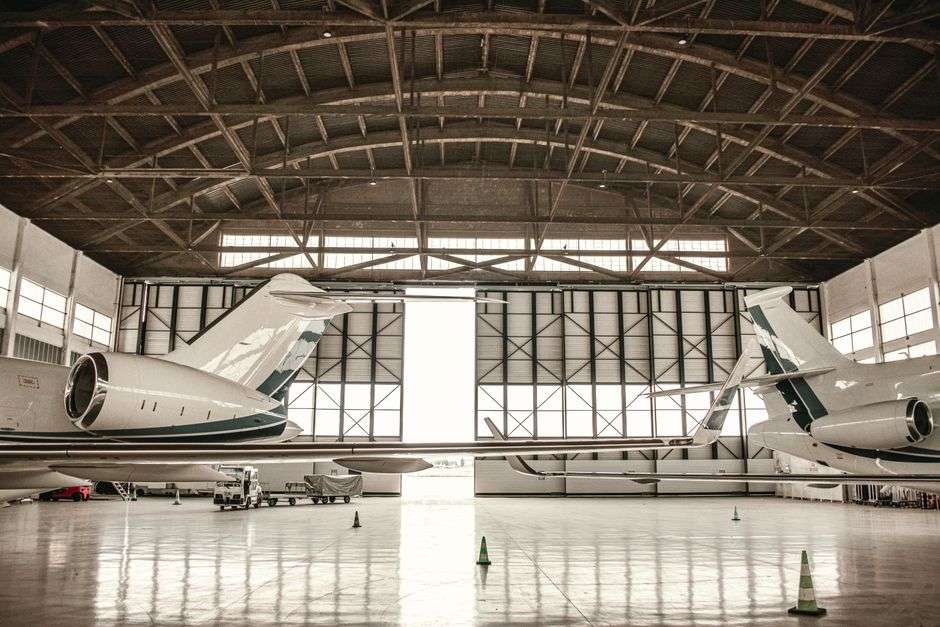
Airbus has officially opened a second final assembly line at its Mobile manufacturing campus, completing a 270,000-square-foot hangar at Brookley Aeroplex that will be dedicated to building the company’s smaller A220-100 and A220-300 jets. Company officials announced the milestone Tuesday, capping an 18-month construction effort even as the coronavirus pandemic continued to disrupt air travel and squeeze airline finances worldwide.
The new hangar houses five primary assembly stations and stands alongside the original Mobile facility that has been producing Airbus A320-family aircraft since 2015. Airbus crews had already been assembling the first A220s in Mobile using existing space at Brookley since August 2019, but the completed hangar marks the first time the smaller jet program has had a purpose-built home in Alabama.
The addition gives the Mobile campus two separate commercial aircraft product lines running side by side, a distinction few aircraft manufacturing sites in the country can claim.
The timing of the opening underscores the company’s long view. Commercial aerospace has weathered few periods as punishing as the pandemic, with airline orders deferred, deliveries slowed and production lines worldwide throttled back. Opening a new assembly line in the middle of that downturn is a statement that Airbus intends to hold the capacity it has built in Mobile through the cycle — and to be positioned for the recovery the company’s planners know will eventually come.
Mobile Mayor Sandy Stimpson addressed the milestone during Tuesday’s Mobile City Council meeting, calling the completed facility “great news” for the city at a time when much of the local and national economy remained under strain from COVID-19.
JetBlue becomes the second A220 customer
Alongside the hangar’s completion, Airbus also welcomed the first components destined to become a U.S.-built A220 for JetBlue, which becomes the second airline customer to have its A220 aircraft assembled in Mobile. The New York-based budget carrier’s order adds momentum to a program that Airbus has been working to grow in the American market.
“The team is excited to start working in their new facility and to welcome a new customer. It’s a strong endorsement from JetBlue in this challenging time,” said Paul Gaskell, president of A220 USA, in a statement announcing the opening. “The expansion of our commercial aircraft production in Mobile to a second product line further solidifies Airbus’ standing as a truly global aircraft manufacturer, and confirms that Airbus is an important part of the American manufacturing landscape. This A220 assembly line will help satisfy the U.S. demand for the A220 aircraft.”
Adding a second U.S. customer matters for reasons that go beyond the order book. Airlines watch one another’s fleet decisions closely, and each carrier that accepts a Mobile-built A220 functions as a public endorsement of the Alabama line’s quality and delivery performance. For a program still building its reputation in the American market, that kind of validation is worth as much as any advertisement Airbus could buy.
JetBlue’s business model also fits the aircraft precisely. The New York-based carrier built its reputation on low fares and coastal routes, and its network depends on aircraft that can fly moderate ranges economically with fewer seats than a standard narrowbody. That is the exact niche the A220 was designed to fill — and having the jet assembled in the United States removes a layer of import economics from the deal.
The A220’s path to Alabama
The A220 program, originally developed by Bombardier before Airbus took a majority stake in 2018, has positioned itself as a fuel-efficient option for airlines flying shorter routes with smaller passenger loads. Building the jets in Mobile allows Airbus to market them as American-made aircraft to U.S. carriers, a factor that has helped the company win domestic orders even as global travel demand cratered during the pandemic.
The jet’s journey to the Gulf Coast was neither quick nor simple. The program’s Canadian designers built the aircraft as a clean-sheet small single-aisle airliner, but the program’s economics proved punishing under Bombardier’s ownership, and the trade disputes that followed its early sales pushed the company toward Airbus. The European manufacturer’s takeover gave the aircraft global sales reach and a production footprint — and Mobile, already the company’s only U.S. assembly site, was the natural place to build it for American buyers.
For the aircraft itself, the move changed its fortunes. Renamed and re-certified under Airbus, the A220 has found buyers among both legacy and low-cost carriers who want a modern, fuel-efficient jet for the 100-to-150-seat segment — a part of the market where older designs dominate and replacement demand runs deep.
Brookley’s transformation
The Brookley campus has grown into one of Mobile’s largest employers since Airbus broke ground on its original Mobile assembly line in 2013, with the site now supporting hundreds of manufacturing and engineering jobs across both the A320 and A220 programs.
The aeroplex occupies ground with its own aviation history. The site was home to Brookley Field, a military air logistics complex that employed tens of thousands before its closure reshaped the southern part of the city. Its rebirth as a civilian aerospace and industrial park took decades, and Airbus’s decision to locate its first U.S. final assembly line there — beating out competing bids from other states — marked the turning point that turned a dormant airfield into a manufacturing destination.
The campus’s growth has pulled a wider supply chain into the region. Parts fabrication, seat manufacturing, engineering services and aircraft-interior firms have all expanded along the Gulf Coast in the years since the first A320 families began rolling out of Mobile, feeding the assembly lines and benefiting from their proximity. Local and state officials have repeatedly pointed to the Airbus presence as a cornerstone of the region’s push to build a broader aerospace manufacturing sector along the Gulf Coast.
The state’s investment in the industry extends beyond the factory floor, too. Workforce programs connected to the aerospace cluster — training pipelines through the state’s community and technical colleges, and apprenticeships built around the assembly lines’ needs — have become part of the pitch Alabama makes to every aerospace company that considers the region.
Company officials did not immediately say how many additional workers would be hired to staff the new A220 line, though the project has been expected to add jobs to the Mobile campus as production ramps up. The opening comes as Airbus, like most aircraft manufacturers, has had to balance long-term investment plans with short-term production slowdowns caused by the pandemic’s impact on airline travel.
What the second line means for Mobile
The completed hangar changes the shape of the local aerospace economy in a practical way: Mobile is no longer a single-program city. Two product lines mean two separate customer bases, two separate supply chains feeding the same campus, and a buffer against the risk that any one aircraft family’s fortunes take a turn. Sites with that kind of diversification hold their workforce through downturns better than single-line operations do.
For city officials who spent years courting and supporting the company’s expansion, the opening validated a strategy of betting public resources on a single anchor tenant and letting the industry grow around it. Mayor Stimpson’s “great news” assessment before the council was brief, but the arithmetic behind it — construction jobs spent, permanent positions added, an industrial tax base widened during a recession — is the kind of news a city government can use.
The work inside the new hangar begins immediately. Five assembly stations will fill with A220 fuselage sections, wings and systems as the line ramps toward deliveries, and the first Mobile-built jet for JetBlue now has a dedicated path from component arrival to rollout. In a global industry where production sites are counted by the dozen but U.S.-based final assembly is nearly unique, Mobile’s newest hangar secures the city’s place on the map for the next generation of narrowbody aircraft.
A hiring outlook shaped by the pandemic
The question of staffing remains open, and company officials’ silence on numbers reflects the uncertainty of the moment. Final assembly lines are staffed according to production rates, and production rates across the industry remain hostage to airline demand. When demand returns, the line’s workforce will scale with it — which means the A220 hangar functions as a banked capacity for the city: built now, staffed as the market allows.
The jobs the line will eventually carry are the kind a region builds a middle class on — skilled manufacturing positions in structures assembly, systems installation and quality control, plus the engineering and planning roles that orbit any production program. The original A320 line demonstrated the model; the second line multiplies it.
For Alabama’s aerospace training pipeline, the addition of a second product line also expands the curriculum’s reach. Workers trained on one aircraft family now have a second pathway at the same campus, and the technical programs that feed the plant can point students toward two distinct production disciplines rather than one.
None of this erases the near-term headwinds. The pandemic remains the dominant fact of commercial aviation, and even the best-positioned assembly sites are living with slowed rates, deferred orders and a cautious customer base. But aircraft programs are measured in decades, and the decisions that matter — where to build, what to build, and whether to double down on a workforce — get made on that horizon. Airbus’s answer, delivered in the middle of the industry’s worst year in generations, is a new hangar, five assembly stations and a second product line on the Mobile River plain at Brookley.