

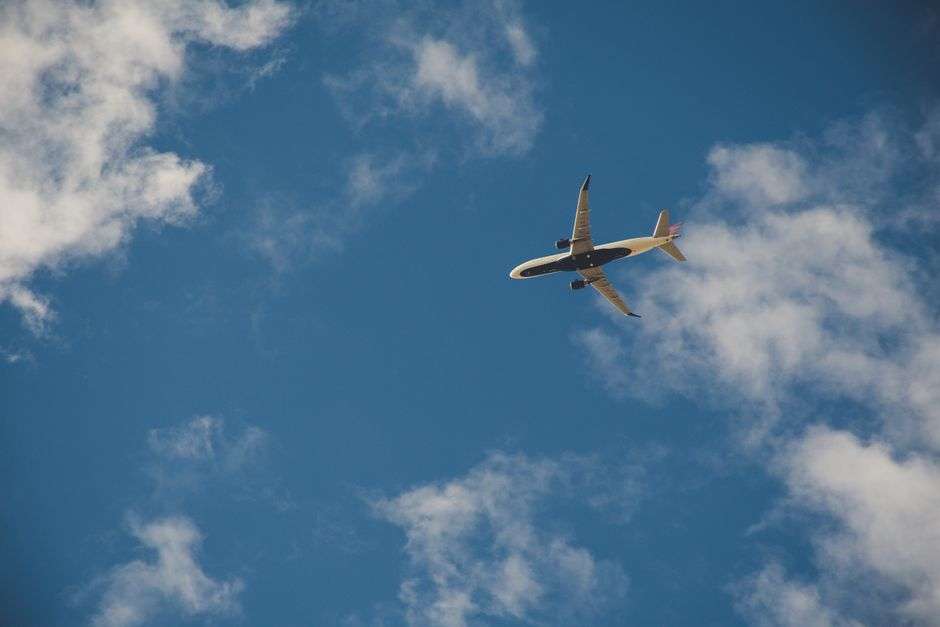
Residents across the Mobile area can expect an unusual sight overhead this week, because an Airbus A350 XWB test aircraft is scheduled to fly directly over the city as part of ongoing testing for the manufacturer’s newest wide-body jet. The flyover is planned for around 11:20 a.m. Friday, while the aircraft wraps up a round of extreme weather test flights based out of Eglin Air Force Base in Florida. Rather than heading straight back to its home base afterward, the test jet is set to take a detour over South Alabama, giving local residents a rare close-up look at the next-generation aircraft.
The centerpiece of the flight plan is a low-altitude pass directly above the Airbus Engineering Center and Assembly Line, which is currently under construction at the Brookley Aeroplex in Mobile. The site, once completed, is expected to serve as a final assembly line for Airbus aircraft built in the United States, a project local leaders have pointed to as a milestone for the region’s aerospace industry and its long-term economic growth. For the crews working on the site below, the flyover will bring the aircraft they will eventually build directly over the floor where the work will happen.
A Salute Over the Golf Course
After passing over Brookley, the aircraft is scheduled to swing by Magnolia Grove, the Robert Trent Jones Golf Trail course hosting this week’s Airbus-sponsored LPGA Classic in Mobile. Tournament organizers say the pass is meant as a salute to the golfers and fans gathered for the event, tying together two of the highest-profile happenings on the local calendar this week. The timing puts the jet over the course during tournament play, and organizers have coordinated the appearance with Airbus so that spectators get advance notice of when to look up.
Flight test officials caution that, as with any test flight schedule, timing could shift because of weather or other operational factors. As of Thursday, however, both flyovers remained on track for their planned Friday morning windows. Test aircraft operate on dynamic schedules, and factors as routine as cloud cover or airspace coordination with air traffic control can move a pass by minutes or shift it to a backup window, so early arrivals at either viewing location stand the best chance of a good look.
The A350 Test Program
The A350 XWB program currently has four aircraft flying as part of its test fleet, and together they have logged roughly 1,600 flight test hours across more than 350 flights since testing began. Those totals are expected to keep climbing as Airbus works toward certifying the jet for commercial service in the years ahead. Each of the four test aircraft carries a different portion of the certification burden — one focuses on systems and avionics, another on performance and handling, a third on cabin and early long-route operations, and the extreme weather aircraft on cold- and hot-weather validation, which is the mission that brought this week’s jet to Eglin.
Extreme weather testing is exactly what it sounds like: the aircraft is flown to locations where it can be soaked in heat, frozen overnight and subjected to conditions at both ends of the operational envelope to prove that systems, engines and structures perform as designed. Eglin Air Force Base, with its extensive flight test infrastructure on the Florida Panhandle, has long served as a hub for such work, and the base’s runways and instrumentation make it a natural staging point for a European test aircraft operating in North America.
The A350 XWB itself represents a new generation of wide-body design. The jet’s fuselage makes extensive use of carbon-fiber composite materials — the XWB stands for extra-wide body — which reduces weight and allows higher cabin humidity and larger window panels than previous-generation aluminum aircraft. Airbus has positioned the A350 against the Boeing 787 and 777 families in the long-haul market, where fuel burn per seat has become the decisive economic factor for airlines flying transoceanic routes. For aviation watchers in Mobile, seeing the test aircraft overhead is a preview of a type that will become a fixture at major airports worldwide in the coming years.
For Mobile, the flyover offers another visible reminder of the city’s deepening ties to the European aerospace giant. Airbus broke ground on its Brookley campus in 2013 with plans to build aircraft for airlines across North America, a project officials have repeatedly cited as one of the most significant economic development wins in the region’s history, promising hundreds of skilled manufacturing jobs once the facility is fully operational.
Brookley’s Long Aviation Story
The choice of Brookley carries its own historical resonance. The aeroplex occupies the site of the former Brookley Air Force Base, a World War II-era installation that was for decades one of Mobile’s largest employers before its closure in the 1960s cost the city thousands of jobs. The airfield never stopped flying — it became Mobile’s general aviation and maintenance airport — and the arrival of Airbus returned the site to large-scale aircraft manufacturing for the first time since the base closed. Local officials have described the assembly line as the fulfillment of a decades-long effort to bring aviation manufacturing back to the field where it once thrived.
The economic footprint extends beyond the assembly hall itself. Supplier companies have followed Airbus to the Gulf Coast, and the engineering center planned alongside the line will put design and certification work in Mobile rather than keeping those functions in Europe. Educational institutions in the region, from community college aviation programs to university engineering schools, have built coursework around the industry’s presence, feeding the skilled workforce that aircraft manufacturing requires. An A350 circling over the city is, in that sense, a preview of the aircraft the region’s own workers will build.
The LPGA Classic connection adds its own layer to the week. Airbus’s title sponsorship of the Mobile tournament has put the company’s name on one of the tour’s regular stops, and the flyover over Magnolia Grove blends the company’s two visible roles in the city — industrial employer and community sponsor. Golf fans at the course will get the same view as the construction crews at Brookley: a state-of-the-art wide-body jet at low altitude over the city where its American-built siblings will one day roll out of the factory. Barring weather, the Friday morning sky over Mobile belongs to the A350.
Aviation enthusiasts hoping to catch the flyover have a few practical considerations to weigh. The pass over Brookley is expected around 11:20 a.m. Friday, with the Magnolia Grove pass following afterward, so spectators wanting both views will need to position themselves between the aeroplex and the golf course along the western shore of Mobile Bay. Spotters typically gather at publicly accessible vantage points near the aeroplex perimeter, and the tournament grounds at Magnolia Grove offer the most comfortable setting for the second pass, though spectators there will want to confirm the timing with tournament officials given the flight test caveats.
The A350’s appearance over Mobile also draws attention to the scale of the test program’s logistics. Moving a test aircraft across the Atlantic, staging it at Eglin for weather trials and routing it over Mobile requires coordination between Airbus’s flight test division, the Federal Aviation Administration and military airspace managers. Test aircraft carry instrumentation rather than passenger interiors — consoles, telemetry racks and sometimes water tanks used to shift the aircraft’s center of gravity mid-flight — which is why the jets look spartan through the windows compared with the finished airliners that will follow.
Each test flight adds data to the certification case Airbus must present to aviation regulators in Europe and the United States. Certification authorities require the manufacturer to demonstrate that the aircraft can handle everything from rejected takeoffs at maximum weight to engine-out procedures, and extreme temperature trials are a specific regulatory requirement. The hours logged by the four-aircraft fleet — roughly 1,600 across more than 350 flights so far — represent thousands of pages of analysis that will underpin the aircraft’s eventual entry into airline service, and the Mobile flyover comes at the midpoint of that long process.
For the city, the week’s pairing of the flyover with the LPGA tournament reflects how Mobile’s identity has shifted with the aerospace investment. A decade ago, a European wide-body jet over downtown would have been an anomaly; now it signals a company that has committed real assets to the community — a factory under construction, a tournament on the calendar and a name that local economic developers cite in nearly every industrial recruitment pitch. The Friday morning passes, one over the assembly line and one over the golf course, put that story in the sky where the whole city can see it.