

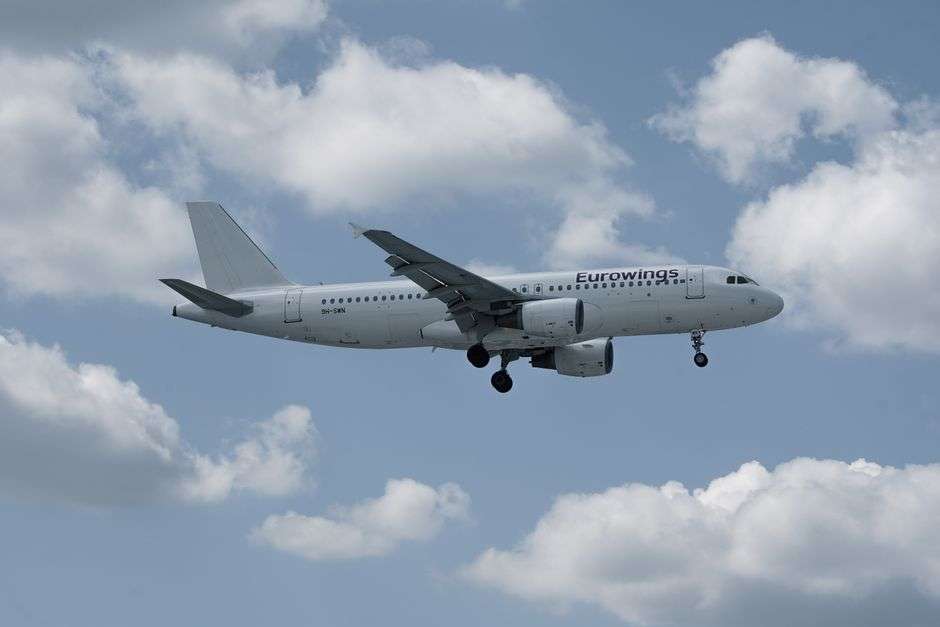
Airbus will build a third final assembly line for commercial jets at Brookley Aeroplex in Mobile, the company announced Monday during an event at Bishop State Community College that also celebrated the opening of a new advanced manufacturing training center for the aerospace industry. The announcement means the aircraft manufacturer will roughly double its production capacity in the Port City, cementing an operation that has grown steadily since its first line opened a little more than a decade ago.
The ceremony was held at Bishop State’s Advanced Manufacturing Technology Center in downtown Mobile, a deliberate choice that tied the company’s expansion to the workforce that builds its airplanes. Airbus expects the new line to begin building airplanes in early 2025, with the added capacity driven by rising customer demand across the company’s commercial aircraft business as airlines around the world replace aging fleets and pursue more fuel-efficient single-aisle jets.
Daryl Taylor, vice president and general manager of Airbus’s Mobile final assembly line sites, told the crowd the company has produced roughly 300 aircraft since its first Mobile assembly line opened. He said the new line will more than double that pace of production and thanked the local community for its support over the years — including in the years after Airbus lost an earlier bid for a U.S. Air Force tanker contract and, rather than leaving, decided to build its first commercial assembly line in Mobile instead.
“You all rallied around us when we were bringing in the first (final assembly line),” Taylor said. “Thank you for your continued support.”
A decade of growth at Brookley
Airbus first announced plans to bring an A320 final assembly line to Mobile in 2012, a milestone that Mobile Mayor Sandy Stimpson referenced during Monday’s event. Stimpson recalled that the original announcement came on July 3, 2012, and noted that former Mobile Mayor and current state Rep. Sam Jones was in the audience Monday, just as he had been for the first announcement a decade earlier.
“Mayor Jones, I know you had to be the happiest mayor in Alabama on that day,” Stimpson said. “Well, now I’m the happiest mayor in Alabama.”
The arc between the two announcements traces one of the most successful industrial development stories in the modern South. The 2012 decision followed the stinging loss of the tanker contract, when Mobile had spent years preparing to host military aircraft work at Brookley. City and county officials had assembled land, incentives and workforce programs for the tanker bid, and when that project went elsewhere, the groundwork did not go to waste — it became the foundation for the commercial bid that followed.
Stimpson said the expansion, combined with Airbus’s existing Mobile operations, will make the city the fourth-largest producer of commercial aircraft in the world, joining the ranks of Toulouse, Hamburg and Tianjin in Airbus’s global production network. For a city that built its industrial identity on shipbuilding, paper and the port, standing alongside Europe’s aerospace capitals in that ranking is a redefinition of what Mobile makes and who it sells to.
How a Mobile assembly line actually works
A final assembly line is the last and most visible stage of a long manufacturing chain. Major sections of each aircraft arrive at Brookley from Airbus plants in Europe, and Mobile crews join the fuselage sections, attach the wings and tail, install systems and cabins, test the aircraft, and roll completed jets out for paint and delivery. The work is labor-intensive, highly specialized and unrepeatable anywhere else in the Western Hemisphere, which is why the line’s growth has pulled suppliers and service firms into the region behind it.
Doubling the pace of production does not simply mean doing the same work twice as fast. It means a second wave of hiring, expanded hangar space, more flight-test and delivery activity at Brookley’s runways, and a deeper bench of skilled trades — structures mechanics, avionics technicians, cabin finishers — than Mobile has ever supported at one time. Each additional line compounds the demand for those skills.
Why Bishop State sits at the center
That is where Bishop State Community College enters the story, and why the training center’s opening was celebrated in the same breath as the assembly line announcement. The two-year college has become the front door to aerospace manufacturing careers for Mobile residents who never considered the industry within reach, offering hands-on programs in the same skills the assembly line consumes daily.
The advanced manufacturing model that Mobile has built around Airbus — community college training pipelines feeding a single anchor employer — has drawn attention from economic developers across the country. Community colleges move quickly, employers can shape curriculum directly, and students see a clear line from coursework to a job at union-scale wages without leaving home. The new training center formalizes that pipeline as the plant’s needs double.
It also broadens who benefits from the aerospace boom. Final assembly hiring at Brookley has drawn from neighborhoods across the city, and programs housed at Bishop State put the entry ramp downtown rather than behind the plant’s gates. For a community college whose student body reflects the city itself, hosting the announcement was both symbolic and practical: the people in the audience are the recruiting pool for the jobs being created.
A cast of characters that keeps returning
The event also served as a reunion for many of the officials and community figures who shepherded the original deal. State and local leaders who helped assemble the incentive package in 2012 have watched each successive expansion validate the decision, and each announcement has drawn the same core group back to a podium — a continuity that is itself part of the project’s story. Industrial recruitment usually measures success in jobs and capital investment; the Mobile measure has been the compounding of a single relationship between a city and a manufacturer that keeps choosing it.
For the workers in the audience, the announcement read differently. A third line means second shifts of hiring classes, more weekend testing flights over the bay, and new colleagues moving through the same doors. People who joined the first assembly line as entry-level mechanics now hold lead and supervisory roles, and the expansion gives them the same path to offer the next generation coming out of the Bishop State program.
The economics behind the expansion
Airbus’s decision to add a third line in Mobile reflects fundamentals that have only strengthened since 2012. The A320 family and its neo variants have become the best-selling single-aisle aircraft in the world, and airlines in North America — the fastest-growing market for new deliveries — place orders measured in years of production backlog. Building aircraft closer to those customers shortens delivery logistics and insulates the program from transatlantic bottlenecks, which matters when an assembly line is trying to hit record output.
Mobile’s advantages have held up as well. Brookley Aeroplex offers deepwater port access via the Alabama State Port Authority, rail lines running onto the field, an available land package around the airfield, and a labor market now seasoned by years of aircraft production. Few sites anywhere combine all of those, and none in the United States offer an existing, proven final assembly workforce already producing at scale.
The multiplier effects extend well beyond the plant. Aerospace suppliers that arrived to support the first line have expanded with each announcement, and the skilled trades that assembly work requires — welders, machinists, electricians, quality inspectors — are the same trades that serve shipbuilding, energy and advanced manufacturing across the Gulf Coast. An aerospace economy raises the wage floor for all of them.
What comes next for Brookley
Between now and the new line’s start of production in early 2025, the work shifts to hiring and construction. Assembly line workers take months to train, and a workforce doubling on the existing timetable means recruiting and instructing new classes continuously for the next two years — a pace that the Bishop State center was designed to absorb. Facility work at Brookley will add the hangar and delivery capacity the third line requires, much of it visible from the roads that carry commuters past the airfield daily.
For local officials, the milestone closes a loop that began with a lost tanker bid more than a decade ago. The city that rallied around a wounded project in 2012 now anchors the fourth-largest commercial aircraft production center in the world, with three assembly lines, a downtown training campus, and a supply chain that reaches across the Gulf Coast. The numbers from Monday — roughly 300 aircraft built, capacity roughly doubling, production starting again in 2025 — will be updated many times in the years ahead, but the direction they point has not wavered since the first jet rolled out of a Mobile hangar.