Chatom Hospital Hosts Unveiling of Alabama’s 2026 Community Star for Rural Health
Washington County Hospital in Chatom hosted the Alabama Hospital Association and state health leaders as they introduced Alabama's 2026 Community Star as part of this year's National Rural Health Day.
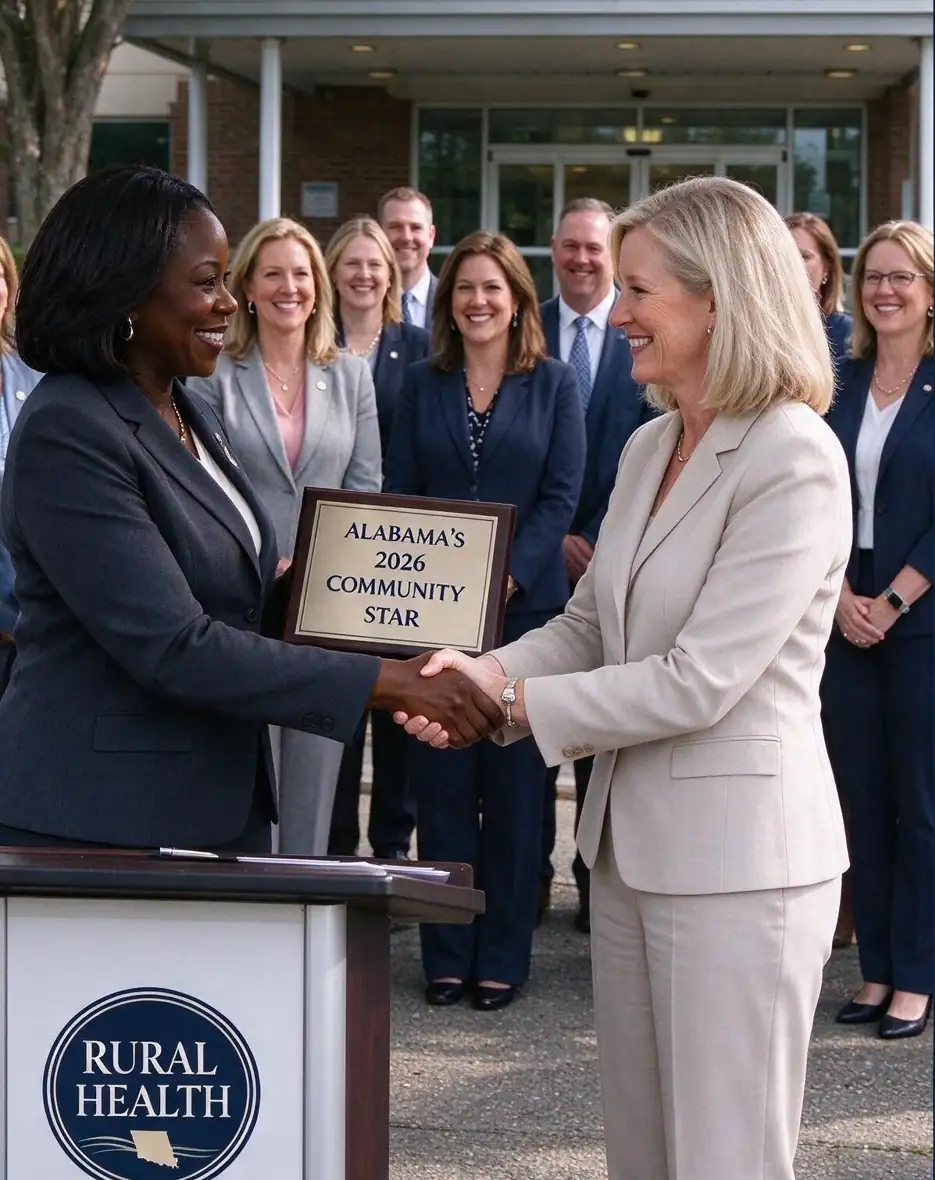
CHATOM, Ala. — A small hospital in one of southwest Alabama’s most rural counties took center stage Thursday as the state named the person it is holding up this year as a model of rural health leadership. The Alabama Hospital Association, joined by state health leaders, presented Alabama’s 2026 Community Star during a gathering at the Chatom hospital that doubled as the state’s National Rural Health Day observance.
Holding the event in Chatom put the focus squarely where the recognition is aimed: on the towns and countryside where access to a doctor, a hospital bed or an emergency room can mean a long drive, and where local people often fill the gaps that distance and limited resources leave behind.
What a Community Star Is
The Community Star designation is awarded by NOSORH, the National Organization of State Offices of Rural Health, an association that supports the rural health offices operating in each state. The organization bestows the title on individuals who are making a significant difference in rural health and in the quality of life of rural residents.
The program began in 2015. Since then, it has honored more than 300 individuals and organizations across the country, according to organizers. Each year, states put forward people whose work stands out in their communities, and those honorees are recognized as part of the national observance.
Because the honor can go to people as well as groups, Community Stars can come from many corners of rural life, whether clinical care, public health, emergency services, education or volunteer work. What ties them together is a record of improving the health of people living outside the nation’s urban centers.
The Day Behind the Celebration
National Rural Health Day falls on the third Thursday of November each year. The observance pays tribute to the people and groups striving to make medical care better in the countryside and small towns and to draw attention to the particular challenges those communities face.
The national rural health offices organization launched the day in 2011, and it has grown into an annual moment for hospitals, clinics, health departments and advocacy groups to highlight rural health work. This year the observance landed on Nov. 19, the same day Alabama introduced its Community Star in Chatom.
Why the Setting Matters
Washington County sits along the Mississippi state line north of Mobile County, a heavily wooded region where timber and related industries have long shaped the economy. The 2020 census counted 15,388 people in the entire county, spread over more than 1,000 square miles. Chatom serves as the county seat.
In a county of that size, the local hospital plays a role far beyond treating patients. It is often among the area’s significant employers, a source of emergency care for residents who would otherwise face a long trip to a larger city, and a hub for primary care and other services. Choosing such a hospital as the backdrop for the state’s announcement underscored the importance of small facilities to the communities that depend on them.
The Challenges Facing Rural Health in Alabama
Most of Alabama’s 67 counties are considered rural, and health leaders have spent years warning about the pressures on rural care in the state. Several challenges come up again and again:
- Distance. Rural residents often live far from hospitals, specialists and trauma centers, which can delay care in emergencies.
- Workforce shortages. Recruiting and keeping doctors, nurses and other health professionals in small towns is a persistent struggle.
- Hospital finances. Small hospitals treat fewer patients, and many serve higher shares of uninsured or publicly insured residents, which can strain budgets. Alabama has seen a number of rural hospitals close in recent years.
- Chronic disease. Rural areas tend to have higher rates of conditions such as heart disease, diabetes and obesity.
- Limited services. Obstetric care, mental health treatment and specialty care can be scarce or unavailable close to home.
Against that backdrop, recognitions like the Community Star program are meant to show that solutions are often local. Many of the people honored have found ways to bring screenings, clinics, transportation, health education or other services to neighbors who would otherwise go without.
Who Was Involved
The Alabama Hospital Association represents hospitals and health systems across the state and advocates on their behalf on issues such as funding, workforce and access to care. It joined state health leaders in introducing this year’s honoree at the Chatom event.
Each state has a State Office of Rural Health, and in Alabama that work is housed within the Alabama Department of Public Health. State rural health offices help connect rural communities with resources, support rural hospitals and clinics, and work on recruiting health care professionals to underserved areas. Through their national organization, those offices coordinate the Community Star program and National Rural Health Day.
The Role of Small Hospitals
Small rural hospitals often operate on thin margins and must offer around-the-clock emergency care with far fewer staff than a city medical center. Many share specialists through visiting clinics, rely on telemedicine connections to larger hospitals, and transfer the most serious cases by ground or air ambulance. Even so, a local emergency room can stabilize a patient during the critical first hour after a heart attack, stroke, crash or other emergency, buying time that can make the difference in survival.
Beyond emergencies, rural hospitals frequently provide laboratory testing, imaging, inpatient care, rehabilitation and, in some places, long-term care. Their payrolls support local households, and their presence can influence whether families and businesses choose to settle in a community. For those reasons, health leaders often describe a rural hospital as an anchor institution whose loss would ripple through an entire county.
How Rural Residents Can Take Part
National Rural Health Day is also an invitation for ordinary residents to support health care in their own communities. Some practical ways to do that include:
- Using local hospitals, clinics and pharmacies when appropriate, which helps keep those services viable.
- Getting recommended screenings, checkups and vaccinations to catch problems early.
- Volunteering with local health fairs, hospital auxiliaries, emergency medical services or community organizations.
- Thanking the nurses, doctors, first responders and staff who keep rural facilities running.
- Encouraging young people to consider careers in health care close to home.
Rural Health by the Numbers
Nationally, tens of millions of Americans live in rural areas, roughly one in five residents of the country. They are, on average, older than people in cities and suburbs, and they are more likely to travel long distances for hospital and specialty care. Those realities are a major reason state rural health offices exist and why the national observance each November focuses attention on the workers and volunteers who serve these communities.
A Recognition Rooted in Community
The Community Star title is not a grant or a prize in the traditional sense. Its value lies in recognition: drawing statewide and national attention to work that is often quiet, unpaid or overlooked. For a county like Washington, hosting the state’s announcement offered a moment to celebrate local health care and the people who make it possible.
As Alabama’s 2026 honoree joins a national roster of more than 300 Community Stars recognized since 2015, the Chatom gathering served as a reminder that the future of rural health care depends in large part on people willing to step up in their own hometowns.