Mobile Outreach Team Takes Medical Exams, Shelter Help and Addiction Referrals to People Living on the Streets
AltaPointe's PATH team brought medical exams, prescription help, shelter assistance and treatment referrals to a Mobile church, part of monthly outreach aimed at people experiencing homelessness.
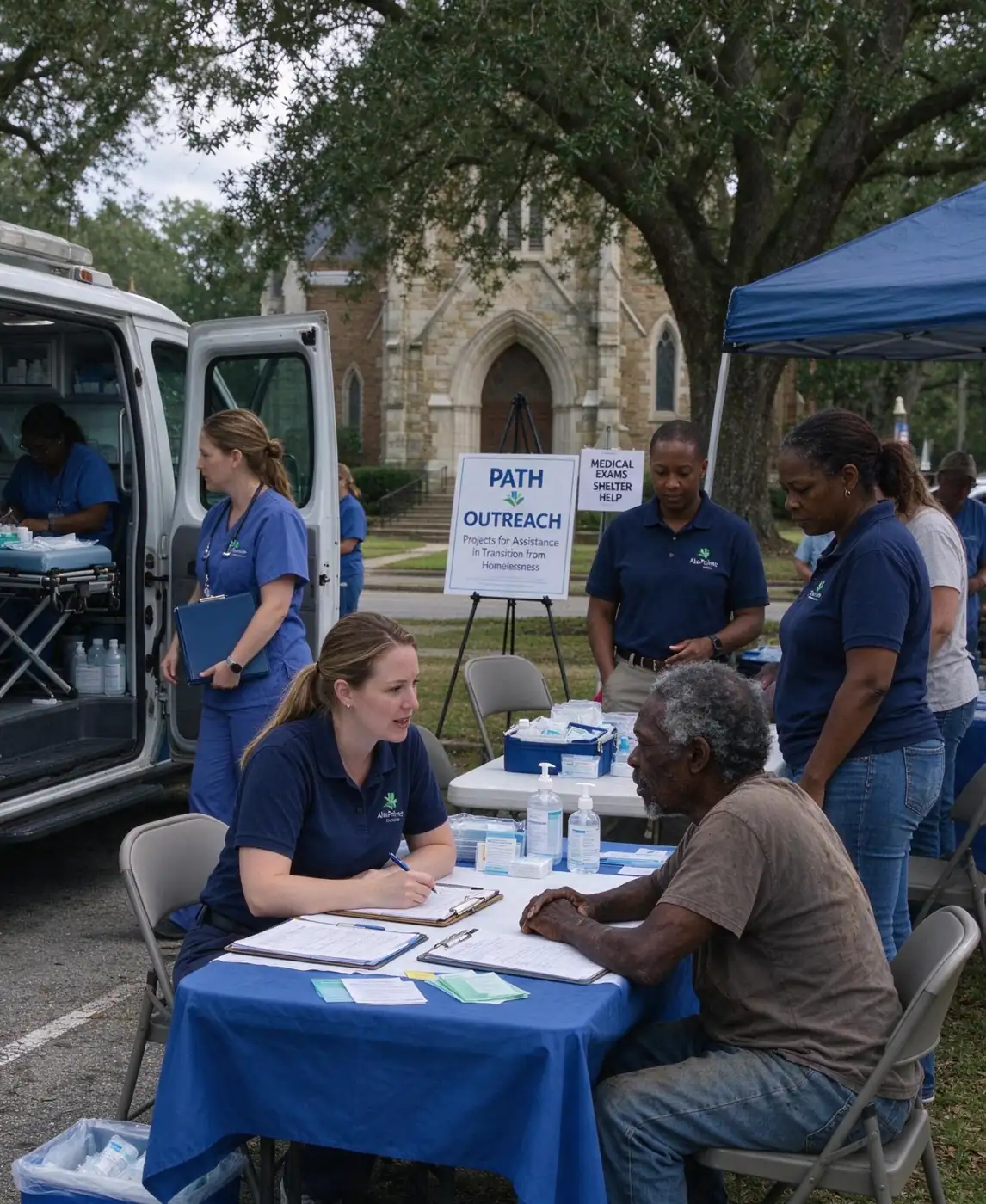
MOBILE, Ala. — For people living on the street, the hardest part of getting help is often just reaching it. AltaPointe Health’s homeless outreach team is trying to close that gap by setting up shop where people already are, and a recent pop-up held on the grounds of Mobile’s All Saints Episcopal Church offered medication help, shelter and housing assistance, addiction treatment referrals and full medical exams in a single stop.
The effort is run by AltaPointe’s PATH team, short for Projects for Assistance in Transition from Homelessness. The team holds outreach events at locations around the Mobile area every month.
Services Offered in One Place
At the church event, visitors could get help with several needs at once:
- Prescription services to help people obtain and keep up with medications
- Housing and shelter assistance for those trying to get a roof over their heads
- Referrals for substance use treatment
- Complete medical exams provided on site through the outreach van operated by AltaPointe’s Crisis Center
Team members explained that gathering all of those services in one location lets staff move people through the paperwork and intake steps quickly, taking care of the biggest needs first and then turning to more urgent individual problems. Staff described that one-stop setup as especially valuable.
Why Meeting People Where They Are Matters
Help exists for people experiencing homelessness, but the path to it is full of obstacles. A primary care doctor working with the outreach effort said many patients cannot find a ride to a clinic. Others feel intimidated by medical offices or, for a range of reasons, have lost trust in the health care system altogether. Taking care directly into the community, the physician said, helps tear down those barriers.
Those barriers are familiar to anyone who works in homeless services. Appointments may be scheduled weeks out, bus routes may not line up with clinic hours, and paperwork often requires an address, a phone number or identification documents that a person living outside may not have. Missing a single appointment can mean starting the process over. Outreach events like PATH’s are designed to cut out as many of those steps as possible.
Basic health problems can also snowball for people without stable housing. A minor wound, an untreated infection or a lapse in medication for a chronic condition such as diabetes, high blood pressure or a mental illness can turn into an emergency room visit or a hospital stay. Catching those issues early, during an exam at a neighborhood outreach event rather than in an ambulance, benefits both the patient and a strained health care system. Likewise, keeping someone on prescribed medication can make it easier for that person to hold onto a shelter bed, follow through with housing applications and stay engaged with treatment.
One Man’s Road Back
The impact of the program is clearest in the experiences of the people it serves. One man who moved to Mobile from Birmingham spent about seven months without a home after his arrival. He described that time as difficult in every way. People who had housing tended to look down on him, he said, while others who were also living on the street sometimes took advantage of him. There were many moments, he said, when he wanted to give up.
The PATH team connected him with shelter and other help that allowed him to regain his footing. Since leaving the street, he has found a creative outlet: he now sells his artwork at a local gallery during Mobile’s monthly Art Walk.
He said art has become his way of working through his emotions, and that he has not needed therapy in more than a year. For the first time in four decades, he said, he is happy.
He said he hopes sharing his story will persuade others in the same situation to ask for help. Plenty of people promise assistance without following through, he said, but the PATH staff kept their word. His advice to anyone who can access resources is to set aside embarrassment and take the help that is offered. He described his own transformation as going from simply trying to survive to looking forward to what comes next.
How to Connect With PATH
Anyone who needs assistance from the PATH team, or who wants to help someone else get connected, can call AltaPointe’s Open Access Line at 251-450-2211.
Family members, friends, church volunteers and others who regularly encounter people experiencing homelessness can pass the number along. A phone call can be the first step toward an assessment and a link to the services a person needs.
What PATH Is
Projects for Assistance in Transition from Homelessness is a federal program administered by the Substance Abuse and Mental Health Services Administration, known as SAMHSA. Created by Congress in 1990, it sends formula grants to every state and several U.S. territories, which in turn fund local agencies to deliver services.
PATH is aimed at people who are homeless or at imminent risk of homelessness and who are living with serious mental illness, including those who also have a substance use disorder. Its emphasis is on street outreach and engagement with people who might not otherwise seek care. Common PATH services include:
- Outreach and screening
- Case management
- Referrals for primary health care, job training, education and housing
- Community mental health services
- Alcohol and drug treatment referrals
- Help connecting to benefits and other support
The program is designed as a bridge: it is meant to engage people and connect them with mainstream mental health, housing and medical services rather than to serve as permanent care.
About AltaPointe
AltaPointe Health is a behavioral health care system based in Mobile that serves Mobile and Baldwin counties as well as other parts of Alabama. It offers outpatient mental health and substance use services for children and adults, psychiatric care, crisis services and primary care integrated with behavioral health. Its Crisis Center serves people experiencing a mental health emergency, and its mobile outreach van allows staff to bring medical care into the community, as it did at the church event.
The Bigger Picture in Mobile
Homelessness in the Mobile area, as in much of the country, is driven by a mix of factors including rising rents, a shortage of affordable housing, job loss, untreated mental illness, addiction and family breakdown. Local shelters, faith communities, nonprofit agencies and health providers work together through a regional network of homeless service providers to coordinate housing placements and services.
Churches such as All Saints Episcopal often play an important role by opening their doors and grounds for events like this one, giving outreach teams a familiar, welcoming location that people can easily reach on foot.
Ways the Community Can Help
- Share the Open Access number, 251-450-2211, with anyone who may need it.
- Treat people with dignity. As the man who regained his footing noted, being looked down on can make it harder to reach out.
- Support local shelters and service agencies through donations or volunteering.
- Call 911 if someone appears to be in immediate medical danger, and call or text 988 to reach the Suicide and Crisis Lifeline when someone is in emotional crisis.
For people still on the street, the message from the PATH team and from those it has helped is the same: assistance is available, and it can come to you.