Smart Glasses in a Federal Courtroom: Mobile Woman Pleads Guilty to Targeting Drug Trial Witnesses
Tierra Shatalia Douglas, 35, of Mobile, admitted she wore smart glasses to secretly film three witnesses at a January federal drug trial and then harassed one of them for months. She faces sentencing Feb. 19.
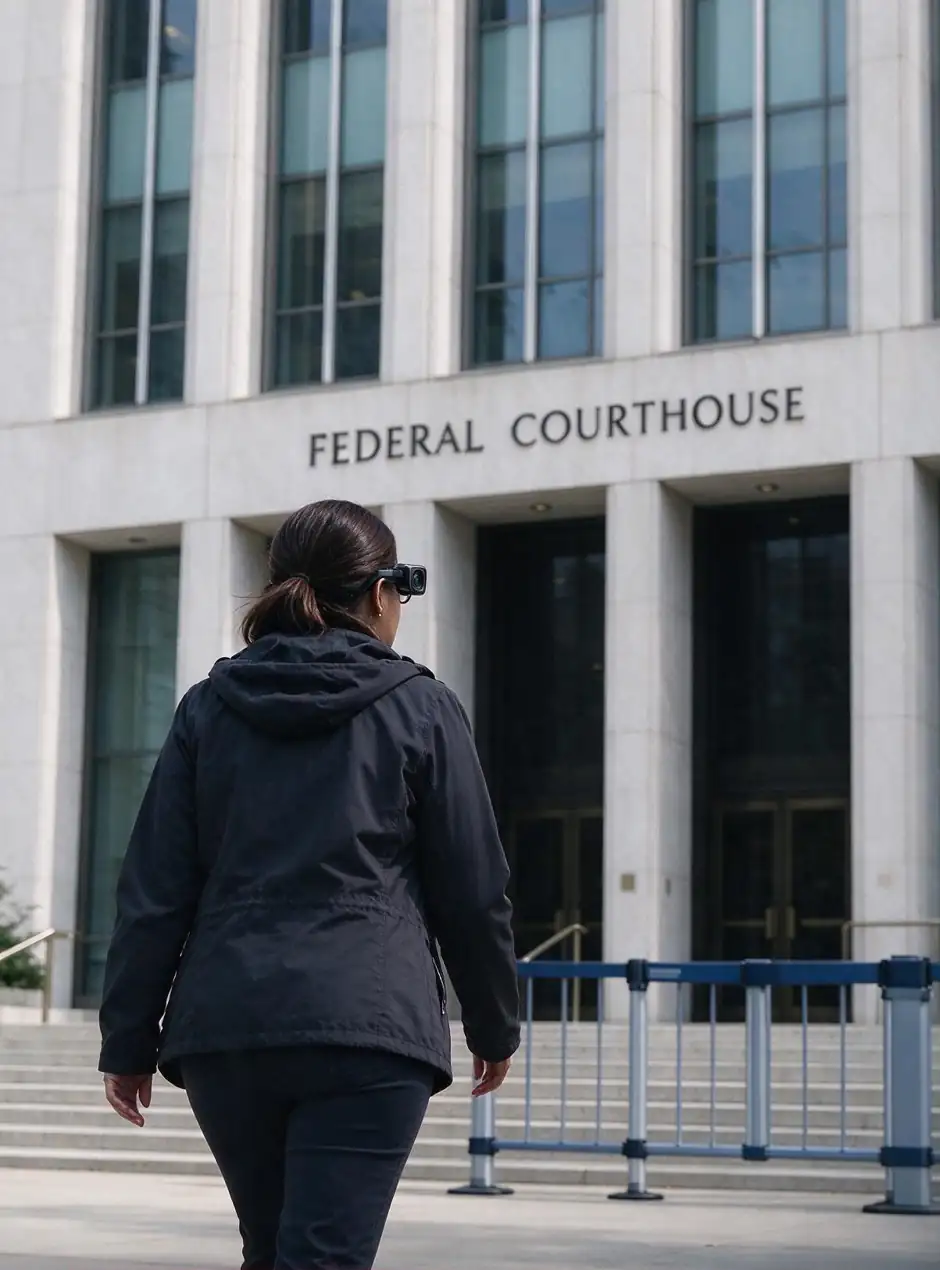
MOBILE, Ala. — A Mobile woman wore camera-equipped smart glasses into the federal courthouse during a high-profile drug trial in January and used them to covertly record three people who took the witness stand, she admitted Thursday as she pleaded guilty to a federal retaliation charge.
Tierra Shatalia Douglas, 35, entered a guilty plea to a federal count of conspiring to retaliate against a witness. Her written plea agreement lays out a campaign that went far beyond the courtroom: she worked with others to gather personal information on witnesses, spread a flyer branding one man an informant, posted online messages that singled out one of his underage children and the school that child attends, and kept taunting him by text for weeks after the trial ended. At one point, the plea paperwork says, she even turned to an artificial intelligence chatbot for help making a flyer, only to be refused.
Douglas is scheduled to be sentenced Feb. 19. The offense can be punished by up to life behind bars, though the government has agreed to ask the judge for leniency.
The Trial at the Center of the Case
The recordings were made as Glennie McGee went on trial in January. McGee is a reputed drug kingpin who now stands convicted, and two relatives, his spouse and the sister of his spouse, were tried with him. Douglas had been upset over the government’s case against him.
Cameras and other recording devices are not allowed in federal courtrooms. The rules governing federal criminal cases forbid photographing proceedings or broadcasting them, and courthouses typically restrict or screen electronic devices at the entrance. Smart glasses, which can resemble ordinary eyewear while hiding a small camera in the frame, present an obvious challenge for that kind of security.
According to her admissions, Douglas wore such glasses inside the courthouse and used them to secretly record three of the witnesses who testified for the government.
A Witness Discovers He Was Filmed
The consequences surfaced quickly. On Jan. 16, one witness learned that footage of him was circulating when a friend forwarded him a video. It showed him walking out of the courtroom after his testimony.
Douglas acknowledged that she then distributed a flyer that included that witness’s photo and labeled him as someone who had cooperated with authorities. She also admitted sending messages over the internet that pointed out one of the man’s underage children and named that child’s school.
The harassment of that witness continued into February, when, the plea deal states, Douglas sent him a string of text messages mocking him for testifying. She had saved his number in her phone under a derogatory nickname that cast him as a rat.
Turning to a Chatbot
Among the more unusual details in the plea document is Douglas’s attempt to get help from ChatGPT. In August, months after the trial, she asked the AI chatbot to design a flyer that would brand one of the witnesses an informant.
The chatbot declined. It responded that it would not produce material labeling an actual, identifiable person as a confidential source for police, but offered instead to produce an image that was plainly marked as a fictional character or a parody. The episode, recorded in the court filing, shows how long the campaign against the witnesses lasted, stretching some seven months beyond the trial.
How Investigators Built the Case
Douglas did not act alone. She admitted communicating with co-conspirators in an effort to obtain personal details about the witnesses, the kind of information that can be used to locate, threaten or shame someone.
Investigators assembled proof that included footage from the courthouse’s own security cameras. Faced with that material, Douglas confessed, the plea paperwork states.
Key Facts
- Defendant: Tierra Shatalia Douglas, 35, of Mobile
- Plea: Guilty to conspiring to retaliate against a witness
- Underlying trial: January federal drug trial of Glennie McGee and two of his relatives
- Admitted conduct: Secretly recording three witnesses with smart glasses; seeking witnesses’ personal information with others; distributing a flyer labeling a witness an informant; identifying a witness’s child and school online; sending taunting texts
- Evidence: Included courthouse surveillance video
- Maximum penalty: Life in prison
- Sentencing: Feb. 19, with prosecutors agreeing to recommend leniency
Why Witness Retaliation Is Treated So Seriously
The federal justice system depends on people being willing to come forward and testify, often against dangerous or well-connected defendants. Witnesses in drug cases in particular may fear for their safety and that of their families if their identities and cooperation become widely known.
Federal law makes it a crime to retaliate against someone for testifying or for providing information to law enforcement, and conspiring with others to do so is punished as seriously as the underlying offense. Penalties scale with the severity of the conduct and the case involved, and in the most serious situations the law allows sentences up to life in prison.
Targeting a witness’s children is viewed as especially grave. Publicly connecting a minor and a school to someone labeled as an informant can expose a child to danger and is the kind of pressure the witness protection laws were written to prevent.
What Happens at Sentencing
A guilty plea does not set a defendant’s punishment. Before the Feb. 19 hearing, federal probation officers will prepare a presentence report that reviews the offense, the defendant’s background and the calculations under the federal sentencing guidelines. Prosecutors and defense attorneys can file arguments about what sentence is appropriate.
The government has promised to seek a more lenient sentence, but a federal judge is not bound by that recommendation. The judge will weigh the guidelines, the circumstances of the crime, the harm to the victims and the factors federal law requires before deciding on a sentence. The life maximum represents the upper limit allowed by law, not a likely outcome.
Plea agreements in federal court often involve a recommendation for a reduced sentence when a defendant accepts responsibility early, which can spare witnesses from having to testify again and save the government the expense of another trial.
Protecting Witnesses After the Verdict
The case also shows that the danger to witnesses does not necessarily end when a jury returns its verdict. In this instance, the conduct Douglas admitted stretched from the January trial into February and then into August, long after the witnesses had left the stand.
Federal prosecutors and agents have several tools to protect people who testify. They can seek protective orders limiting the release of witness information, ask that defendants or associates be barred from contacting witnesses, and, in the most serious cases, refer witnesses for relocation and security assistance. When intimidation or retaliation does occur, investigators can bring new charges, as happened here.
Anyone who believes they are being threatened or harassed because they cooperated with law enforcement or testified in a case should contact the prosecutor’s office or investigating agency handling that case, or call 911 in an emergency. Saving messages, screenshots, flyers and other evidence can help investigators build a case.
Social Media and the Spread of Informant Labels
Labeling someone an informant online has become a recurring concern in criminal cases nationwide. A single post or image can be shared widely within minutes, reaching people far beyond the original audience and potentially putting the person named, and their family, at risk. Courts and prosecutors have increasingly treated that kind of online exposure as a form of intimidation or retaliation when it is aimed at people who testified or helped investigators.
The chatbot’s refusal in this case reflects safeguards that many AI developers have built into their tools, which are designed to decline requests that would accuse real, identifiable people of wrongdoing or expose them to harm.
Wearable Cameras and Courtroom Security
The case highlights a growing concern for courts as wearable technology becomes more common and harder to spot. Smart glasses now on the consumer market can capture photos and video with little more than a tap on the frame, and some models look nearly identical to standard sunglasses or prescription frames.
Courts across the country restrict cellphones, cameras and recording devices to protect jurors, witnesses and the integrity of proceedings. Visitors to the federal courthouse in Mobile pass through security screening, and court rules prohibit recording inside courtrooms. Anyone with questions about what may be brought into a federal courthouse can check the court’s posted rules before arriving.
What Comes Next
Douglas will return to federal court in Mobile on Feb. 19 for sentencing. In the meantime, the case stands as a reminder that recording witnesses and spreading their identities in an effort to punish them for testifying can lead to a federal conviction, even when the recordings are made with a device that looks like an ordinary pair of glasses.