Alabama Gas Prices Dip to $3.57 a Gallon, but GasBuddy Warns a Rebound May Be Coming
Alabama's average gas price fell 2 cents to $3.57 a gallon this week, but GasBuddy says oil market pressures could send prices higher again soon.
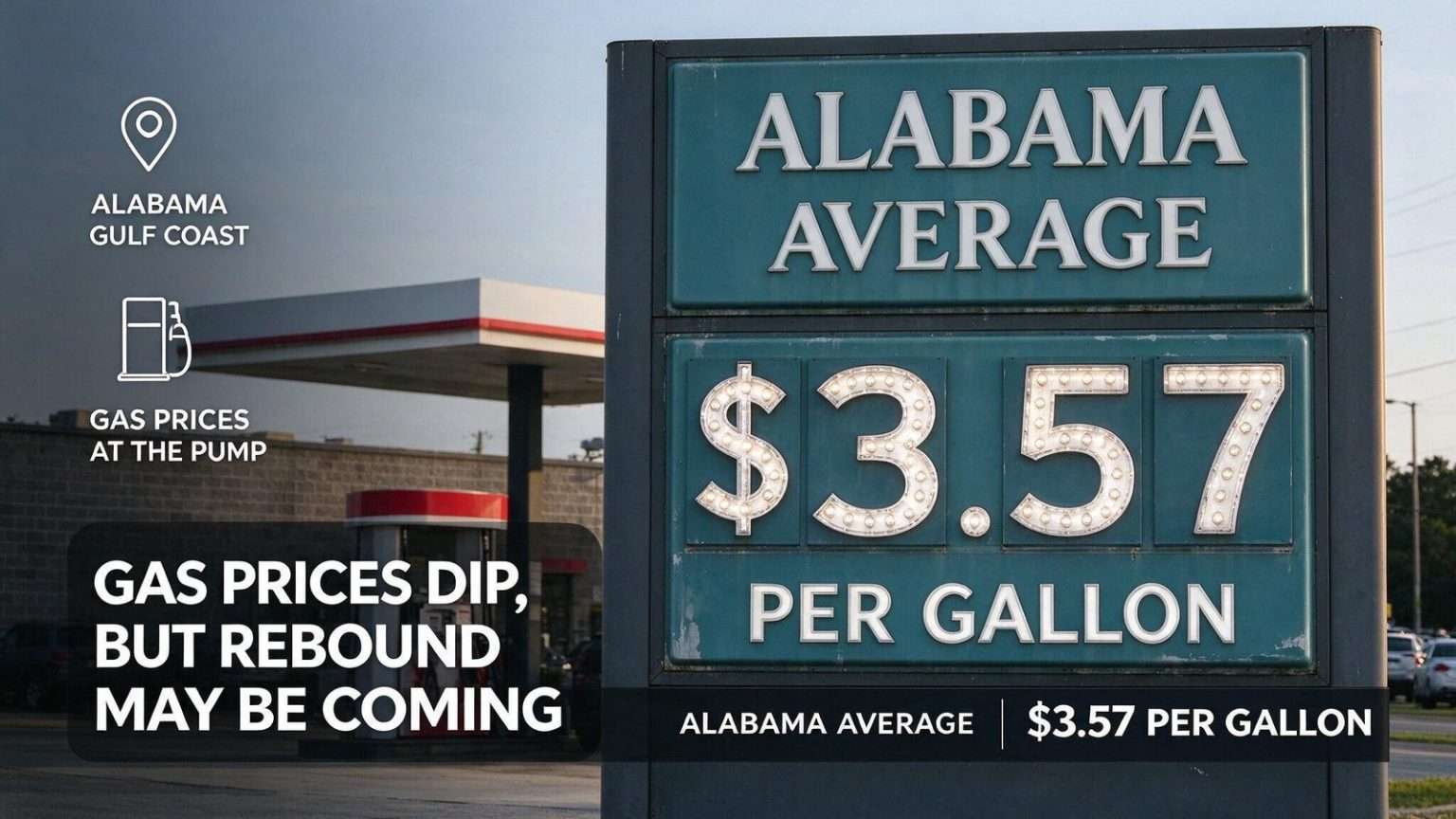
Drivers across Alabama got a small break at the pump this week, with the statewide average price of a gallon of regular gasoline falling 2 cents to $3.57, according to the latest tracking from GasBuddy, the fuel-price monitoring service widely used by motorists and industry analysts alike.
The dip, while modest, offers brief relief for commuters and travelers in Mobile and Baldwin counties, where daily driving distances between work, school and coastal destinations can add up quickly. Even small swings in the price per gallon are felt by households across South Alabama, from families budgeting for back-to-school commutes to tourists fueling up for trips along the Gulf Coast.
Why Prices Fell, and Why That May Not Last
GasBuddy, which aggregates real-time price reports submitted by drivers at thousands of stations nationwide, said the recent decline should not be mistaken for a lasting trend. The service pointed to pressures building in the broader oil market that could push prices back upward in the days ahead, a reminder that gas prices tend to move in short-term cycles driven by factors far beyond any single station or city.
Crude oil costs, refining capacity, seasonal demand and global supply decisions all play a role in what drivers ultimately pay at the pump. Even a two-cent dip like the one recorded this week can reverse quickly if oil markets tighten, which is why services like GasBuddy caution consumers against assuming a downward trend will continue.
What It Means for South Alabama Drivers
For residents of Mobile and Baldwin counties, gas prices are more than an abstract economic indicator. Many households rely on personal vehicles for daily commutes, and the region’s tourism-driven economy along the Gulf Coast means fuel costs also factor into the cost of getting to and from popular destinations like Gulf Shores and Orange Beach.
Local drivers looking to track prices in real time can use apps such as GasBuddy to compare costs between nearby stations, and the differences between stations in the same city can exceed the statewide week-to-week swing. On a fifteen-gallon fill-up, a ten-cent difference between two stations amounts to a dollar and a half — small in isolation, but meaningful when repeated every week across a household’s budget.
The region’s commuting patterns amplify fuel costs. Mobile’s workforce spreads across the bay and the port area, and Baldwin County’s growth has pushed residents farther from employment centers, lengthening daily drives. For a family with two commuters, each dollar added to the price of a gallon translates into hundreds of dollars a year at the pump.
Alabama’s fuel taxes are among the lowest in the nation, which historically keeps the state’s average below many neighbors — though the state’s 2019 fuel-tax increase, a phased 10-cent rise earmarked for road and bridge work, narrowed that advantage. What remains is a pump price shaped by three forces: the global crude market, regional refinery and pipeline dynamics, and a comparatively modest state tax.
Gulf Coast refining concentrates a large share of the nation’s gasoline production within a few hundred miles of Alabama, and the Colonial Pipeline’s route through the state connects local supply to the Gulf’s output. When refineries run well and pipelines flow, Alabama drivers generally see prices below the national average; outages, storms and seasonal fuel-switching can push the state’s prices higher in a hurry.
The Season Behind the Numbers
Gasoline prices follow a seasonal rhythm as reliable as school calendars. Prices typically climb from late winter through the summer driving season as refineries switch to costlier summer-blend fuel and demand peaks with vacation travel, then ease into the fall as stations draw down to cheaper winter blends. A dip during any stretch of that cycle invites the same question GasBuddy posed this week: is this the start of a slide, or a pause before the next climb?
The service’s caution reflects how the last several years have trained consumers. Pandemic-era swings, hurricane disruptions to Gulf refining, and international supply decisions — including production choices by oil-exporting nations — have produced price movements that no weekly trend predicted. A two-cent dip can evaporate overnight on refinery news, which is why analysts emphasize the market context over the number on the sign.
Crude oil remains the dominant driver. Gasoline is a refined product whose wholesale price tracks the cost of the crude it comes from, and crude is priced on global markets where geopolitics, production quotas and inventory reports move costs before any Alabama station changes its sign. Regional factors — refinery maintenance schedules, pipeline flows, local inventories — layer on top of that base.
How Drivers Actually Save
Consumer behavior shifts with price levels in predictable ways. When averages climb past certain thresholds, drivers consolidate errands, carpool more often, and comparison-shop more aggressively; when prices fall, those habits loosen. GasBuddy’s data shows that the spread between the cheapest and most expensive stations in a given metro is consistently larger than any week-to-week movement of the average, making station choice the most actionable saving available to most drivers.
App-based price tracking has made that spread visible, and station clusters near highway interchanges — including the I-10 corridor that carries beach traffic through Mobile and Baldwin counties — tend to price differently than neighborhood stations a few blocks away. Tourist routes price for convenience, while commuter corridors compete on volume.
Vehicle maintenance matters too. Underinflated tires, clogged air filters and aggressive acceleration measurably cut fuel economy, and a driver stretching a tank through Mobile’s spread-out geography can offset a good chunk of any price increase with driving habits alone.
For now, the statewide average sits at $3.57, two cents cheaper than last week and, by GasBuddy’s own warning, possibly near the bottom of its move. Drivers planning beach trips or long commutes can lock in the modest savings while they last — and keep an eye on the crude market, which will ultimately decide whether the next sign they pass is lower or higher.
Tourism and the Fuel Bill
Baldwin County’s beach economy makes fuel prices a shared concern for businesses and visitors alike. Gulf Shores and Orange Beach draw millions of visitors annually, most arriving by car from Alabama, Georgia, Tennessee and the Midwest, and fuel is a line item in every family’s vacation budget. When prices rise ahead of peak season, destinations feel it in shortened stays and thinner spending on the coast; when prices ease, the drive down Highway 59 or I-65 gets a little cheaper for everyone.
Local hospitality businesses watch the same numbers. Charter boats, rental agencies and attractions all carry fuel costs of their own, and gas prices feed directly into trip pricing for everything from fishing excursions to jet ski rentals. A sustained move in crude markets ripples through the coastal economy within weeks.
The port city’s commercial side feels it too. Mobile’s port, chemical plants and paper mills consume fuel and diesel at industrial scale, and diesel prices — which track gasoline closely — feed into the cost of every good trucked into the region. Inflation at the pump is rarely confined to the pump.
Reading the Signs Right
Economists caution against reading too much into any single weekly move. GasBuddy’s statewide averages are compiled from hundreds of daily station reports, and a two-cent shift sits within the normal noise of the data. What makes the number newsworthy is the service’s accompanying warning: the same market pressures that produced the dip could reverse it, and the service’s analysts track crude inventories, refinery utilization and demand trends to gauge which way the next weeks will bend.
Drivers who want to time a fill-up can watch a few indicators themselves. Local prices tend to rise slightly before holiday weekends, drift downward midweek at competitive stations, and follow crude oil headlines with a lag of several days to a few weeks. None of those patterns is a guarantee, but together they explain why two neighbors can fill up the same day and pay meaningfully different amounts.
The long view matters as well. Alabama’s average has spent recent years oscillating with the global market — falling hard when demand collapsed, surging with supply shocks, and settling between extremes as the market found its footing. A $3.57 average represents a middle ground that many drivers and analysts alike have learned to treat as fragile rather than stable.
Regional comparisons frame the state’s position too. Alabama’s average typically runs below the national figure and below many Southeastern neighbors, a gap explained largely by taxes and proximity to Gulf refining. That structural advantage softens the blow when crude climbs, and it means the state’s drivers often feel international market swings a bit less sharply than consumers farther from the Gulf.
For South Alabama households, the practical takeaway is unchanged: the two-cent dip is real but small, the risks of reversal are real, and the biggest savings remain the ones within a driver’s control — where to fill up, how to drive, and whether the next trip to the beach starts with a full tank bought at the right station.