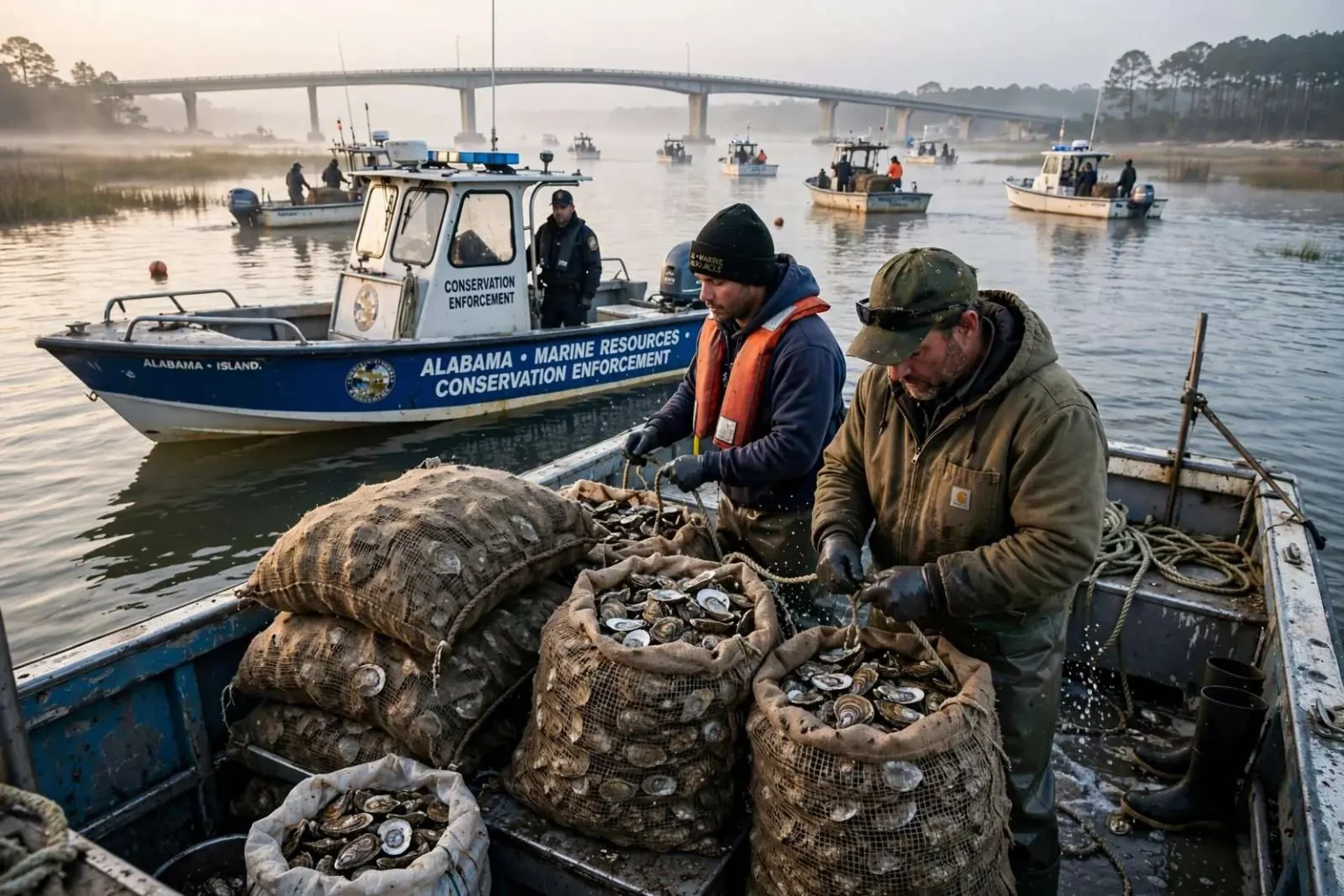
Alabama’s oyster harvesting season began Monday, with harvesters launching their boats near the bridge to Dauphin Island early in the morning for the start of what officials expect to be a productive season.
Scott Bannon, director of the Marine Resources Division for the Alabama Department of Conservation, said this year’s harvest is expected to match last season’s results.
“We’re hoping for about 20,000 sacks of oysters which is about 2 million pounds. Last year we were open for about 47 days,” Bannon said.
Enforcement officers were out in full force making sure harvesters didn’t exceed their sack limit. They were also checking to make sure the oysters met the minimum size requirement of three inches.
This year brings a significant change for recreational oyster catchers, who are now required to purchase recreational harvest tags. Tags are available at the Oyster Management Station at 16871 Dauphin St. Recreational oystercatchers are allowed to harvest 100 legal-size oysters per person once a day.
Commercial oyster catchers are required to purchase a commercial oyster catcher’s license. They are allowed to harvest six sacks of oysters per person or vessel once a day. Commercial oyster catchers can visit the Marine Resources Division at 2 North Iberville Drive or call 251-861-2882 for more information.
Recreational oyster catchers are allowed to harvest in the same area as commercial catchers. However, recreational and commercial catches cannot be transported together.
Oyster harvesting areas in Alabama can also be closed temporarily during the season. The Alabama Department of Public Health monitors shellfish-growing waters and closes harvest areas when heavy rainfall and high river levels raise the risk of bacterial contamination, reopening them once conditions improve.