

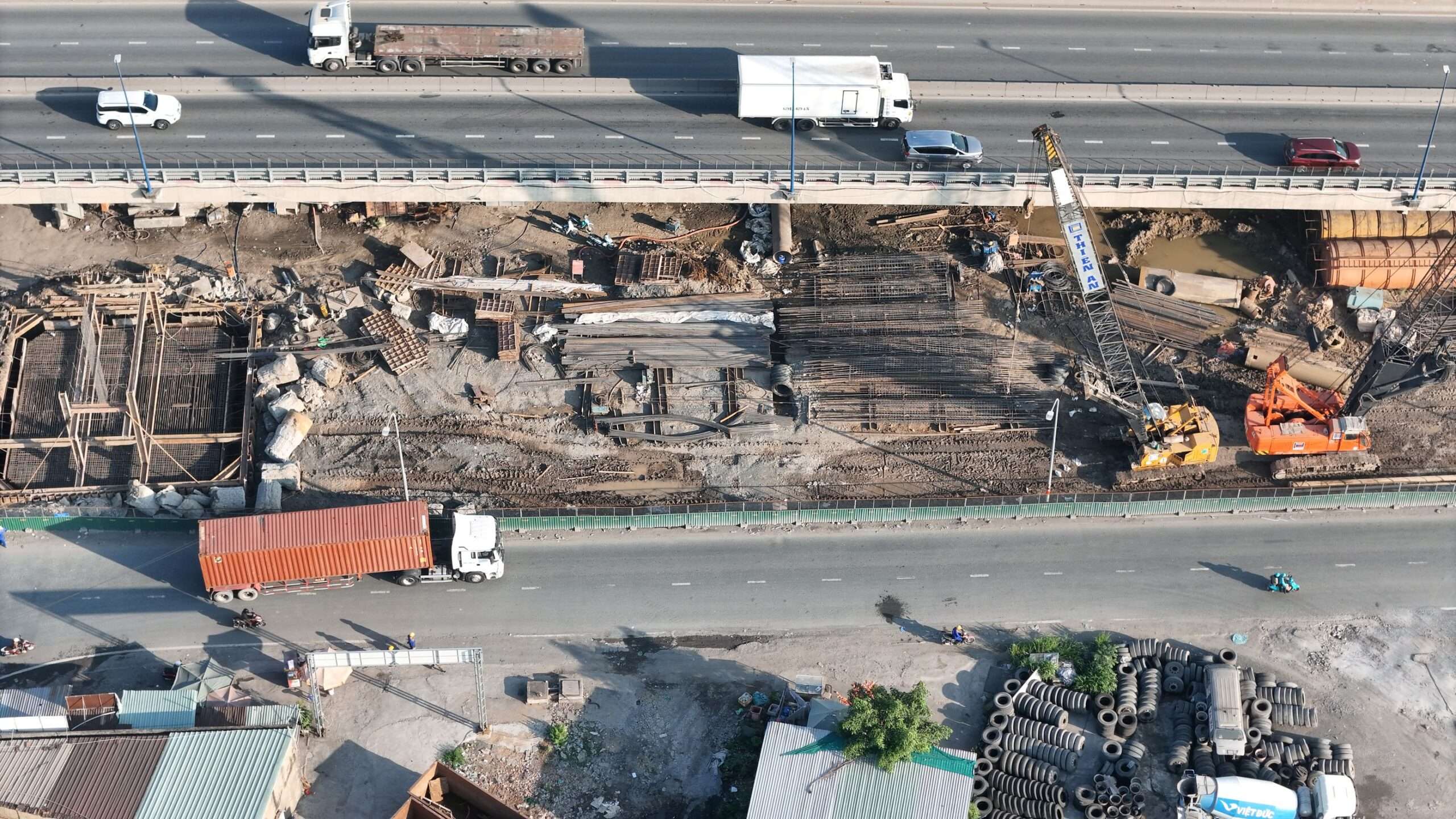
Construction on the $3.2 billion Interstate 10 Mobile River Bridge and Bayway project could be authorized within weeks, putting one of the largest infrastructure undertakings in Alabama history on the verge of breaking ground after nearly three decades of planning. Tony Harris, chief of communications and government relations for the Alabama Department of Transportation, told the Legislative Joint Transportation Oversight Committee on Wednesday in Montgomery that a Transportation Infrastructure Finance and Innovation Act (TIFIA) loan covering up to 49% of the project's cost is expected to close by mid-September.
That loan is considered the last major piece needed before construction can formally begin. "For a project that has been hurry up and wait, we believe we have a path forward and can begin soon," Harris told the committee. "We expect a groundbreaking date set in next few weeks and significant participation by federal partners in that groundbreaking." If the timeline holds, crews could be breaking ground on the bridge and Bayway work before Halloween, nearly 30 years after the first feasibility study identified the need for a new Mobile River crossing.
Harris told lawmakers that once the TIFIA loan and accompanying bond financing reach financial close around mid-September, ALDOT would be positioned to authorize full construction on the project as early as the first days of October. ALDOT expects pre-construction activity to ramp up in the coming weeks, including the opening of a field office in downtown Mobile as soon as this week. Matt Ericksen, ALDOT's Southwest Region engineer, told members of the Eastern Shore Metropolitan Planning Organization on Wednesday that utility relocation work and construction of a laydown yard would also begin soon.
"It should be a lot more visible here in the (near) future," Ericksen said during the MPO meeting at Daphne City Hall. The project, which stretches along I-10 between Mobile and Daphne, has moved quickly since it was announced July 9. As currently designed, it calls for a two-phase build: a 215-foot-tall, six-lane cable-stayed bridge across the Mobile River, plus restriping of the existing I-10 Bayway to expand it from four lanes to six lanes in each direction. Once construction starts, the work is expected to take about five years to complete.
Unlike earlier versions of the plan, the current proposal does not include tearing down and rebuilding the existing Bayway during phase one. Harris said, however, that the U.S. Department of Transportation has not released ALDOT from the original federal requirement to eventually replace the Bayway — that work has simply been pushed to a second phase. A new bayway would be built in phase two, and tolls would not begin on that structure until the new bridge itself is complete, which ALDOT projects for 2031.
Background and Context
Toll revenue collected once the bridge opens is intended to help fund that second phase of construction. Construction inflation since 2020 has driven a steep rise in the project's price tag. Less than ten years ago, the crossing was projected to cost around $800 million. By 2019, that estimate had grown to $2.1 billion, the same year a public-private partnership proposal paired with a $6 one-way toll drew heavy public backlash and ultimately collapsed. Building the full project in one phase today would cost more than $5 billion — a figure state officials say is no longer realistic.
Phase one alone, covering the new bridge and the restriped Bayway, carries an estimated price tag of $3.2 billion. "Quite frankly, that is becoming the new reality for transportation mega projects around the country – to use innovative funding and financing or to phase things," Harris said of the decision to split the work into phases. "We were only able to achieve phased approval recently." Harris outlined for lawmakers how that $3.2 billion in phase-one funding is being assembled from a mix of state and federal sources.
It includes a $125 million Infrastructure for Rebuilding America (INFRA) grant, a previously awarded $550 million federal Bridge Investment Program grant, the TIFIA loan nearing financial close, and at least $250 million in state funding, with the remaining balance to be covered through bond financing arranged in coordination with the U.S. Department of Transportation. A federal pilot program known as the Interstate System Reconstruction and Rehabilitation Pilot Program, or ISRRPP, cleared the way for a new tolling structure, with toll revenue going toward repaying the borrowing used to fund Phase 1.
Republican lawmakers have credited the Trump administration's role in advancing that federal authorization, while the project's $550 million Bridge Investment Program grant was awarded through the U.S. Department of Transportation during the Biden administration. Even phased, Harris said, the project will rank as the most expensive in ALDOT's history. The bulk of its financing will come from borrowing that is repaid through tolls. Under a framework the Eastern Shore MPO and Mobile County MPO adopted in 2021, frequent Bayway commuters were promised a toll no higher than $2.50 each way.
Under the toll structure unveiled this month, drivers using an ALGO Pass will pay $3 each way, while those using an interoperable transponder from another toll system will pay $7.70. Frequent commuters can also buy a $60 unlimited monthly pass, which works out to roughly $1.36 per one-way trip for daily users. Drivers without any transponder will be billed through a pay-by-plate process. ALDOT has said the ALGO transponders themselves will be widely available and provided free of charge, at least initially.
Background and Context
Tolls will not be collected on the new bridge or bayway until 2031; the causeway, the Wallace Tunnel, the Bankhead Tunnel and the Africatown Bridge are expected to remain toll-free routes indefinitely. That toll plan has generated frustration in online comments but little organized pushback from public officials so far — a marked change from 2019, when the Eastern Shore MPO voted to strike the previous version of the project from its planning documents amid intense constituent opposition. No one spoke against the current project during Wednesday's Eastern Shore MPO meeting.
Daphne Mayor Robin LeJeune, who sits on the MPO along with other local elected officials, said several factors have helped build public support this time around, including more time for residents to understand the project's financing challenges, closer coordination between ALDOT and local governments, and a tolling framework the MPOs had already worked out in advance. LeJeune also pointed to worsening congestion on the Bayway, which he said increasingly spills into Daphne and Spanish Fort during peak summer travel.
The Bayway was originally designed to handle about 35,000 vehicles a day; more than 100,000 now cross Mobile Bay during peak periods. Traffic backups are especially severe on summer weekends, with delays often stretching into U.S. 98 in Daphne. "It was easy for us to come in fresh to take a step back and say, 'what can we live with and what are the parameters on what we can do to move this project forward?'" LeJeune said, pointing to leadership changes at both MPOs in 2021 and the mounting pressure of congestion to get the project moving.
"We wanted to be on the same page with the Mobile MPO … (and) have a joint project moving forward," he added. "It's been a big difference there."
Wider Significance for Coastal Alabama
This story is part of a broader set of changes playing out across Mobile, Baldwin and the wider Gulf Coast region. Local residents, businesses and government agencies have been watching developments like this one closely, because decisions made in Mobile and Baldwin counties often ripple outward into neighboring communities across south Alabama, Mississippi and the Florida Panhandle. Public meetings, council work sessions and state legislative hearings have all carried echoes of the underlying concerns, with stakeholders ranging from neighborhood associations to industry groups weighing in on what the outcomes will mean for daily life along the Gulf Coast. Reporters and editors in the region have worked to document how these issues affect ordinary people, from commuters on Interstate 10 to families visiting the public libraries and parks that anchor so many of the Port City’s neighborhoods. The deeper context often emerges over months rather than days, as projects move from announcement to planning to construction, and as the people most directly affected find their voices in the public record. Continued coverage remains important, both for accountability and for the historical record, and the unfolding situation is one that warrants attention from anyone with a stake in the future of south Alabama.
Looking ahead, observers across the region expect the conversation to continue evolving. Local officials have signaled their intent to monitor outcomes closely, and community organizations have indicated they will remain engaged as new information becomes available. The intersection of state policy, local implementation and on-the-ground impact is precisely where stories like this one tend to develop their lasting significance. For Mobile and Baldwin residents, the practical effects will play out over time, in everything from tax bills and utility rates to traffic patterns and the availability of public services. Following the developments requires patience and attention to detail, but it is also a reminder of how civic life in coastal Alabama continues to be shaped by decisions that begin far from the neighborhoods they ultimately touch. Residents who want to stay informed can do so by following local government meetings, attending public hearings when significant issues arise, and reading the regional reporting that tracks how these stories progress from one phase to the next.
Local news organizations continue to follow this story closely, and updates are expected as more details emerge. The developments have generated discussion across the region, with attention from both longtime residents and newcomers who are following the issue for the first time. Community leaders have emphasized the importance of staying engaged with local government and participating in public meetings when significant decisions are being made. As the situation continues to unfold, residents are encouraged to remain informed through reliable local reporting and official city and county communications channels. The story remains active, and additional information is anticipated in the coming days and weeks as the relevant agencies and stakeholders complete their work.