Troopers Blame Dark Highway, Not GPS, in Ambulance Crash That Killed Bicyclist Near Mount Vernon
State troopers say a dark stretch of U.S. 43 near Mount Vernon left an ambulance driver little time to react before the Oct. 5 crash that killed a bicyclist. A ghost bike now marks the site.
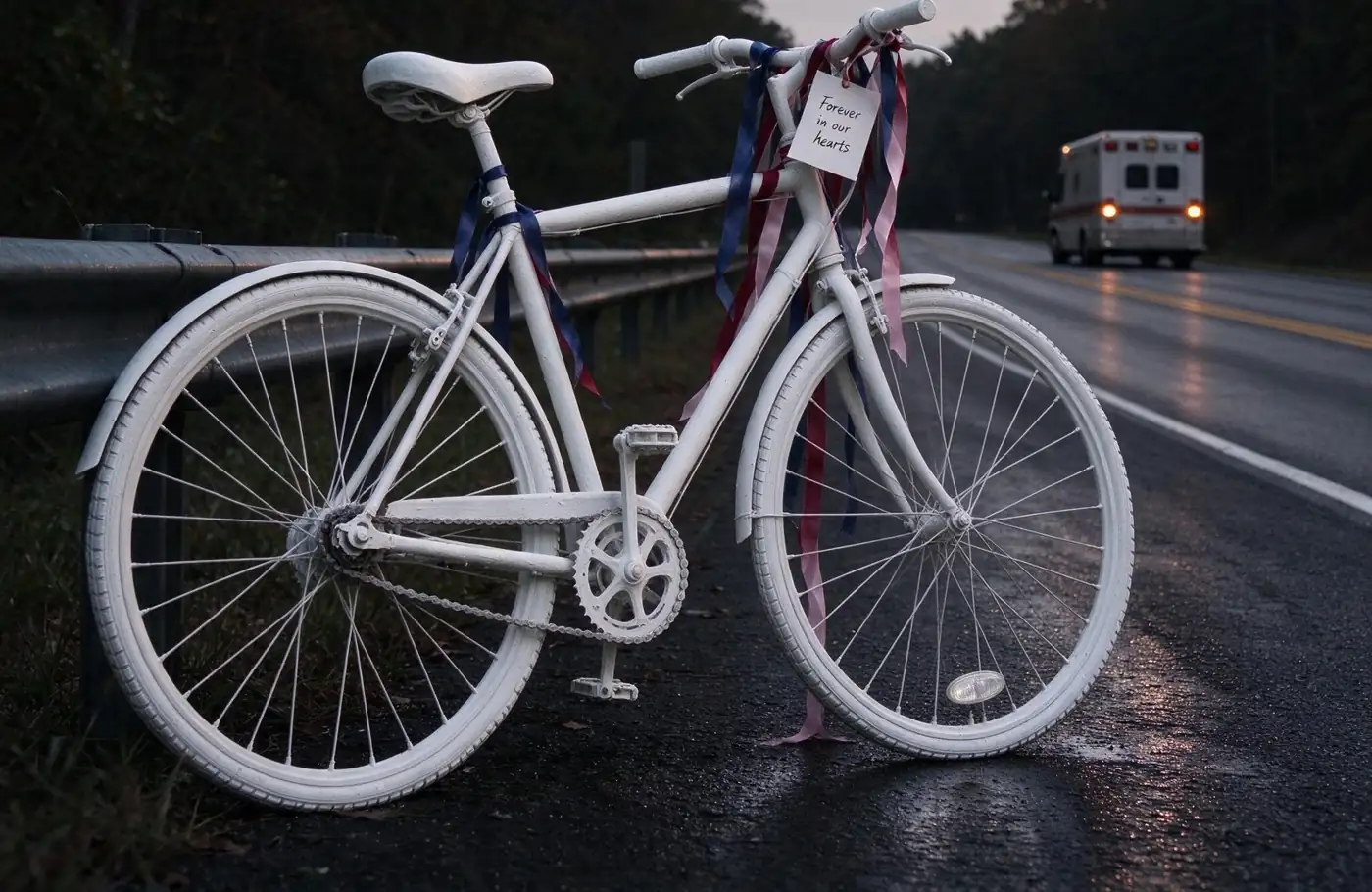
MOUNT VERNON, Ala. — More than six weeks after a bicyclist died on U.S. Highway 43 in north Mobile County, state troopers have concluded that darkness on the highway, not the actions of the ambulance driver who struck him, left too little time to avoid the collision. A white bicycle now stands near the spot as a memorial, and the rider’s family says the outpouring of support since his death has helped carry them through.
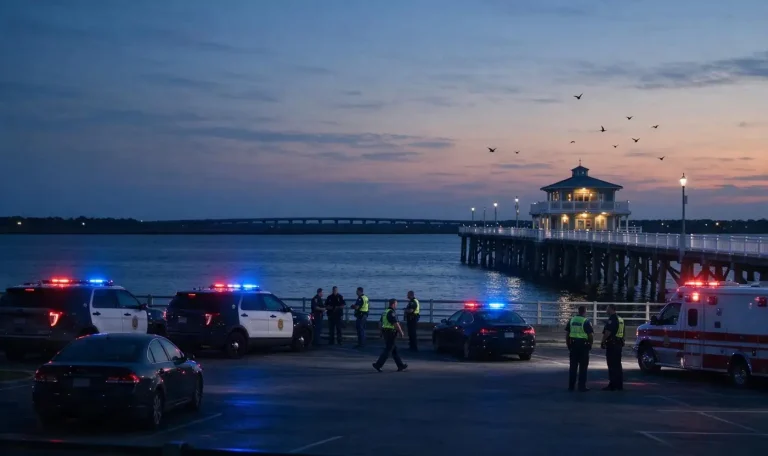
The crash happened on the night of Oct. 5 near Red Fox Road, close to Mount Vernon. Investigators say an ambulance operated by Newman’s struck the man’s bicycle. He did not survive, and his family held his funeral four days later, on Oct. 9.
The rider’s name is being withheld in this article out of respect for the family’s privacy.
What the State Crash Report Found
The Alabama Law Enforcement Agency, whose Highway Patrol Division investigates many serious crashes on state and federal highways, has completed a crash report on the collision. Its findings include several key points:
- Time: Shortly before 8:30 p.m. on Monday, Oct. 5
- Location: U.S. Highway 43 near Red Fox Road, in the Mount Vernon area of north Mobile County
- Vehicle: An ambulance moving a patient from one hospital to another
- Emergency equipment: The ambulance was not running its lights or siren at the time
- Bicycle position: The report says the cyclist was in the left lane of the highway, which troopers described as improper
- Navigation: The driver switched off the vehicle’s GPS unit moments before the impact
Why troopers say the GPS was not a factor
The detail about the GPS unit drew attention, but the trooper who handled the investigation determined that it did not cause the crash. Instead, ALEA concluded that the dark stretch of highway did not give the ambulance driver enough time to respond once the bicycle came into view.
Newman’s has declined to comment publicly on the crash.
A non-emergency transport
Ambulances do far more than respond to 911 calls. A large share of their work involves scheduled or urgent transfers that move patients between hospitals, nursing facilities and specialized care centers. When a transfer is not a life-or-death emergency, crews typically drive without flashing lights or sirens and follow the same traffic laws as other motorists, including posted speed limits. The ambulance involved in this crash was making that kind of hospital-to-hospital trip.
A Family Learns the News
On the evening of the crash, the man let his father know he was heading out for a bike ride. His father asked him to check in once he got to where he was going.
That call never came. Instead, a relative phoned with word of the crash. By then, a group of people had gathered at the scene and was trying to revive him.
In the weeks since, the family has spoken about the kind of person he was. They describe him as someone with a warrior’s spirit who consistently gave back to his community and served as an inspiration to people of every age. His father has said that anyone who met or talked with him remembered him, and that his cheerful personality brought light to the people around him.
Roots in the MOWA Choctaw community
The family belongs to the MOWA Band of Choctaw Indians, a state-recognized tribe whose community is centered in southwest Alabama. The tribe’s name blends the first letters of Mobile and Washington counties, where many of its members have lived for generations, including in the areas around Mount Vernon, Citronelle and McIntosh. The band holds an annual powwow and operates community programs for its members.
Relatives have said they are grateful to everyone who has reached out with condolences since his death.
A Ghost Bike on Highway 43
Within weeks of the crash, a white-painted bicycle known as a ghost bike was placed at the site to honor him. The memorial was installed by Bike Friendly Atlanta, a nonprofit cycling organization based in Georgia.
Ghost bikes began appearing in American cities in the early 2000s and have since spread around the world. Each one is an ordinary bicycle stripped down and painted entirely white, then locked near the place where a rider was killed. The bikes are meant both as personal memorials and as quiet reminders to drivers that people on bicycles share the road.
For the rider’s family, the memorial is a sign that his energy, passion and love continue to reach the people around him even after his death.
How Fatal Crash Investigations Work
When someone dies in a crash on a state or federal highway in Alabama, troopers from ALEA’s Highway Patrol Division typically take charge of the investigation. Their work usually includes documenting the final positions of vehicles and any debris, measuring the roadway, photographing the scene, examining the vehicles involved, interviewing the driver and any witnesses and, where available, reviewing data or video that can help reconstruct the moments before impact.
Commercial and fleet vehicles, including ambulances, often carry onboard equipment such as GPS units, cameras or telematics systems that record location and speed. Information from those devices can help troopers build a timeline, which is one reason details like the status of a navigation unit can appear in a crash report even when investigators conclude they were not the cause.
The resulting Alabama Uniform Traffic Crash Report records the trooper’s observations, the conditions at the time and any contributing circumstances the investigator identifies. In serious cases, reconstruction specialists may also be called in. Findings about fault in a crash report are separate from any civil claims, which are handled through the courts.
About This Stretch of Highway
U.S. Highway 43 is one of the main north-south routes through north Mobile County. From Mobile and Prichard, it runs north through Saraland, Satsuma and Creola before passing Mount Vernon and continuing on toward Calvert, McIntosh and Jackson. Along that path, it carries commuters, industrial traffic tied to plants along the Mobile and Tombigbee rivers, log trucks and emergency vehicles traveling between communities and medical centers.
North of the more developed areas, much of the highway passes through wooded, lightly populated country. Many stretches have no overhead street lighting, so after sunset drivers depend almost entirely on their headlights. In early October, the sun sets in south Alabama a little before 7 p.m., meaning the crash happened well after dark.
What Alabama Law Says About Bicycles
Under Alabama law, a bicycle is treated as a vehicle, and people riding one have most of the same rights and duties as drivers. A few rules are especially important on highways:
- Ride with traffic: Cyclists must travel in the same direction as other vehicles.
- Stay to the right: When moving slower than the flow of traffic, riders are generally required to keep as far to the right as practicable, with exceptions for turns, passing and unsafe road conditions.
- Use lights at night: A bicycle ridden after dark must have a white headlight visible from at least 500 feet ahead and a red rear reflector, and a red rear light is widely recommended.
- Three feet to pass: Since 2015, Alabama has required drivers to leave at least three feet of space when passing a person on a bicycle.
Staying visible after dark
Safety advocates say the hours after sunset are among the most dangerous for anyone on two wheels, especially on rural highways with higher speeds. Common recommendations include:
- Use a bright white front light and a flashing red rear light, even if not strictly required.
- Wear reflective clothing or a high-visibility vest, and add reflective tape to the bike frame, pedals and helmet.
- Choose routes with paved shoulders, lighting or lower traffic volumes when possible.
- Let someone know your route and when you expect to arrive.
- Always wear a properly fitted helmet.
Advice for drivers
Drivers on rural roads at night are urged to slow down, use high beams when no oncoming traffic is present, scan the shoulders for bicycles and pedestrians and give cyclists ample room when passing. Avoiding distractions inside the vehicle, such as phones and navigation screens, helps keep a driver’s full attention on the road ahead.
Remembering a Life
More than a month after the crash, the ghost bike on Highway 43 serves as a lasting marker for a man his loved ones say touched nearly everyone he met. His family continues to thank the friends, neighbors and strangers who have offered their support.
Anyone seeking a copy of an Alabama crash report can generally request one through ALEA. People struggling with grief after a sudden loss are encouraged to reach out to a counselor, faith leader or local support group.