Animal Rescue Foundation Closing Theodore Building to Support Municipal Shelters
The Animal Rescue Foundation is closing its Theodore shelter and shifting to community-based care to better support Mobile County's municipal animal.
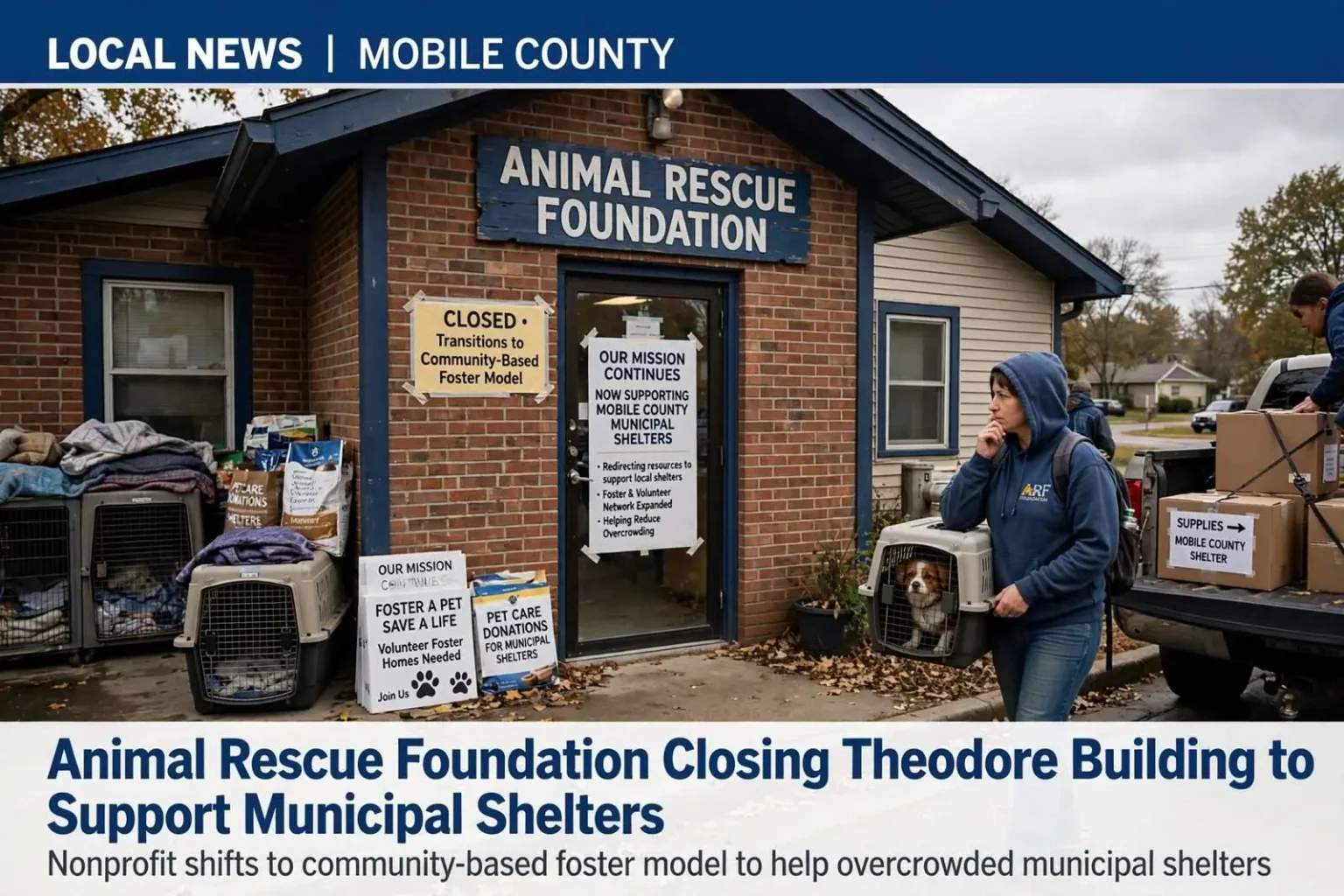
The Animal Rescue Foundation, a Theodore-based nonprofit that has operated a physical shelter for years, announced it is closing its building and shifting to a community-based model of animal rescue.
The organization said the closure is part of a deliberate strategy to move away from brick-and-mortar operations and instead channel its resources toward supporting Mobile County’s municipal animal shelters, which have long struggled with overcrowding.
Natalie Ortell, secretary for the Animal Rescue Foundation, said the decision had been in the works for some time and does not signal the end of the organization’s involvement in local animal welfare.
“Our mission at ARF has always been to work with our municipal shelters, but what we found is that over time we’ve become sort of a space for people to not take their dog to the shelter,” Ortell said. “So what we want to do is support our shelters and make it really effective.”
By stepping back from operating its own intake facility, the foundation hopes to direct adopters, fosters, and volunteers more consistently through the county’s public shelters rather than serving as an alternative that may have diverted resources and attention.
The shift reflects a broader national conversation in animal welfare about the most effective ways to reduce shelter overcrowding and improve outcomes for homeless pets. Many organizations have moved toward community-based programs — including foster networks, spay-neuter clinics, and pet retention assistance — rather than maintaining costly physical facilities.
Mobile County’s municipal shelters have frequently reported being at or over capacity, making the foundation’s decision to bolster those systems potentially significant for the region’s animal welfare infrastructure.
The Animal Rescue Foundation said it will continue to play an active role in the rescue community through its new operational model, though specific details of the transition were not immediately available.
How foster-based rescue works
Rescue groups that operate without a shelter building rely on volunteer foster homes, where dogs and cats live with a family until they are adopted. The rescue typically covers veterinary costs such as vaccinations and spay or neuter surgery, and the number of available foster homes, rather than the number of kennels, determines how many animals it can take in at one time.
Government-run shelters, by contrast, generally take in the strays picked up by animal control officers, which is why they are often the first to feel the strain when intake rises.