

If you have spent any time on the Eastern Shore’s social media, you have seen Fairhope Now — the Facebook group that celebrates small businesses, sunsets and local talent with a strict no-negativity policy. What you may not know is the story of its co-founder and administrator, Anne Dorman: a former trauma counselor who left mental health over caseloads and burnout, built a career in real estate on her psychology training, and now helps run a 30,000-member community group that functions as Fairhope’s unofficial welcome wagon.
Mobile Born, Farm Raised, Water Bound
Dorman was born in Mobile, the youngest of five children. Her father, Skip Barker, a lawyer and cotton farmer in Selma, kept a family farm there, and weekends in summer meant creek swimming and pine tree planting instead of beach trips — “we swam in the creek and pretended we were at the beach,” she says. Her father took her hunting and fishing as a child, dry leaves and all; her mother, Patricia Horn, grew up in Bayou La Batre, where Dorman’s maternal grandfather stood 6-foot-4 — “a big guy in a small town.”
She learned to water ski on Mobile Bay, the local rivers and the Gulf, and still skis today. After St. Paul’s Episcopal School in Mobile and two years at UAB, she came back home and finished a psychology degree at the University of South Alabama, waiting tables along the way — at one of those tables sat Lane Dorman, who left a tip larger than his bill. “He was a smart man,” she says. They married, and moved to Clemson while Lane earned a master’s in environmental science.
From Trauma Counseling to Real Estate
For the next decade the family moved through Clemson, Kennesaw, Georgia, and Raleigh, North Carolina, as Lane oversaw groundwater remediation projects as a hydrogeologist. Along the way Anne earned a master’s degree in psychology at Mercer University and worked as a cognitive behavioral therapist with abused children — a manageable caseload that, she says, produced an 85 percent success rate.
Home pulled them back. Lane took a position managing the Pensacola office of Geosyntec Consultants, an international environmental firm; Anne joined a large community mental health organization in Mobile. They split the commute and settled in Fairhope. But the nonprofit caseloads wore her down. “If you have a hundred patients, it takes too long to see them all regularly and have effective results,” she says. “I was burning out. Big changes need to happen in Alabama regarding mental help.” Lane noticed before she said a word — “he’s so observant and aware” — and suggested a career change.
In 2016 she got her real estate license and joined a large Eastern Shore firm. The psychology background, it turned out, transferred completely. “Buying and selling a home is stressful for clients, and my psychology background has been a big advantage. It’s all about relationships,” she says. Within a few years, a group of colleagues decided to build something of their own: with Alison Ward as qualifying broker, Mobile Bay Realty was founded alongside Jill Delamore, Carrie Mackey and Laurie Weber. The firm grew to 26 agents without recruiting — by design. “It’s all about ethics, character, and professionalism. We are in a small space, and we need to like the people we work with.”
The pandemic housing boom was not in anyone’s business plan — buyers arriving from across the country, offers over asking, then the whiplash of rising rates and thinning inventory. Dorman works both sides of the bay and across Baldwin County, from Gulf Shores and Orange Beach to Fort Morgan Road, and says she has helped more families find homes in her later years than in the boom itself. The firm’s size philosophy remains deliberate: “We don’t want to become so big as a real estate brokerage company that we don’t know everyone’s kids’ names.”
Fairhope Now: 30,000 Neighbors and Counting
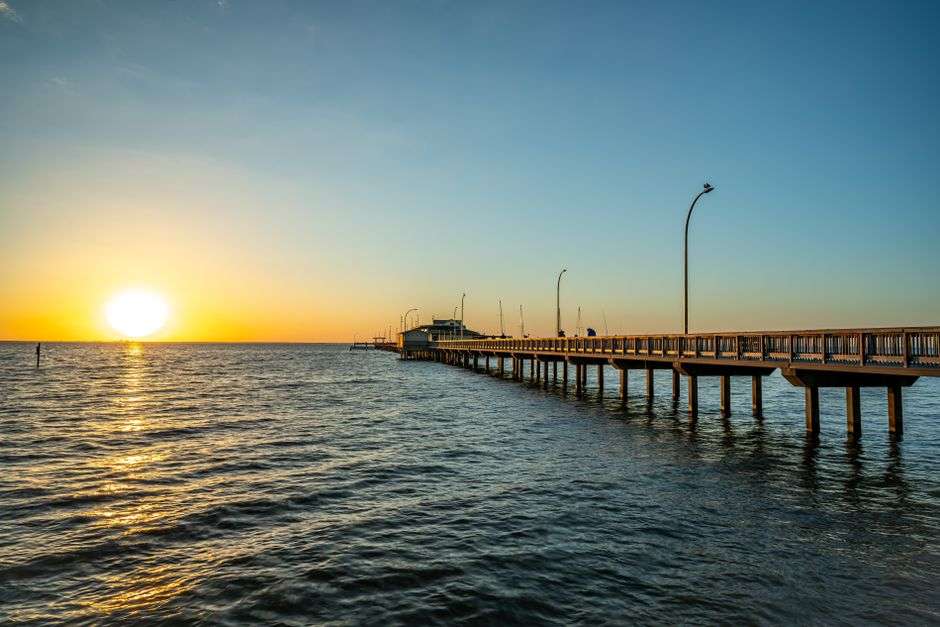
The other half of Dorman’s public life is Fairhope Now, the Facebook group she co-founded with John Oldshue as a deliberately positive space to highlight small businesses, community events and local talent. The group rocketed past 30,000 followers, and while she says it “almost runs itself now,” she still polices it daily to keep the content positive. Regular contributors post sunset photography from around the bay and short interviews with locals, and the group has become one of the Eastern Shore’s genuine ambassadors — a place where a small business promotion reaches thousands of neighbors without a dime of advertising.
“There is so much going on in Fairhope,” she says. “I love being involved in the community.”
Energy, Boards and Venison
How does one person carry a counseling degree, a brokerage, a Facebook community and three daughters — ages 17, 13, and 10? Dorman credits example and energy: “I saw my parents work hard, invest and give back to the community.” She has served on numerous community boards spanning her church, education and organizations serving the disadvantaged. “I’m hyper and have lots of energy. I sleep well and pray a lot, so I’m not a worrier or anxious.”
Away from work she gardens, boats, hunts and fishes — she killed a deer last season and keeps the freezer stocked with venison — and the family spends its time on the water, with her daughters learning to sail at Fairhope Yacht Club. Lane, now a licensed pilot in a flying club, keeps the family traveling.
“I saw my parents work hard, invest and give back to the community,” she says, which is as good an explanation of Fairhope Now as any: a community group built to be what its founders wished they saw online. For a town that grows by the month, having a counselor’s ear and a realtor’s network behind the county’s most positive corner of the internet is a quietly valuable piece of civic infrastructure — and Dorman, characteristically, would rather talk about everyone else’s kids’ names than her own role in it.