

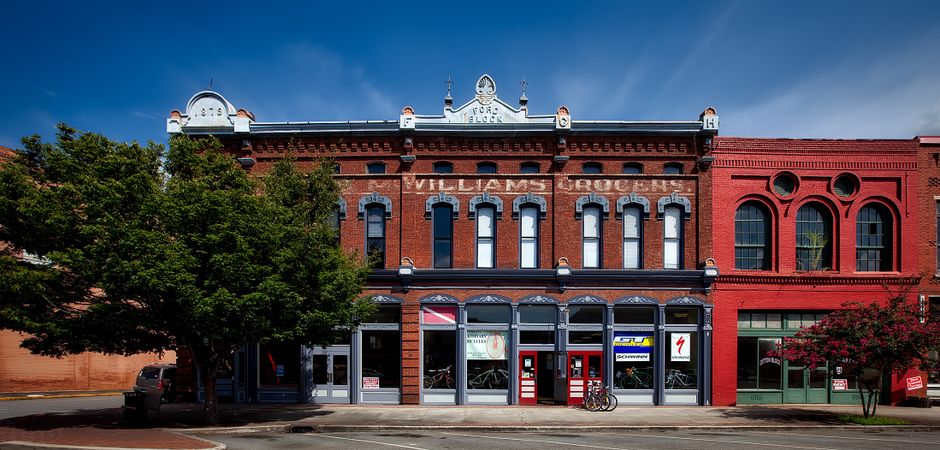
ATMORE, Ala. — More than a decade and a half ago, a local news Hometown Tour paid a visit to Atmore, and the portrait it painted of the Escambia County city remains a useful window into the community’s character. The 2007 report highlighted Atmore’s history, its population of roughly 8,000 residents, and the small-city character that residents told the news crew they valued deeply. This is a historical summary of that 2007 local feature, and community details may have changed in the years since.
The tour’s framing was classic small-town Alabama: a city proud of its roots, anchored by industries that built it, and small enough that residents knew their neighbors by name. Atmore sits in the southwestern corner of Escambia County, just a few miles from the Florida line along U.S. Highway 31, with Interstate 65 running nearby to connect the city to Mobile to the south and Montgomery to the north. That geography — close enough to the Gulf Coast for an easy drive, far enough out to keep its small-city rhythm — has defined Atmore’s pace of life for generations.
A city shaped by timber and rail
Any account of Atmore’s history runs through two forces: the timber industry and the railroad. The city grew up around a railroad depot in the late nineteenth century, when rail lines opened the pine forests of south Alabama to commercial harvesting, and the community that sprang up around the tracks took the name of railroad official William T. Atmore. Lumber mills and turpentine operations drew workers and their families, stores and schools followed, and by the twentieth century Atmore had established itself as the commercial center for a surrounding agricultural area of farms and small communities in southern Escambia County.
The 2007 tour took particular note of Heritage Park, which recognizes the timber industry and the railroads that helped shape the city. The park stands as a physical reminder of that inheritance — a place where the machinery and memory of the timber era are preserved for residents and visitors, and where the city’s story is told in the artifacts of the people who built it. For a community of Atmore’s size, that kind of visible, maintained connection to its founding economy is both a point of pride and a draw for visitors traveling the Highway 31 corridor.
The railroad’s role in Atmore has evolved but never disappeared. Freight traffic still moves through the area, and the historic depot district remains one of the city’s most distinctive landmarks. Generations of Atmore families worked for the railroad or the mills, and the overlap of those livelihoods — timber fed the railroads as much as it fed the sawmills — is the thread that ties the city’s economy together across its whole history.
The small-city character residents valued
What residents told the 2007 report they valued most was not an attraction but an atmosphere. Atmore in the mid-2000s was a place where festivals drew the whole town, where Friday night football at the high school functioned as the community’s weekly gathering, and where the distance between city government and the governed was measured in handshakes rather than hearings. Cities of roughly 8,000 people occupy a particular niche in Alabama life: large enough to support a full complement of schools, churches, medical services, and retail, yet small enough that civic life remains personal.
The city’s calendar in that era reflected its identity. The Greater Gulf State Fair’s roots and regional festivals aside, Atmore’s own signature events — downtown celebrations, heritage observances tied to the timber and railroad past, and church and school gatherings that crossed every other line in town — gave the year its structure. Local institutions such as Atmore Public Library, the Escambia County school presence, and the city’s longstanding businesses formed the civic infrastructure that residents pointed to when they described what made their city feel like home.
Atmore also carried a distinction few cities its size could claim: the presence of the state’s maximum-security prison, Holman Correctional Facility, on its outskirts, which for decades made the city a fixture in Alabama news beyond its borders. Residents’ relationship with the institution was pragmatic rather than defining — jobs and economic impact on one side, distance on the other — and it remained a background fact of Atmore life rather than the story residents told about themselves. The story they told, in 2007 as now, was about community.
Atmore’s place in the region
Geography has always been part of Atmore’s story. The city anchors the southern end of Escambia County, Alabama, serving surrounding communities such as Canoe, Huxford, and Freemanville, and sitting a short drive from Flomaton and the Florida communities of Century and Pensacola’s orbit. U.S. 31 and the rail line run through town parallel to one another, as they do in so many south Alabama cities, and Interstate 65’s interchange put both Mobile and Montgomery within commuting-and-commerce distance. Pensacola’s beaches and the Casino-fueled development across the state line added a tourism dimension to the local economy.
The Poarch Band of Creek Indians’ presence in the Atmore area is another essential part of the region’s story. The tribe’s federal reservation lies adjacent to the city, and over recent decades the tribe’s enterprises and governmental presence have become major economic forces in Escambia County. In the years since the 2007 report, that growth — hospitality, gaming, and associated development — has reshaped the economic landscape around Atmore considerably, adding jobs and drawing visitors to the area in ways the 2007 tour could only have foreshadowed.
Downtown Atmore in the mid-2000s retained the classic small-city commercial grid: a courthouse-square-style arrangement of storefronts, banks, pharmacies, and diners surrounding the civic buildings, with the depot heritage nearby. Main-street communities across south Alabama spent those decades working to keep their downtowns viable against competition from highway retail, and Atmore’s efforts — facade improvements, event programming, and local investment — followed the same playbook that peer cities like Monroeville and Brewton pursued.
Looking back from today
Read today, the 2007 Hometown Tour report functions as a snapshot of a specific moment: Atmore at roughly 8,000 residents, proud of Heritage Park and its timber-and-rail heritage, and confident in the small-city character its residents described. Some details of that portrait have certainly shifted — populations and businesses change across two decades in any Alabama city, and the region’s economy has evolved around it. What has not changed is the framework the tour identified: a community whose identity rests on its history, its location, and its people.
Historical summaries like this one serve a practical purpose for readers who did not see the original broadcast. They preserve the local color of an era — what residents emphasized, what institutions anchored daily life, how a city described itself when a news crew came calling — and they give newer residents and younger generations a record of the city’s self-image at a moment in time. Details may have changed since 2007, and readers should verify current facts about population, businesses, and institutions directly with the city.
The essentials, though, travel well across the years. Atmore remains the south Escambia County city built by timber and rail, home to Heritage Park’s tribute to both, and defined by the small-city character that residents told a news crew, in 2007, was exactly what they valued about the place they lived.
What the 2007 era looked like on the ground
Readers who remember Atmore in 2007 will recall a city in the middle of the same transitions that were playing out across south Alabama’s small cities. Downtown merchant rows had thinned from their mid-century peaks even as banks, medical offices, and service businesses remained active. The schools — Atmore’s elementary, middle, and high schools serving the city and its surrounding communities — continued to function as the town’s most reliable common ground, the place where generational continuity was most visible on any given Friday night in the fall.
Agriculture still mattered to the surrounding countryside in that era, as it does now. Farms across southern Escambia County produced the region’s traditional mix of row crops, cattle, and timber, and the relationship between town and country shaped local commerce: feed and seed, equipment dealers, lenders, and the co-op infrastructure that rural Escambia depended on. The 2007 report’s emphasis on the timber heritage reflected more than nostalgia — forestry remained a working industry in the county’s pine lands, linking the city’s founding economy to its present one.
Transportation ties were equally practical in 2007. The drive to Mobile along Interstate 65 took under an hour, which meant Atmore residents worked, shopped, and received medical care across a corridor that stretched from the Port City to the state capital. That regional mobility is one of the quiet constants of south Alabama life — small cities like Atmore function as home bases within a larger Gulf Coast economic region, and the 2007 tour’s subjects lived comfortably within that pattern.
Preserving the story
Heritage Park deserves particular emphasis in any retelling of the 2007 visit, because it was the feature most specifically tied to the city’s self-understanding. Parks that commemorate an industry are relatively rare; most municipal parks honor nature or recreation. Atmore’s choice to build its public memory around the timber and railroad workers who created the city says something about how residents saw themselves — as inheritors of a working-class, industrial story rather than an aristocratic one. That identity, visible in the park’s displays and grounds, was the historical throughline the news crew captured.
Local historical preservation efforts in Atmore have long extended beyond the park as well. The depot, historic churches, and downtown buildings carry markers and stories maintained by residents who understood that a city of 8,000 cannot rely on institutional budgets to keep its memory — it relies on volunteers, local historians, and families who pass down the record. The 2007 report benefited from exactly that kind of local knowledge, and any summary of it, including this one, leans on the work those residents did.
For readers evaluating historical summaries, the standard caveats apply. A 2007 broadcast reflected the city as it stood that year; populations shift, businesses open and close, and civic institutions evolve. The value of the record is not that every detail still holds but that the community’s defining characteristics — its heritage sites, its geographic role, its self-image — were documented at a moment when a news crew thought them worth visiting. That is the historical purpose the Hometown Tour served for Atmore, and the reason its portrait remains worth retelling nearly two decades later.