

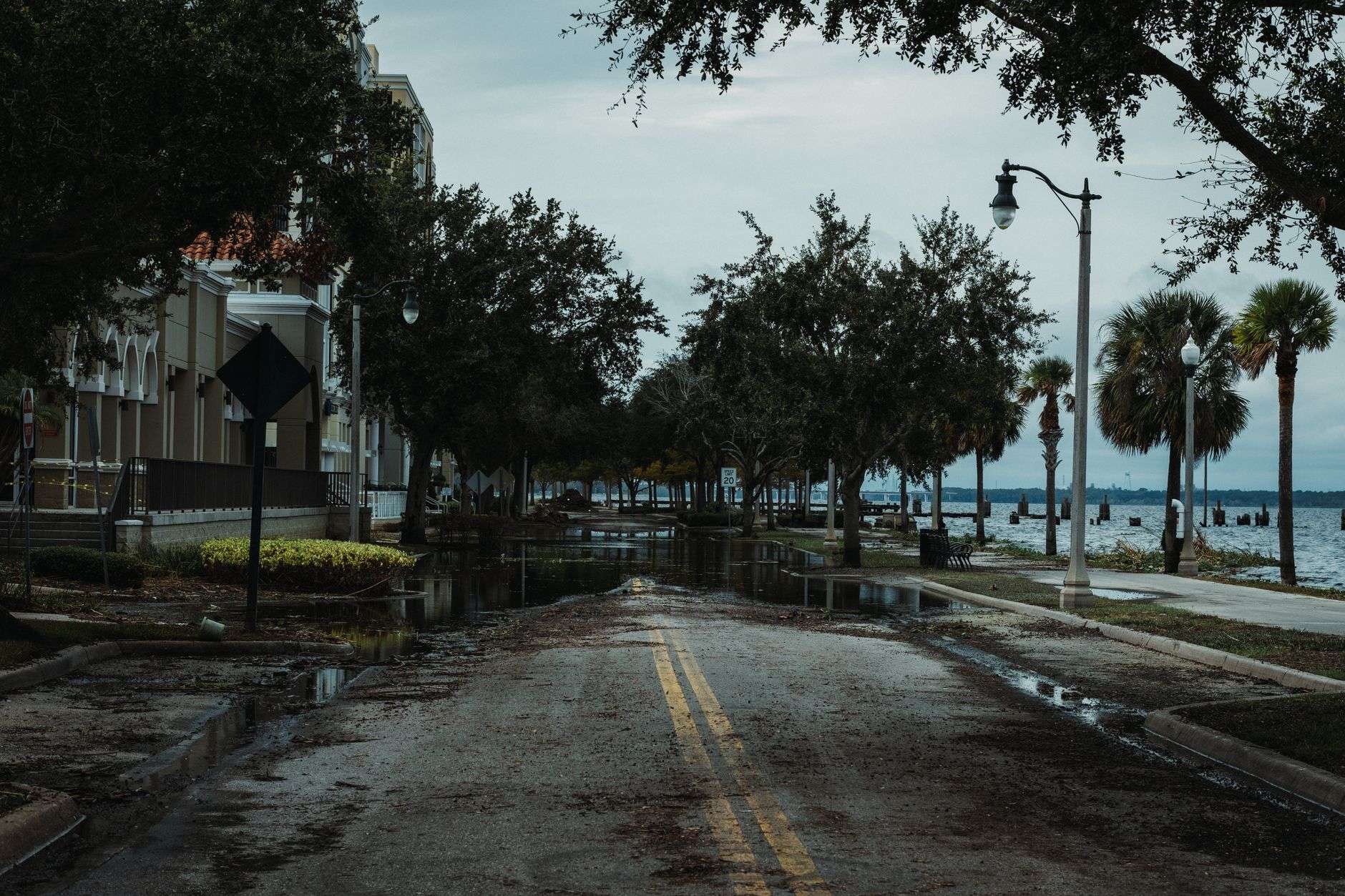
BAY MINETTE, Ala. — The Baldwin County Commission has awarded just over $12.1 million to 10 cities, towns and utility districts for water, sewer, drainage and roadway work, spending federal disaster recovery dollars that trace back to the 2020 hurricane season.
The awards were announced Monday under the 2026 Local Government Recovery Infrastructure Program, a locally administered grant program the county built to move Community Development Block Grant — Disaster Recovery money into public works projects run by municipalities and eligible local agencies. Every dollar is tied to the recovery from Hurricane Sally and Hurricane Zeta, the two storms that struck the Alabama coast six weeks apart in the fall of 2020.
Baldwin County Commission Chairman Jeb Ball framed the round of grants as an investment in infrastructure that has to perform on ordinary days as well as during a storm.
“These investments strengthen the infrastructure our communities rely on every day and during severe weather,” Ball said. “Working with our municipalities and utility partners, we are thrilled to be investing disaster recovery funds in projects that will make Baldwin County more resilient and better prepared for future storms.”
The 10 awards total $12,125,420.98. The two largest, $2 million apiece, go to Bay Minette and Fairhope.
The Full List of 2026 Awards
Projects receiving 2026 Local Government Recovery Infrastructure Program awards are:
- City of Daphne — Randall Avenue drainage improvements: $1,581,883
- City of Robertsdale — Robertsdale sewer and drainage rehabilitation: $800,000
- Town of Loxley — Loxley sewer rehabilitation for the Holley Street lift station area: $809,000
- East Central Baldwin Water Authority — water line installation on Woerner Road, the Foley Beach Express and Kings Landing Road: $1,235,000
- Town of Magnolia Springs — drainage improvements: $949,537.98
- City of Orange Beach — Jubilee Point Road elevation: $950,000
- North Baldwin Utilities — Westside wastewater treatment plant emergency storage pond restoration: $1,000,000
- City of Fairhope — water expansion on Fish River: $2,000,000
- Perdido Bay Water, Sewer & Fire District — operations and maintenance facility: $800,000
- City of Bay Minette — disaster recovery project: $2,000,000
The geographic spread is deliberate. Daphne, Fairhope and Magnolia Springs sit on or near the Eastern Shore; Robertsdale and Loxley are inland along the Interstate 10 and Alabama 59 corridors; Orange Beach faces the Gulf; Bay Minette anchors the north end of the county; and the three utility recipients — East Central Baldwin Water Authority, North Baldwin Utilities and the Perdido Bay Water, Sewer & Fire District — serve unincorporated territory that no single city hall answers for.
What CDBG-DR Money Actually Is
Community Development Block Grant — Disaster Recovery funding, almost always shortened to CDBG-DR, is not a standing program that states can draw on at will. Congress has to appropriate it after a specific disaster, and the U.S. Department of Housing and Urban Development then allocates the money to states, territories or local governments in the areas the department identifies as most impacted and distressed.
That structure makes CDBG-DR fundamentally different from the federal disaster aid most people encounter first. Federal Emergency Management Agency public assistance is generally aimed at restoring damaged facilities to their pre-storm condition, and it arrives comparatively quickly. CDBG-DR is the long tail of recovery: it is flexible, it can pay for unmet needs that other programs will not cover, and it can fund mitigation work that leaves a community better protected than it was before the storm. It is also slow, because HUD must publish a Federal Register notice governing each appropriation, and the receiving government must write and win approval for an action plan before any money moves.
The flexibility is the point. A CDBG-DR grantee can put the money into housing repair, infrastructure, economic revitalization or public services, so long as the activity ties back to the declared disaster and satisfies HUD’s national objectives. That is why a single appropriation can produce a new lift station in one town and a home repair program in another.
ADECA’s Role and the $43.36 Million Baldwin Award
In Alabama, CDBG-DR money for Hurricanes Sally and Zeta runs through the Alabama Department of Economic and Community Affairs, the state agency that administers a wide portfolio of federal pass-through grants, from community development and energy programs to law enforcement and workforce funding. ADECA is the state-level administrator; HUD retains oversight of the grant.
ADECA subgranted $43.36 million to Baldwin County. Rather than spending it directly, the county wrote a local recovery plan — a document that inventories what still has not been fixed years after the storms and sets out how the money will be divided among housing, infrastructure and other recovery needs. Public comment is a required part of that process, not an optional courtesy; HUD rules oblige grantees to publish draft plans and take citizen input before amounts are locked in.
Out of that $43.36 million, the county carved out $13.36 million specifically for infrastructure projects led by municipalities and eligible local entities. That set-aside is the Local Government Recovery Infrastructure Program, and Monday’s 10 awards are its 2026 round. The $12,125,420.98 committed represents roughly 91 percent of the program’s total, leaving about $1.2 million of the infrastructure set-aside uncommitted after this announcement.
What Sally and Zeta Did to Baldwin County
Hurricane Sally came ashore at Gulf Shores early on Sept. 16, 2020, as a strong Category 2 storm with maximum sustained winds near 105 mph. What made Sally punishing was not its category but its pace: the storm crawled, and it dumped enormous amounts of rain on a narrow strip of coast. The National Weather Service office in Mobile recorded 29.99 inches at Orange Beach and 29.30 inches in the Fort Morgan area, with totals of 15 to 30 inches across Baldwin County into the western Florida Panhandle and 7 to 15 inches farther inland.
Storm surge pushed 7 to 9 feet above ground level into the back bays and sounds of southeast Baldwin County. Sustained hurricane-force winds of 75 to 85 mph, with gusts above 100 mph, brought down trees and power lines across the county and left power outages that were close to total in places. The weather service attributed three deaths to the storm in its coverage area, one direct and two indirect. The Alabama Forestry Commission documented more than 2,400 damaged forested acres and roughly $1.56 million in timber loss, and more than 1,000 pecan trees went down.
Zeta followed on Oct. 28, 2020, making landfall near Cocodrie, Louisiana. Post-season analysis upgraded it to a Category 3 at landfall with sustained winds of 115 mph. It stayed strong as it raced inland and across the Alabama line. Mobile Regional Airport reported sustained winds of 55 mph with a gust to 91 mph, and a National Ocean Service gauge at the Bayou La Batre bridge measured about 6.89 feet of surge. Zeta knocked out power to more than 400,000 customers in Alabama and caused an estimated $840 million in damage statewide, with wind damage concentrated in Mobile and Baldwin counties.
Arriving six weeks apart, the two storms compounded each other. Crews were still working through Sally debris and tarped roofs when Zeta’s winds arrived, and drainage systems already scoured and silted by Sally’s rainfall took a second hit.
Why Drainage and Sewer Keep Topping the List
Seven of the 10 awards involve water, sewer or drainage. That is not an accident of who applied. In a flat, low-lying, fast-growing county, the systems that move water are the ones a hurricane exposes first.
Drainage projects such as Daphne’s Randall Avenue work and Magnolia Springs’ improvements address the mechanics of getting rainfall off streets and out of yards quickly enough to keep it out of houses. Sanitary sewer work — Robertsdale’s rehabilitation and Loxley’s repairs around the Holley Street lift station — addresses a different hazard. When groundwater and stormwater infiltrate cracked sewer mains and manholes, the volume entering the system can overwhelm lift stations and treatment plants, which is how a rain event turns into a sanitary sewer overflow. North Baldwin Utilities’ emergency storage pond restoration at its Westside treatment plant is aimed squarely at that problem: storage capacity buys a plant time when flows spike.
Two awards are about redundancy rather than repair. The East Central Baldwin Water Authority’s new water lines on Woerner Road, the Foley Beach Express and Kings Landing Road add capacity and connection points in a stretch of the county that has grown quickly. Fairhope’s water expansion on Fish River works the same way for its system. Orange Beach’s Jubilee Point Road elevation is the most literal adaptation in the group: raising the roadway itself so that it stays passable when water rises. And Perdido Bay Water, Sewer & Fire District’s operations and maintenance facility is the piece most easily overlooked — the building where crews, vehicles and parts are staged has to survive a storm for the utility to respond after one.
What Happens Next
An award announcement is the start of a process, not the end of one. Each recipient still has to move through design, environmental review, procurement and construction under the compliance rules that attach to federal grant money. CDBG-DR projects carry documentation obligations that local public works contracts ordinarily do not, including environmental review requirements and federal labor standards on qualifying construction work, and the county has continuing reporting duties to ADECA and HUD.
For residents, the visible consequences will arrive unevenly and over a period of years: a street closed for drainage work in Daphne, a roadway raised at Jubilee Point, new water lines trenched along Kings Landing Road, crews working a lift station in Loxley. The county’s CDBG-DR program information, including its local recovery plan and program materials, is posted through the Baldwin County grants department.
Six years after Sally and Zeta, the money moving now is the part of recovery that never made the immediate news coverage — the pipes, ponds, culverts and roadbeds that determine how the next storm plays out.