

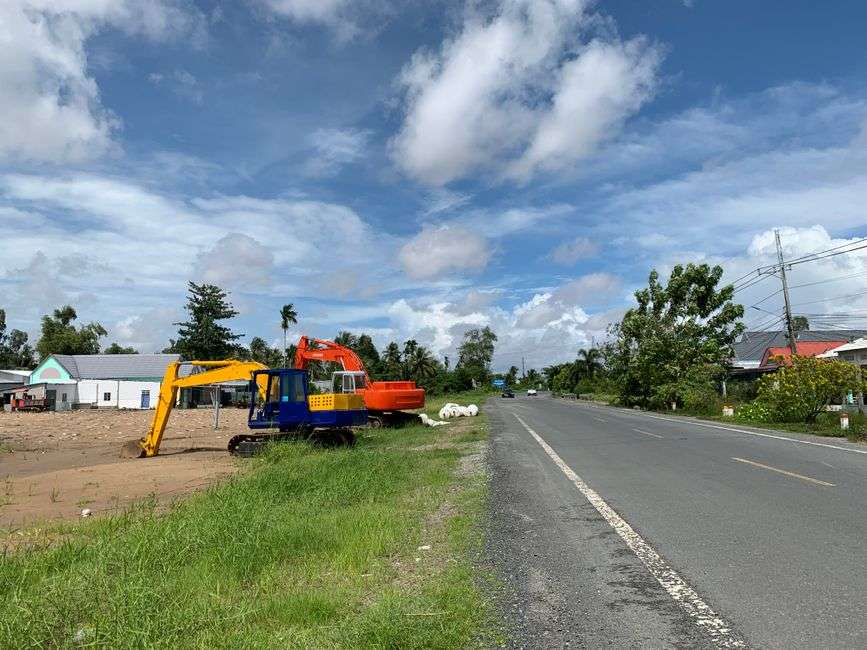
BALDWIN COUNTY, Ala. — The Baldwin County Commission has secured grant funding for the next phase of construction on the County Road 65 Corridor Extension, with work expected to begin later this summer. The announcement marks another step in a long-running effort to build out a modern network of north-south roadways across a county that has absorbed years of rapid residential and commercial growth. Phase II of the project will extend County Road 65 between County Road 28 and County Road 32, establishing a new segment of roadway and strengthening the north-south connection to a major east-west route in the area.
Asphalt Services was awarded the $2.7 million construction contract for the work. The contract covers the building of the new segment of County Road 65, a stretch that will give drivers in the corridor a continuous paved route where gaps in the grid have long forced traffic onto older two-lane roads and indirect detours. County officials say the project supports long-term plans to improve connectivity across Baldwin County, reduce congestion and improve travel for residents as the area continues to grow.
The commission said grant funding secured for the project continues to play an important role in advancing major transportation improvements countywide. For a county government that must maintain hundreds of miles of roads outside its incorporated cities, outside funding has become an essential supplement to local revenue, and officials have consistently pointed to successful grant applications as the difference between a road project that happens on schedule and one that waits years for a place in the budget.
Why the corridor matters
Baldwin County’s road network grew up around a grid of numbered county roads laid out across farmland, timberland and wetlands, with a handful of state and federal highways carrying the heaviest traffic volumes. As the county’s population has spread from the Eastern Shore communities south and west and new subdivisions have risen along former farm roads, many of those older connectors have carried far more traffic than they were designed to handle. Extensions such as the County Road 65 project are intended to give drivers direct alternatives and to spread growth across more of the network rather than concentrating it on a few overloaded routes.
The Phase II segment between County Road 28 and County Road 32 fits that pattern. By filling in the missing link between two existing east-west roads, the project creates a continuous north-south corridor that residents can use for daily trips to work, school and shopping without merging onto busier state highways. Planners describe that kind of connectivity as the backbone of a growing county: when the grid is complete, each new subdivision or commercial site adds traffic that can disperse across multiple routes instead of funneling onto a single road.
County officials have framed the extension as part of a broader, long-term strategy rather than a one-off improvement. Successive commissions have worked through a list of corridor projects intended to keep pace with development, and the County Road 65 corridor has been identified in county planning documents as one of the routes that will carry an increasing share of local travel as the surrounding area builds out. Each phase moves the corridor closer to its planned alignment, and the grant that funds Phase II allows that work to continue without waiting for local funds to accumulate.
The role of grant funding
Grant funding occupies a central place in Baldwin County’s transportation planning, and the commission’s statement about the County Road 65 project reflected years of experience with that reality. Large road projects routinely cost millions of dollars, and the county’s share of local funding must be stretched across resurfacing, bridge work, drainage and new construction all at once. When a grant covers a major share of a construction contract, the county can advance a project like the CR 65 extension years earlier than local revenue alone would allow, and it can keep other planned projects moving in parallel.
The $2.7 million contract awarded to Asphalt Services illustrates the scale involved. That figure covers construction of a single phase of the corridor, and the full build-out of a major county roadway typically unfolds in multiple phases over several years as sections are designed, funded and built one after another. Officials have noted that the corridor approach — completing the extension in phases between existing crossroads — allows each finished segment to deliver immediate travel benefits to residents even while later phases remain in design or await funding.
Grants for road work in Alabama counties typically flow through state and federal programs administered with the Alabama Department of Transportation, which works with county commissions on projects that qualify for transportation funding. Competing for those dollars requires counties to prepare engineering plans, right-of-way documents and environmental reviews before a project can be considered, which means that an award like the one behind Phase II usually represents years of groundwork by county engineering and grants staff. Baldwin County has built a track record with that process, and commissioners have credited it with bringing outside investment into the county’s road system that local tax revenue by itself could not have matched.
Growth pressures on Baldwin County roads
The urgency behind corridor projects like CR 65 comes from Baldwin County’s place as one of the fastest-growing counties in Alabama. New residential development has spread across the county’s unincorporated areas for years, drawn by the Eastern Shore’s economy, the region’s coastal environment and the availability of land along the county’s network of farm-to-market roads. Each subdivision, school and shopping center adds trips to roads that were originally built for agricultural traffic, and county engineers have worked to keep the network ahead of demand rather than behind it.
Congestion on the county’s older two-lane roads has been one of the most common complaints from residents, particularly during peak commute hours and the summer tourism season, when traffic bound for the beaches adds to local volume. A completed north-south corridor gives drivers a way to reach east-west routes without using congested state highways, and it provides a more direct path for emergency vehicles and school buses serving the growing neighborhoods in the corridor. Officials have described those everyday benefits — shorter trips, safer roads and less time stuck in traffic — as the practical payoff of the investment.
The County Road 65 extension also supports the county’s economic development efforts. Companies considering a location weigh road access heavily, and a modern grid that connects employment areas, freight routes and residential neighborhoods makes the county more competitive. Commissioners have repeatedly tied road spending to job growth, arguing that the same corridors that carry commuters also carry the commerce that broadens the county’s tax base and reduces the burden on individual property owners.
How a county road project comes together
Building a new segment of county roadway involves far more than paving. Before the first equipment arrives, county engineers complete surveying and design work, establish the roadway’s alignment and grade, and address drainage in a low-lying coastal county where stormwater management shapes every project. Right-of-way must be acquired or dedicated along the route, and utility lines are often relocated ahead of construction. By the time a construction contract is awarded and a start date is set, as with the Phase II work now scheduled for later this summer, most of that preliminary work is already behind the county.
Construction itself proceeds in stages: clearing and grading the new alignment, building up the roadbed, installing drainage structures, laying the base courses and then the asphalt surface that gives the corridor its name. The contractor, Asphalt Services, will carry out that sequence under the county’s inspection, with the goal of delivering a roadway built to standards that can handle heavy traffic for decades. Weather plays a role in any Gulf Coast construction schedule, and county officials typically caution that timelines can shift with heavy rain and summer storms even when a project begins on time.
Residents along the corridor will notice the work in the coming months as crews and equipment move into the area between County Road 28 and County Road 32. Counties generally ask drivers to use caution around active construction zones and to watch for changed traffic patterns as the new segment takes shape. When the phase is finished, the new roadway becomes part of the county’s maintained system, added to the grid that residents use every day.
Looking down the corridor
Phase II is one piece of a longer vision for the County Road 65 corridor, and county officials have been explicit that the extension between County Road 28 and County Road 32 is intended to fit into that larger plan. Corridor projects of this kind are usually mapped out section by section, with each phase connecting to the next so that the roadway eventually runs continuously between its planned endpoints. The county’s approach lets it seize funding opportunities as they become available — which is precisely how officials describe the grant behind the current phase — while keeping the overall alignment intact for future work.
The commission’s statement about the project emphasized the same themes that have run through Baldwin County’s transportation planning: connectivity, congestion relief and preparation for continued growth. Those priorities appear in county planning documents and in the commission’s annual budget discussions, where road funding is among the most persistent demands from residents across the county’s districts. The County Road 65 extension gives the commission a concrete answer to those demands, and the grant funding behind it demonstrates the strategy the county has pursued to pay for major improvements without placing the entire cost on local taxpayers.
For the residents who live and drive in the corridor, the practical effects begin later this summer when construction starts and arrive in full when the new segment opens. A smoother, more direct route between County Road 28 and County Road 32 will shorten everyday trips, relieve pressure on surrounding roads and give emergency responders another path through a growing part of the county. As county officials noted in announcing the award, projects like this one are how a county built on a patchwork of old farm roads steadily assembles the modern transportation network its residents now expect — one funded phase, and one completed segment, at a time.