Beach to Rocket City: What It’s Like to Fly Alabama’s Only Intrastate Airline Route
Allegiant's nonstop Gulf Shores-Huntsville route is Alabama's only intrastate airline service. Here's what flying it is actually like.
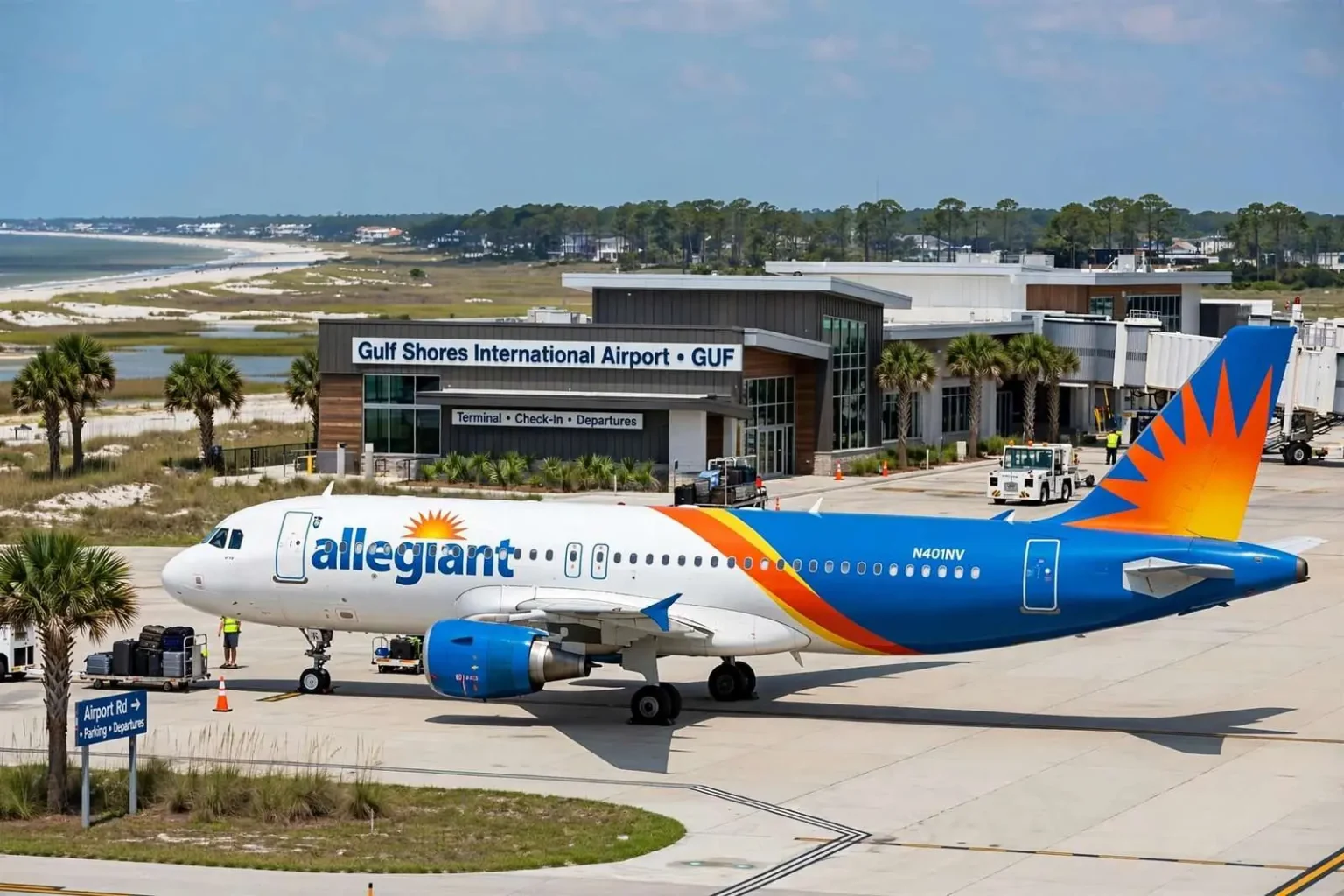
For most of Alabama’s history, getting from the beaches to the Rocket City meant four-plus hours of interstate driving. Since May, there has been an alternative that takes less than an hour in the air — and it is a novelty in more ways than one. The nonstop Allegiant Air route between Gulf Shores International Airport and Huntsville International Airport is the only commercial airline route connecting two Alabama cities, and a summer of flying it has shown exactly what a difference a short runway of a trip can make.
A Route Born on the Beach
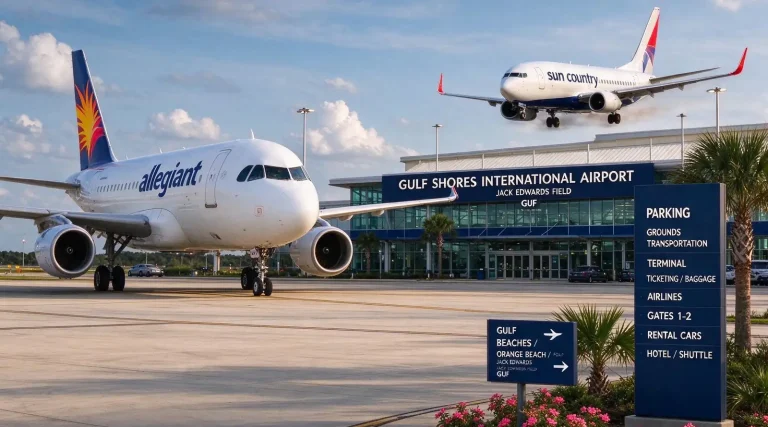
Gulf Shores International Airport, known by its code GUF, opened to commercial traffic in May 2025, when Allegiant launched its first seven nonstop destinations from the coastal airport. The airline — the only commercial carrier serving Gulf Shores — added three more destinations soon after, and by this past summer the route map had grown to 13 destinations with roughly 30 weekly flights, supported by a $15 million terminal expansion.
The Huntsville route joined the network on May 21, 2026, part of a five-destination expansion that also brought new nonstop service to Omaha, Oklahoma City, Louisville and Springfield, Missouri. Introductory one-way fares started at $40 — a price airport officials were quick to compare to a tank of gas — with flights operating up to twice weekly through the summer season. At 312 miles, the flight is scheduled at about an hour and twenty minutes gate to gate, though actual airborne time often runs shorter.
Gulf Shores airport director Jesse Fosnaugh said at the route’s launch that instead of a long and tiring drive, travelers can now go between the Rocket City and Alabama’s beaches in about an hour, calling the intrastate link a huge win for the state.
Departing the Coast
The experience of flying the route starts with the drive. From Fairhope, the run out to the airport is about 21 miles, most of it down Alabama’s Highway 98 and the Foley Beach Express. Standard airline practice applies — arriving roughly two hours before departure for a domestic flight — though the airport’s small footprint makes the check-in process fast and, in the early weeks of a new route, noticeably enthusiastic.
One quirk of the new terminal: parking runs through the airport’s app rather than a cash lot, which is a small adjustment for travelers accustomed to beach-town improvisation. And dining options remain limited inside the terminal — a Lulu’s location serves wraps, sandwiches and snacks, with canned beer and wine available, and food trucks have appeared outside on busier days. It is a fair trade for a terminal that began boarding commercial flights just last year.
The gate crowd tells the story of the route’s appeal. On a typical summer flight, the seating area mixes military families, beach-bound vacationers from North Alabama, and retirees visiting grandchildren. Conversations overheard before boarding tend to arrive at the same theme — no Atlanta connection, no three-hour layover, no connecting flight to miss. For a state whose travelers have long funneled through hubs to get almost anywhere, an all-nonstop itinerary between two Alabama cities still feels slightly improbable.
Forty-Six Minutes Over the State
Once airborne, the flight is short enough that the beverage service barely has time to finish. The route climbs north over Baldwin County, crosses the river country of the interior, and sets down at Huntsville International Airport in roughly 46 minutes of flying time. Deplaning happens minutes after touchdown — one of the small luxuries of a route with a single aircraft’s worth of passengers arriving at a time.
Huntsville’s terminal offers considerably more in the way of dining than Gulf Shores’, a detail returning beachside travelers tend to notice on the way home. The return leg makes the practical case for the route in full: wheels-down on the coast in time to cook dinner at home the same afternoon, with a couple hundred dollars of gas money and, more to the point, most of a day saved compared to driving.
What Comes Next
The Huntsville service was launched as a summer seasonal route, with the schedule published through mid-August — demand, as always, will determine whether it returns and for how long. The broader trajectory at Gulf Shores is not subtle: the airport has grown from zero commercial flights to 13 destinations in about a year, and Allegiant’s carrier-of-choice strategy — nonstop flights, no hubs, low base fares — has been rewarded with a Skytrax award as North America’s best low-cost airline for three consecutive years.
For North Alabama families, the math is straightforward: a $40 fare and an hour in the air versus a full day of interstate driving. For Baldwin County, the route stitches the beach economy to the state’s largest northern metro without an Atlanta detour. And for anyone who has ever white-knuckled I-65 in summer beach traffic, the proposition hardly needs selling. Alabama is a big state with one small airline route tying its two ends together — and for now, it is the only way to fly between them without a steering wheel.
Related coverage from South AL News
- Groceries Cost More, Gas Costs More, and Alabama's Beaches Are Headed for 9 Million Visitors Anyway
- Gulf Shores Airport Breaks Ground on $15 Million Terminal Expansion Just a Year After Opening
- Three Years Running: Allegiant Wins Skytrax's Best Low-Cost Airline in North America as Gulf Shores Enters Year Two
- Gulf Shores International Airport Shuts Down at Noon Friday as Hurricane Isaias Approaches