Bonnethead Sharks: Social and Friendly Gulf Coast Residents
Bonnethead sharks are common in Gulf Coast bays, growing to four feet and specializing on blue crabs. They are not a threat to swimmers.
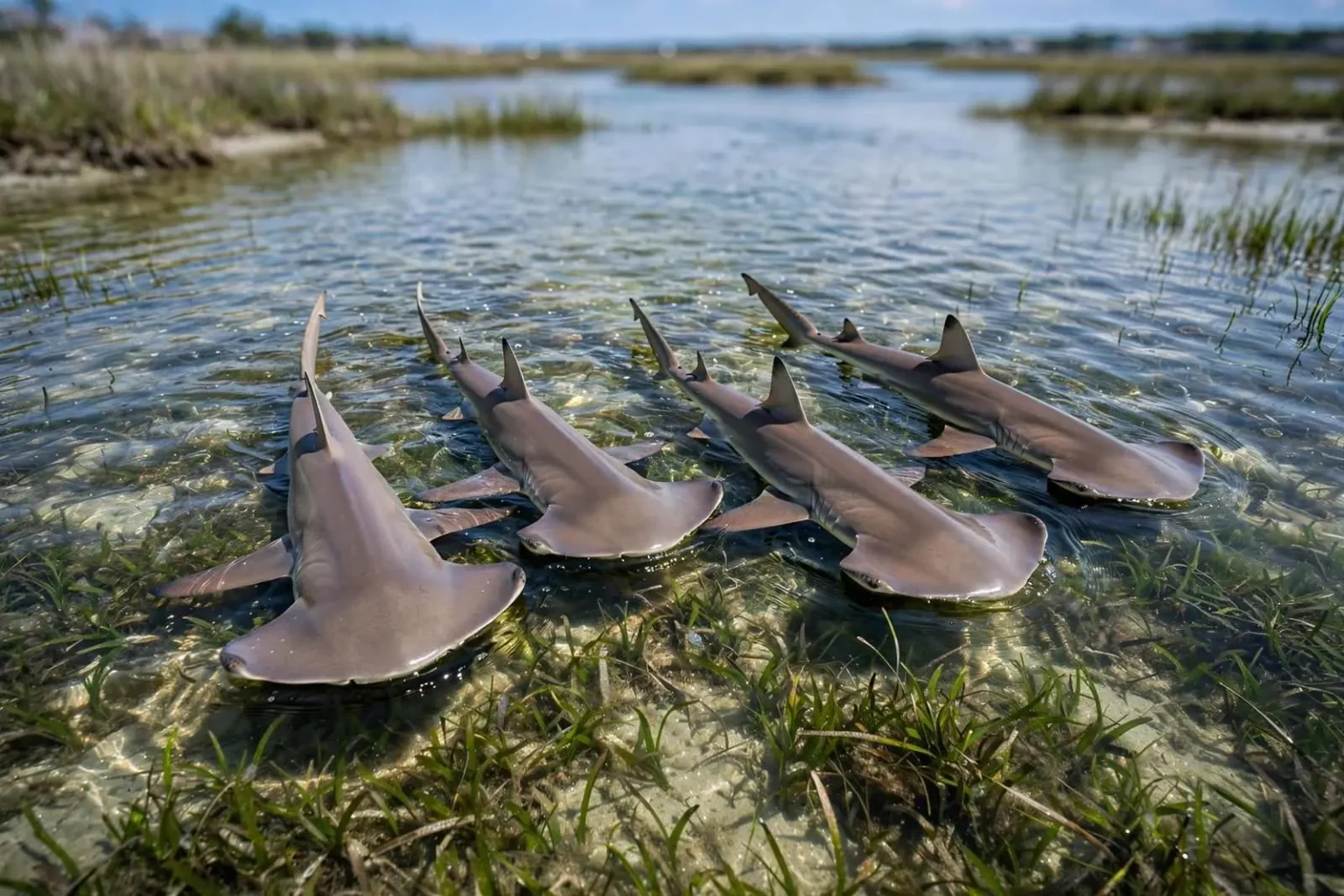
Bonnethead sharks are a common sight in the inshore waters and bays of the Gulf Coast, according to marine experts — and swimmers who spot one this summer should know they are looking at one of the region’s most harmless and most interesting residents. The small, shovel-headed sharks cruise the same shallow waters people swim, fish, and paddle through, and scientists who study them say their presence is actually a sign of a healthy bay system.
Dr. Sean Powers, director of the University of South Alabama School of Marine and Environmental Sciences and senior marine scientist at the Dauphin Island Sea Lab, says bonnethead sharks are very common in inshore waters. “Swimmers will see them if they’re in the back bay around seagrass,” Powers said. The back bays he describes — the grass-bed shallows behind the barrier islands and along the edges of Mobile Bay — are precisely the habitat bonnetheads prefer, and the place where an afternoon wader is most likely to cross paths with one.
That habitat preference tells you a great deal about the species. Bonnetheads are creatures of the estuary, drawn to the nursery grounds where seagrass, marsh edge, and sandy bottom meet. The northern Gulf of Mexico’s bay systems, from Mobile Bay to the sounds east and west, provide exactly that mix, which is why the species is so frequently encountered here and why scientists treat its abundance as a gauge of the coast’s overall condition.
Small, Social, and Easy to Recognize
Bonnethead sharks are small, growing to about four feet maximum — a size that immediately separates them from the large hammerheads and bull sharks that give Gulf sharks their fearsome reputation. Their name comes from the broad, bonnet-shaped head that marks them as members of the hammerhead family, though theirs is the smoothest and most compact version of the hammerhead profile. From a kayak or a pier, the rounded shovel of a bonnethead breaking the surface is unmistakable.
They are also very social sharks, often seen in groups of four or five individuals. Schools of bonnetheads move through the shallows together, a behavior that makes them one of the more visible sharks in the Gulf simply because they rarely travel alone. For boaters in the back bays, a cluster of dorsal fins cutting through ankle-deep to waist-deep water on a summer afternoon is far more likely to be bonnetheads than anything else.
Crab Specialists of the Seagrass
These sharks primarily eat crustaceans, especially shrimp and crabs, and their diet makes them a unique player in the estuary’s food web. Powers says bonnetheads specialize on blue crabs and can eat a tremendous number of them. A shark built to crush crabs is an unusual thing — most sharks chase fish or squid — but the bonnethead’s flattened head and modified jaws are essentially crab-cracking equipment, evolved to pick apart the Gulf’s most iconic shellfish.
That diet also explains where they live. Blue crabs concentrate in the seagrass beds and marsh fringes of the back bays, and bonnetheads follow them in. The result is a shark that spends its life patrolling the same shallow, grassy nurseries where juvenile fish, shrimp, and crabs grow up — a predator embedded in the very habitat that makes Gulf Coast estuaries productive.
Not a Threat to Swimmers
Unlike many shark species, bonnetheads are not considered a threat to swimmers, and the anatomy behind that reassurance is straightforward. They are part of the hammerhead family, with their mouth positioned underneath them — tucked well back beneath the broad head — which makes it difficult for them to bite humans. A shark whose mouth faces the bottom is built for grabbing crabs off the seafloor, not for striking at a swimmer’s leg at the surface.
“You would have to work pretty hard to get bit by a bonnethead,” Powers said. It is a point worth making in a region where shark sightings draw immediate headlines. The sharks that generate genuine concern along the Gulf Coast — bull sharks, blacktips, and their larger cousins — behave and feed differently than the small, bottom-oriented bonnethead. Swimmers who keep the distinction in mind can watch a school of bonnetheads work through a grass flat with the same relaxed interest they would bring to watching pelicans feed.
The species’ size compounds the safety margin. At four feet maximum, an adult bonnethead is barely larger than the redfish anglers regularly pull from the same waters. Its teeth are suited to crustaceans, its mouth is positioned to hunt the bottom, and its prey is crabs — a set of traits that puts people firmly outside the bonnethead’s menu and its method of hunting.
A Regular at the Aquarium
Bonnetheads are also commonly found in aquariums where visitors can pet rays, and that touch-tank presence has made the species one of the Gulf Coast’s most familiar sharks up close. Their manageable size, hardiness in captivity, and docile feeding habits make them well suited to exhibit life, where generations of coastal visitors have run their hands past a bonnethead gliding by in a shallow pool. For many people, that aquarium encounter is the first time a shark stops being an abstraction and becomes an animal with texture, weight, and a personality.
On the Alabama coast, the Dauphin Island Sea Lab’s public aquarium gives residents and tourists a chance to meet bonnetheads and their estuary neighbors without getting wet, and the species is a staple of the region’s marine education programs. Between the touch tanks and the back-bay encounters, the bonnethead is often the shark that introduces Gulf Coast children to the idea that sharks are neighbors to be understood rather than dangers to be feared.
Why the Species Matters to the Bay
Scientists pay close attention to bonnetheads because of the role they play in the estuary. As crab and shrimp specialists, they sit atop the invertebrate food web of the seagrass beds, and their numbers reflect the health of the habitat beneath them. Clean water, productive seagrass, and abundant blue crabs support bonnetheads; degradation of any of those pieces shows up in shark counts. In that sense, every school of bonnetheads seen in the back bays is a quiet report card on the coast’s condition.
The University of South Alabama and the Dauphin Island Sea Lab maintain long-running research programs on the sharks and fishes of Mobile Bay and its surrounding waters, using sampling surveys, acoustic tracking, and diet studies to follow how species like the bonnethead use the estuary through the seasons. Work like that by Powers and his colleagues turns an everyday sighting into data — on where bonnetheads travel, what they eat, and how the population responds to changes in the bay.
For the public, the takeaway from the scientists is refreshingly simple. The small sharks swimming past the seagrass this summer are locals, not visitors; crab eaters, not man eaters; and a sign the back bays are doing what back bays are supposed to do. Swimmers who spot one should count themselves among the Gulf Coast residents getting a good look at the estuary at work — from a respectful distance, with no hard work required to stay safe.
Sharing the Shallows: A Primer for Gulf Coast Water Users
The back bays of the Alabama coast are shared space, and the bonnethead’s presence there is worth understanding rather than fearing. Anglers wading the grass flats, kayakers crossing the bayous, and swimmers off the beachside shallows all move through bonnethead habitat on a summer day. The species responds to people the way most small sharks do — by keeping its distance — and the sightings that do occur usually involve a shark more startled by the encounter than the human is.
Simple habits make coexistence automatic. Boaters running the shallow flats should keep an eye out for the tell-tale clusters of small fins and idle past rather than through a school. Anglers who hook a bonnethead while crabbing or fishing shrimp under a popping cork should release it promptly, as the species plays a valuable role in the bay’s balance. Swimmers need no special precautions at all for bonnetheads; the standard Gulf Coast advice about avoiding dawn and dusk swimming and staying clear of schooling baitfish applies to the larger species, not this harmless grass-flat specialist.
It is also worth knowing what else shares those waters. Bonnetheads are far from the only shark in Mobile Bay and the back bays — the estuary serves as a nursery for a dozen or more species, most of them small and bottom-oriented, a few of them larger. The difference is that bonnetheads announce themselves: they travel in visible groups, in visible shallows, and their distinctive head shape makes identification easy even for a first-time visitor to the coast.
The Estuary Connection
The reason bonnetheads thrive along the Alabama coast comes down to geography. Mobile Bay, the Mobile-Tensaw River Delta, and the surrounding sound systems form one of the most productive estuarine complexes on the Gulf of Mexico, funneling fresh water and nutrients into a sheltered mix of seagrass beds, oyster reefs, and marsh. That combination raises the blue crabs and shrimp the bonnetheads depend on, and the sharks respond by concentrating exactly where the water is richest — including the popular back bays behind the barrier islands where Powers says swimmers will see them.
Estuaries are measured by how well they support creatures at every level of the food web, and the bonnethead occupies a middle rung that makes it a useful indicator. When researchers sample the bay and consistently find bonnetheads in good condition, it suggests the grass beds are holding, the crab populations are stable, and the water quality that sustains both is intact. When they don’t, scientists start asking harder questions about what has changed upstream.
That is the quiet significance of a common shark. The bonnethead asks nothing of coastal residents except clean water and healthy grass, and in return it keeps the flats in balance and offers everyone who paddles or wades a daily brush with wild ocean life. Marine experts’ message about the species is ultimately an invitation: learn to recognize the bonnet-shaped shadow crossing the seagrass, understand what it is there to eat, and let the most approachable shark on the Gulf Coast change how you see the waters out your back door.