Buns sold at Walmart, Sam’s Club and other retailers recalled in Alabama
Flowers Foods recalled several bun varieties sold at Walmart, Sam's Club and other Alabama retailers over possible hard-plastic contamination.
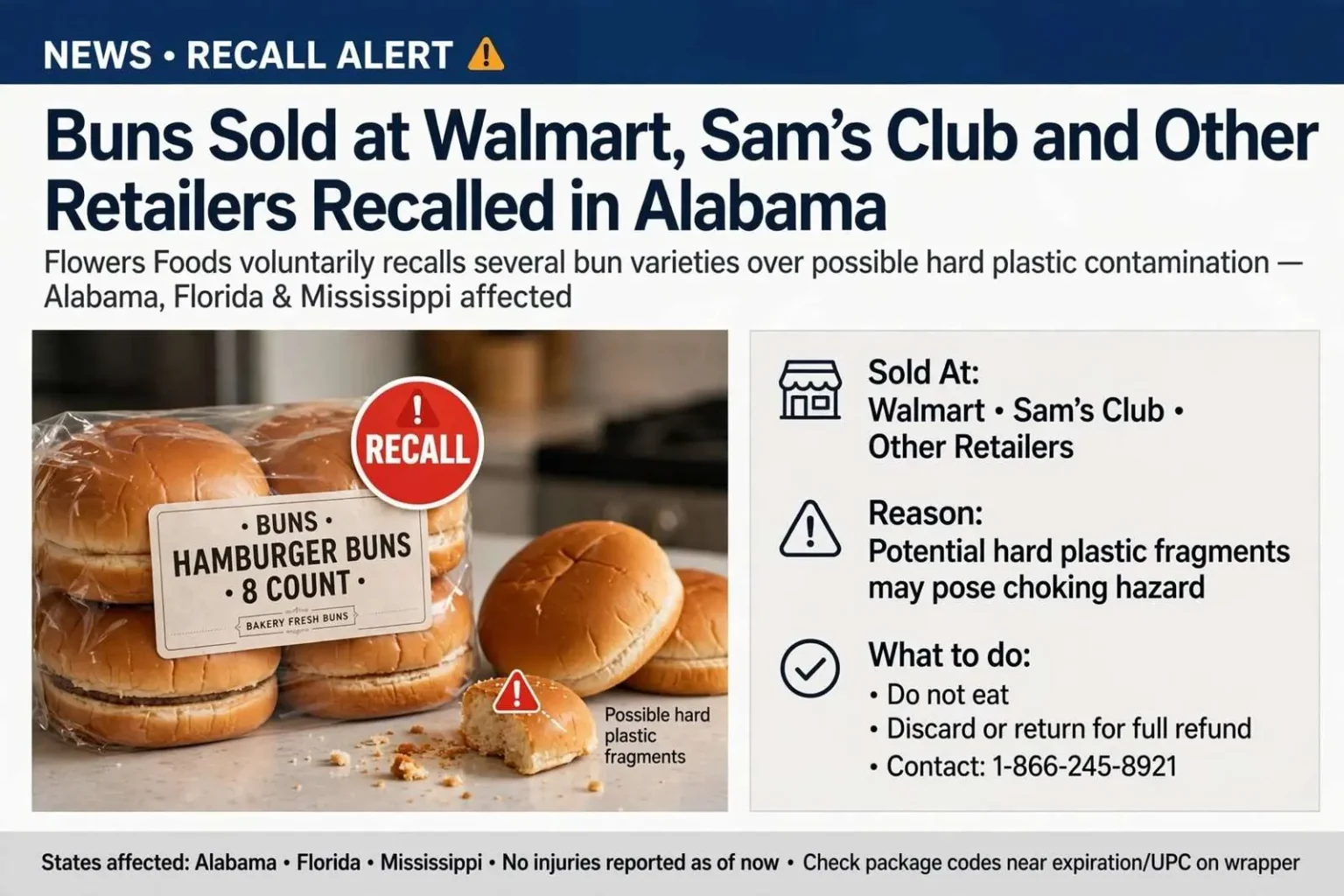
Several varieties of buns sold at national grocery retailers — including stores in Alabama — are being voluntarily recalled over a possible contamination, the manufacturer announced.
Flowers Foods said the recall is due to the potential presence of small pieces of hard plastic that may have been introduced during production. The company said the fragments could pose a choking hazard, prompting the voluntary pull of affected products from store shelves across the region.
The recalled products were distributed under several brand names in multiple states, including Alabama, Florida and Mississippi. Customers who purchased the affected buns should not eat them; the company advises throwing them away or returning them to the place of purchase for a full refund.
No related injuries or illnesses have been reported, according to the company. Consumers with questions can contact Flowers’ Consumer Relations Center at 1-866-245-8921.
What Shoppers Should Do
The first step for anyone who bought buns recently is to check what’s at home. Recalled bakery products are typically identified by brand name, variety, package size and the manufacturing codes stamped near the date or UPC on the wrapper. Products covered by a recall should not be eaten even if they look and smell normal — hard plastic fragments can be small enough to miss during a visual inspection but still capable of causing injury, particularly to children and older adults.
Shoppers have two options for the affected bread: discard it, or return it to the store where it was purchased for a full refund. Grocery chains across Alabama, Florida and Mississippi honor recall refunds at the customer service desk, and most do not require a receipt for recalled products, since the recall notice itself serves as the transaction record.
Families who served the buns before learning of the recall — at a cookout, a church supper or a family dinner — should watch for symptoms such as mouth or throat pain, difficulty swallowing or abdominal pain, and seek medical care if anyone may have swallowed a fragment. Health providers can evaluate whether imaging or follow-up care is needed.
Checking the pantry matters more than checking the store. Bakery products move off shelves quickly, so the packages most likely to still be around are the ones already sitting in a household bread drawer, freezer or pantry — which puts the responsibility on the customer rather than the grocer once the initial shelf pull is done.
Why Hard Plastic Triggers a Recall
Foreign material in food is one of the most common reasons for voluntary recalls in the baking industry. Hard plastic can enter a production line through broken equipment parts — scraper blades, conveyor guides, seals, gaskets or packaging machinery components — and because the material is rigid and can splinter, it presents a real risk of mouth injury, choking or internal damage if swallowed.
Food safety regulations treat hard or sharp foreign objects seriously. Federal guidance classifies products contaminated with hard plastic as physically hazardous, and a company that discovers the potential for such contamination is expected to move quickly — identifying the affected production window, tracing where the product was distributed and pulling it from shelves before anyone is hurt.
Voluntary recalls like this one are coordinated with the U.S. Food and Drug Administration, which oversees most packaged bread and bakery products. The FDA posts recall notices publicly, and retailers receive alerts instructing them to remove affected lots from shelves and warehouses. The company’s Consumer Relations Center fields questions from customers and tracks any reports of injury or illness, information that can expand or narrow the scope of the recall as it develops.
Bread recalls for foreign material tend to move faster than recalls tied to bacterial contamination, because the risk is visible and immediate rather than spreading over days. Companies in the baking industry have learned that announcing quickly and refunding customers without friction is the path that protects both shoppers and the brand.
About Flowers Foods and the Region’s Bread Supply
Flowers Foods is one of the largest packaged bakery companies in the country, headquartered in Thomasville, Georgia, and its breads and buns reach grocery shelves across the Southeast through a network of bakeries and distribution routes. Alabama shoppers know its products from everyday sandwich bread to hamburger and hot dog buns stocked for family cookouts and holiday weekends.
The company operates bakeries across the region, and its distribution model puts fresh packaged bread on shelves in small towns and metro areas alike. That reach is also why a single recall touches multiple states at once — a production issue at one bakery can place affected products on shelves from the Gulf Coast to the Atlantic, under several brand names.
For grocers, handling a bread recall is routine but urgent. Bakery departments move product quickly, so affected lots sell within days of being stocked. Stores pull the recalled varieties as soon as the alert arrives, post notices where required and process refunds for customers who bring product back.
Keeping the Kitchen Safe After a Recall
Food safety specialists suggest a few habits that make recall response easier for any household. Keep packaging until the food is eaten, since recall notices identify products by codes and dates printed on the wrapper. Store bread in its original bag rather than transferring it to a generic container, so brand and variety stay visible. And when a recall hits a product already in the pantry, check other items from the same brand and purchase trip — related varieties produced on the same line are sometimes included as an investigation widens.
Parents of small children have particular reason to pay attention to recalls involving choking hazards. Young children eat buns and bread constantly, in high chairs and car seats and at day care, and they lack the molars and the airway control to handle even a small fragment safely. Checking the pantry against a recall list before serving, rather than after, is the habit health officials hope the announcements build.
Households that freeze bread for later use should take note as well: freezing does not remove a recall’s scope, and a package tucked into the freezer weeks ago is just as affected as one on the counter. Freezer-stored recalled items should be discarded or returned like any other.
Food Recalls in Context
Recalls of bread products for foreign material are not unusual in the industry, and food safety advocates point out that the system worked as designed when a company identifies a problem, announces it and refunds customers without waiting for reports of harm. The absence of reported injuries in this recall, as of the announcement, is consistent with how these cases typically unfold: the contamination is caught in production or distribution, or by a customer, before the product is largely consumed.
Consumers can follow active recalls through the FDA’s public recall listings and through retailer notices, and companies typically post information on their own websites with product photos, codes and instructions. Signing up for a grocer’s loyalty program also has a safety benefit — many chains use purchase data to notify customers directly when a product they bought is recalled.
For now, the advice from Flowers Foods is straightforward: check your bread and buns against the recall information, don’t eat any affected product, throw it away or return it for a full refund, and call the Consumer Relations Center at 1-866-245-8921 with questions. The company said it would update the public as more information becomes available.
Refunds, Stores and the Regional Shelf
The refund path is deliberately simple because regulators and manufacturers both want discarded product to be the easy choice. A customer who brings the recalled package — or in many cases just mentions it — to the customer service counter of a grocery store in Mobile, Baldwin County, or anywhere else the product was sold, gets the money back on the spot. Stores in turn file the loss with the manufacturer’s recall program, which reimburses retailers for returned product and the labor of pulling it.
The region’s grocery landscape makes the recall’s footprint wide. The same national and regional chains operate across south Alabama, the Florida Panhandle and coastal Mississippi, and their distribution centers serve stores on shared schedules, meaning affected lots can appear on shelves in all three states within the same few days. Independent grocers and discount stores that buy through wholesale channels received the same recall alerts through the FDA’s distribution.
Restaurant and food-service buyers received a parallel notice through industry channels, since buns purchased in bulk for kitchens and concession stands fall under the same recall. Operators who bought affected product were advised to check freezers and storerooms, not just current stock, and to contact their distributors about credit.
Officials said the recall remains active while the company works with retailers to confirm that affected product has been removed from the supply chain, and customers can expect the Consumer Relations Center to keep taking calls as long as questions come in.