Mobile Drilling and Inspection Firm Challenge Testing Hires Karl Meyermann to Grow Client Base
Mobile-based Challenge Testing has hired Karl Meyermann as business developer to expand its geotechnical drilling, environmental drilling and inspection work with engineering, construction and industrial clients.
MOBILE, Ala. — Karl Meyermann has joined Mobile-based Challenge Testing, Inc. as business developer, a newly announced hire aimed at growing the drilling and testing firm’s client base among engineering, construction and industrial customers.
In the role, Meyermann will be responsible for building relationships with clients, finding new opportunities for the company and widening its reach across the three industries it serves, the company said.
A Mobile company with a national client list
Challenge Testing is headquartered in Mobile and works for clients across the United States. Its services fall into three main lines of work:
- Geotechnical drilling
- Environmental drilling
- Nondestructive testing
Each of those services plays a distinct part in how projects are planned, built and maintained, which helps explain why a firm in this field would put an emphasis on business development across several industries at once.
What the company’s services involve
Geotechnical drilling
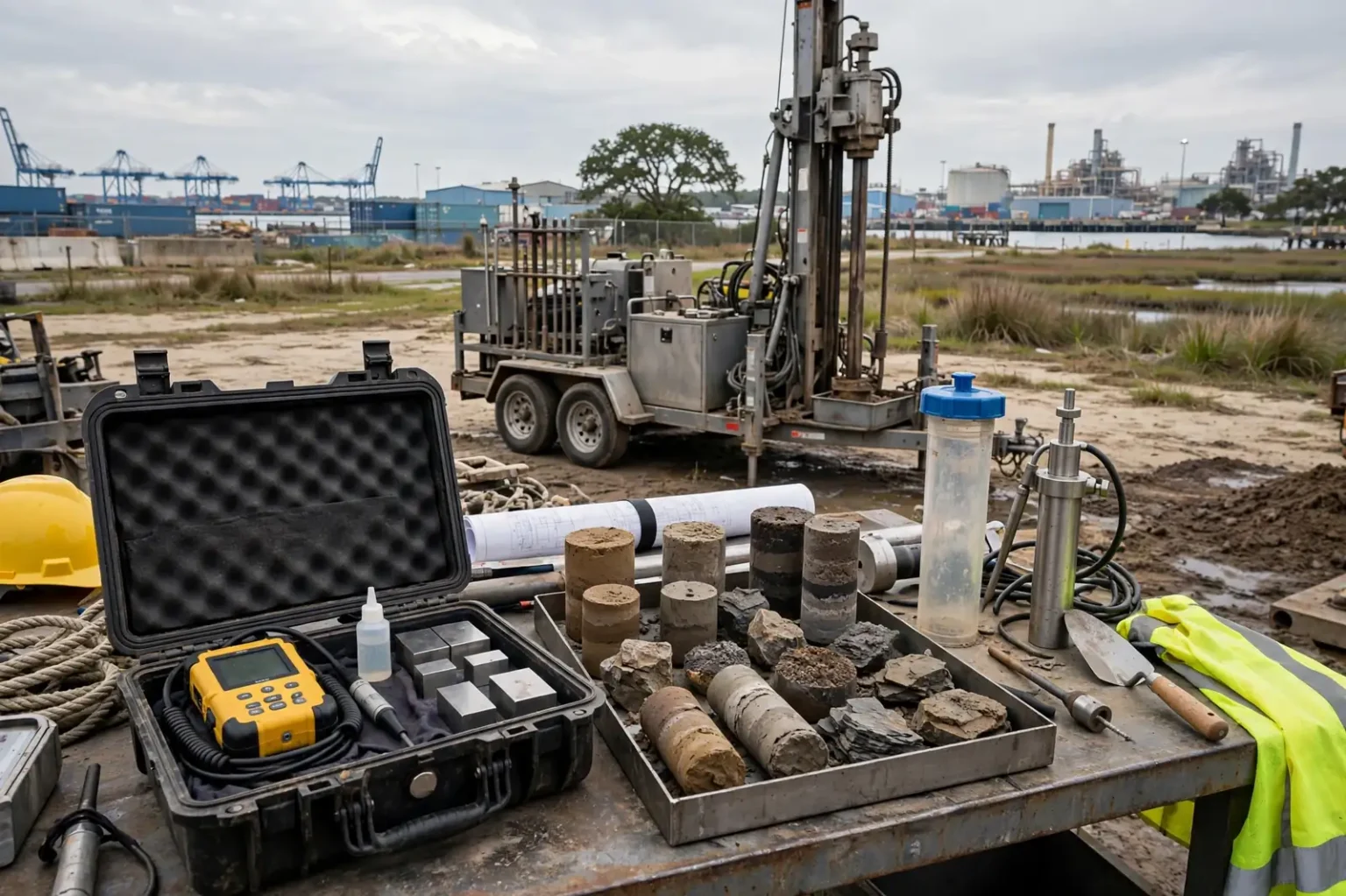
Before a building, bridge, roadway or industrial plant goes up, engineers need to know what lies beneath the site. Geotechnical drilling retrieves soil and rock samples from below the surface so engineers can evaluate how the ground will behave under a load. Information from borings helps designers decide what kind of foundation a structure needs, how deep piles or footings must go and whether the soil must be improved before construction begins.
Along the Gulf Coast, where soils can range from sand to soft clay and groundwater often sits close to the surface, that subsurface data can be especially important to designers and builders.
Environmental drilling
Environmental drilling serves a different purpose. Rather than measuring the ground’s strength, it is used to investigate whether soil or groundwater has been contaminated and to install wells that allow conditions to be monitored over time. This kind of work commonly supports property transactions, regulatory compliance and cleanup projects at industrial sites, fuel facilities and other locations where pollutants may be present.
When commercial or industrial property changes hands, buyers and lenders often order environmental site assessments. If an initial records review suggests a possible problem, a follow-up assessment may call for drilling to collect soil and groundwater samples for laboratory analysis. In Alabama, groundwater and contamination cleanup programs are overseen by the Alabama Department of Environmental Management, and monitoring wells are a common tool for tracking conditions at regulated sites.
Nondestructive testing
Nondestructive testing, often shortened to NDT, refers to a family of inspection methods that check the condition of materials and components without damaging them. Techniques such as ultrasonic testing, radiography, magnetic particle inspection and dye penetrant testing can reveal cracks, voids, corrosion or weld defects in pipes, tanks, structural steel and equipment.
Industrial plants, pipelines, shipyards and construction projects rely on NDT to confirm that welds and materials meet specifications and to spot developing problems before they lead to failures. Because the methods leave the part intact, the inspected component can go right back into service.
NDT work is performed by trained technicians, and employers in the field commonly qualify and certify their inspectors under widely used industry guidelines, with separate levels of certification for each testing method. Clients in regulated industries frequently require documentation of those qualifications before inspection work begins.
The business developer’s role
In technical service companies, a business developer typically serves as a link between the firm and the engineers, contractors, plant managers and project owners who hire it. The job often involves learning what upcoming projects need, explaining the company’s capabilities and helping match services to clients.
For Challenge Testing, Meyermann’s assignment spans all three of the sectors the company targets: engineering, construction and industrial. Those markets overlap frequently, since a single project, such as a new plant or a major infrastructure job, may require subsurface investigation during design, environmental work during permitting and inspection of welds and materials during construction and operation.
Part of Mobile’s industrial services sector
Mobile’s port, shipbuilding, chemical and manufacturing industries support a wide range of local companies that provide engineering, inspection and testing services. Firms like Challenge Testing work behind the scenes on many of the projects that shape the region and other parts of the country, from site preparation to the inspection of finished structures.
At a glance
- Company: Challenge Testing, Inc.
- Headquarters: Mobile, Alabama
- New hire: Karl Meyermann, business developer
- Focus of the role: client relationships, new opportunities and expanded presence in engineering, construction and industrial markets
- Services: geotechnical drilling, environmental drilling and nondestructive testing for clients nationwide