Charter Captains Set the Record Straight on Alabama’s Split Red Snapper Season
Charter boats fish 7 days a week in Alabama's red snapper season while private anglers get weekends only. Here is how the split rules work.
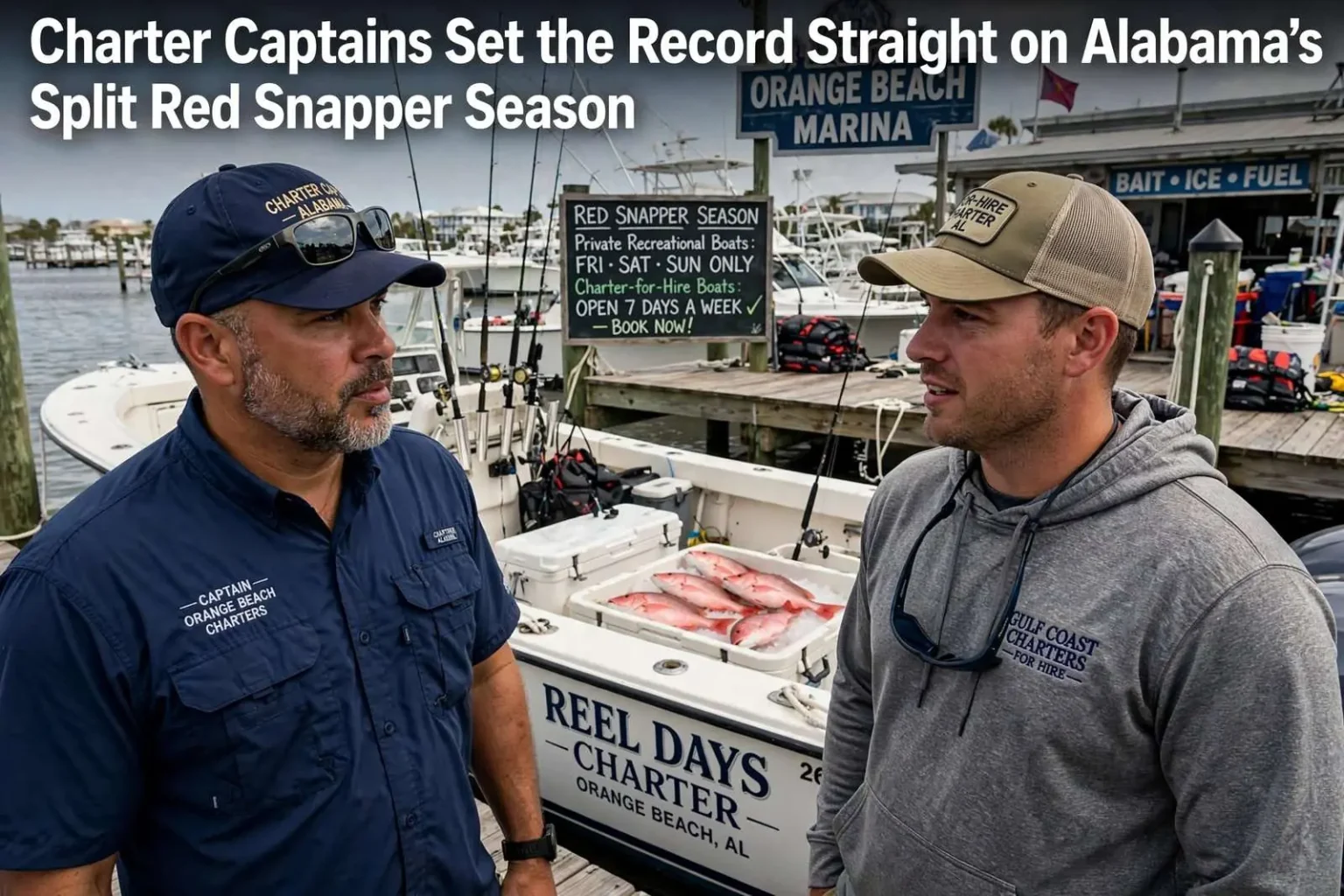
Red snapper season along the Alabama Gulf Coast runs under two very different sets of rules, and charter boat operators say too many anglers still do not understand the difference between the private recreational sector and the charter-for-hire fleet. The confusion has real consequences: anglers who assume the boats are shut down on weekdays pass up trips that are, in fact, perfectly legal.
The split comes down to how each group is regulated. Privately owned recreational boats are limited under Alabama law to fishing for red snapper on Fridays, Saturdays and Sundays only. Charter-for-hire vessels, which operate as federally registered boats, face no such restriction — they may take customers out seven days a week across the full season, which ran roughly 61 or 62 days through August 1.
That distinction is rooted in the way red snapper is managed in federal waters of the Gulf of Mexico. The species has been under a rebuilding plan for years, and federal managers allocate a share of the recreational catch to the charter-for-hire sector, which is held to reporting and documentation requirements that private boats do not face. Because charter captains log their trips and catches, managers can hold that sector to its allocation across a longer season, while state regulators compress the private-angler season into weekend days to keep the private-sector catch within its quota.
For captains in the for-hire sector, the distinction has been misunderstood for several seasons running, and they want the public to know their boats are open every day of the week. Every closed weekday that a customer assumes applies to charters is a trip that never gets booked, and in a business where the season is measured in weeks, weekday trips are a meaningful share of annual revenue.
Alabama’s red snapper fishery is unlike almost any other on the Gulf Coast, and that is by design. The state’s artificial reef program has placed thousands of structures — from deliberately sunken ships to concrete reef balls — across permitted reef zones stretching from nearshore waters out past the state-federal boundary, creating the habitat that snapper and other reef fish need to thrive. The result is a fishery in which quality red snapper can be caught within easy running distance of the inlets at Orange Beach and Dauphin Island, something no other Gulf state can match to the same degree.
That proximity is a large part of why the charter fleet is so accessible. Trips do not require long offshore runs, which keeps fuel costs down and makes shorter outings practical. Options range from four-hour trips aimed at beginners getting an introduction to bottom fishing, to six-hour outings geared toward more serious anglers looking to fill the box. A family with young children can be on the water, catch fish and be back before the afternoon heat, while dedicated anglers can use the extra hours to work deeper water and add species to the cooler.
Pricing has stayed accessible, with six-hour trips running about $100 per person. On a per-angler basis, that puts a full day of Gulf bottom fishing within reach of visitors who might otherwise assume a charter is a luxury experience. Captains point out that the price includes the boat, crew, tackle and the knowledge of someone who runs these reefs for a living — the pieces that matter most when the goal is putting fish in the box on a limited number of days.
Operators encourage anyone interested in getting in on the season to call ahead and reserve a spot, including walk-on availability on shared trips. Shared-trip walk-ons pair individual anglers or small parties with others to split the cost of a charter, a family-friendly way to experience Gulf snapper fishing without owning a boat. Weekday departures are often the easiest to book on short notice precisely because so many anglers wrongly assume the fleet is tied to the weekend schedule.
The charter-for-hire fleet is an established part of the coastal economy on both sides of Perdido Pass. Marinas along the Orange Beach waterfront and at Dauphin Island host the boats, and a charter trip supports more than the captain and deckhand — bait shops, fuel docks, fish cleaning services, restaurants and lodging all see the effects of every booked trip. When anglers skip weekday trips because of the misunderstanding, that economic activity simply never happens.
Captains also stress that the seven-day schedule does not mean charter boats ignore conservation. Federal rules still apply to the for-hire sector: bag limits and size limits are enforced, trips are documented, and captains can face serious penalties for violations that would endanger the sector’s allocation. Most operators view the reporting requirements as a fair trade for the longer season, because the data the fleet provides helps defend its share of the catch in future management decisions.
For private anglers, the weekend-only structure means planning matters more than it used to. A Friday-through-Sunday season concentrates pressure on the nearshore reef zones, and good weather windows on those three days become precious. Captains note that private boaters who want more snapper time have an alternative: booking a seat on a charter during the week, which is both legal and often more productive, since the crew knows which reefs have been producing.
The misunderstanding between the two sectors has been a recurring theme in conversations along the coast, and operators have tried to clear it up at the dock, on the radio and in their advertising. The message is consistent: the Friday-Sunday rule governs private recreational boats, while federally permitted charter boats run all week for the duration of the season. Anyone planning a trip should confirm the rules for the type of outing they are considering rather than assuming one schedule applies to everyone.
Anglers new to the fishery should also keep a few practical points in mind. A valid fishing license is required for the appropriate waters, and the Gulf’s summer heat and afternoon thunderstorms make morning departures the norm. Charter crews handle the licensing requirements for customers on for-hire trips, another reason the walk-on option appeals to visitors who did not come to the coast planning to fish.
The season’s roughly 61- to 62-day length through August 1 means the calendar matters. Anglers who wait until the final weekends risk finding boats booked and launch ramps crowded, while those who call ahead for a Tuesday or Wednesday departure often find open seats and calmer conditions at the cleaning stations. The fleet’s message this season is simple: the boat is ready seven days a week, the six-hour trips are running about $100 a person, and the fish are there whether the day’s name starts with S or not.
Why the two sectors are regulated differently
The weekend rule for private boats and the seven-day rule for charters are not arbitrary. Charter trips operate under a federal framework in which each vessel holds the appropriate federal permit, each trip is documented, and the sector’s landings are tracked against an allocation set for the for-hire fleet. Private recreational fishing, by contrast, is managed at the state level in Alabama, and state managers have chosen to concentrate the private season on weekends as the most practical way to provide access while keeping the total catch within the state’s share. Two systems, two sets of days — and a great deal of confusion at the dock.
Captains say the practical effect of the misunderstanding is biggest on weekdays, which are exactly the days when visitor families, shift workers and retirees are most able to go. A party that calls on a Monday and is told by a friend that “snapper season is closed” may simply give up on the idea, even though a federally permitted charter could have them over the reefs that same morning. Operators would rather correct that impression at the booking stage than lose the trip entirely.
What a trip actually looks like
A typical outing begins at the marina well before midday, with the captain and deckhand loading ice, tackle and bait while customers arrive. The run to the first reef spot may take as little as half an hour, depending on the zone the crew chooses, and once the boat is anchored the crew rigs lines and coaches newcomers through the technique of bottom fishing — letting the bait reach the structure, feeling the strike, and cranking steadily rather than yanking. Four-hour trips usually work one or two spots; six-hour trips add time to move with the current and try deeper structure if the first stops slow down.
The catch is cleaned at the dock, and most crews will point customers toward the handful of local kitchens along the coast that will cook an angler’s own fish. For many visiting families, that sequence — catch, clean, cook — is the whole point of the trip, and it is exactly the experience the charter fleet can offer on any day of the week while the season lasts.