Chlamydia Cases Keep Climbing in Mobile County, Health Officials Say
Mobile County has logged 1,915 chlamydia cases so far in 2026, and health officials say the total is on track to keep rising, with young women making up most cases.
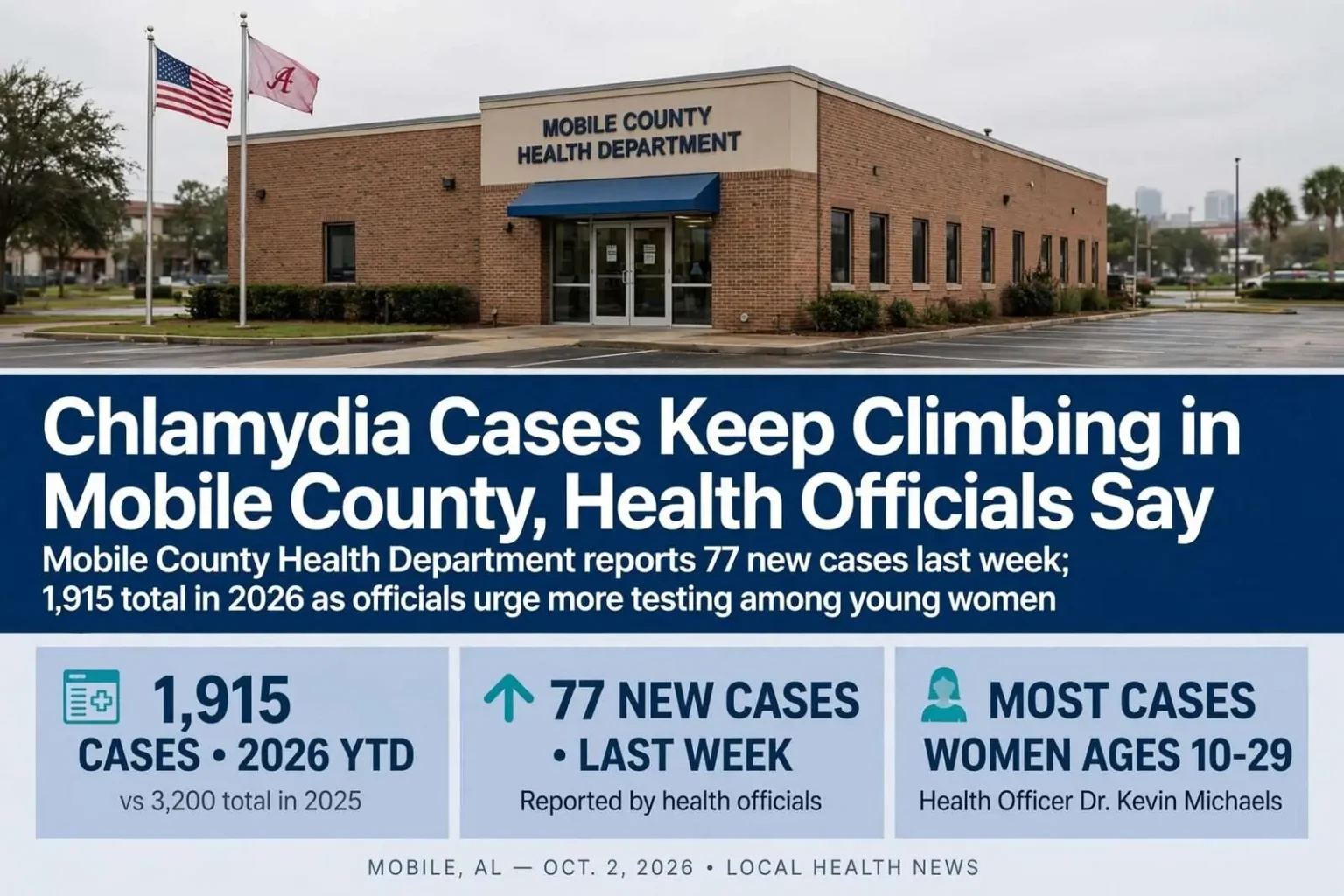
Chlamydia remains the most frequently reported sexually transmitted infection in Mobile County, and health officials say this year’s total is on pace to keep climbing.
The Mobile County Health Department reported 77 new cases last week alone, bringing the county’s total for 2026 to 1,915. Health Officer Dr. Kevin Michaels said the county logged almost 3,200 cases in all of 2025.
“The only way you’re going to get chlamydia is through unprotected sexual activity,” Michaels said. “It’s based on the sexual practice of the individual and, yes, unprotected sex, multiple partners increases the risk.”
Young Women Make Up Most Cases
Michaels said the vast majority of reported cases are among young women. “The vast majority of cases have been in the female population. So, women, and typically in the age range of 10 to 29,” he said.
Statewide, the Alabama Department of Public Health’s STD report showed 6,490 chlamydia cases reported across Alabama between January and March of 2026, underscoring that the trend extends well beyond Mobile County.
Michaels said rising case counts don’t necessarily mean the infection itself is spreading faster — increased testing may also be driving the numbers up. “I think more people are getting tested. It’s present. The availability of treatment is available,” he said.
Often Silent, Always Treatable
Chlamydia can be difficult to catch early because symptoms often differ between men and women, and in some cases don’t appear at all. “Women, you can have chlamydia and not know about it. It’s present. It may not cause any symptoms,” Michaels said. “Men are going to experience symptoms. They’re going to experience burning when they pass through urine.”
Because the infection can go unnoticed, particularly in women, health officials urge anyone who may have been exposed or who is experiencing symptoms to contact a primary care provider for testing, regardless of whether symptoms are present. Chlamydia is treatable with antibiotics, and Michaels recommends practicing safe sex as the most effective way to prevent it from spreading further.
Why Testing Matters
Chlamydia is caused by the bacterium Chlamydia trachomatis. Left untreated in women, it can spread to the uterus and fallopian tubes and cause pelvic inflammatory disease, which can lead to chronic pain, ectopic pregnancy and infertility.
Because so many infections produce no symptoms, the Centers for Disease Control and Prevention recommends yearly chlamydia screening for all sexually active women younger than 25, as well as older women with risk factors such as new or multiple partners.