Choctaw County Road Tax: Voters to Decide 5-Mill Levy for $13.1 Million Plan
Choctaw County voters will decide Nov. 3 on an up-to-five-mill property tax that would fund 24 pay-as-you-go road and bridge projects covering about 46 miles.
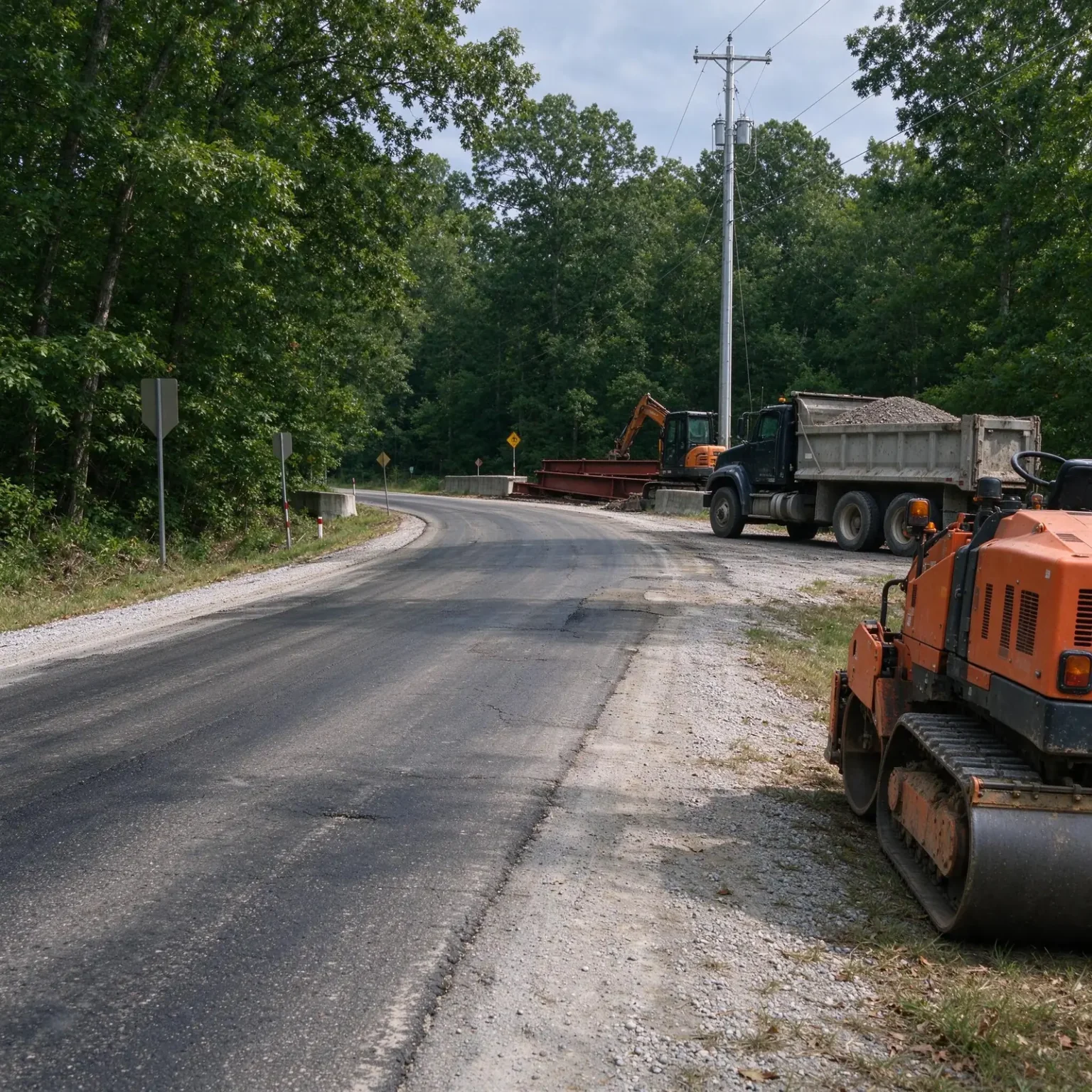
BUTLER, Ala. — Choctaw County voters will decide on Nov. 3 whether to approve a new property tax of up to five mills dedicated entirely to fixing county roads and bridges. The Choctaw County road tax would pay for a list of 24 projects on a pay-as-you-go basis, covering about 46 miles of roadway, with all of the work to be finished by Jan. 1, 2033.
The measure will appear on the general election ballot in Choctaw County. A “yes” vote approves both the pay-as-you-go road program and the additional ad valorem tax that would fund it. A “no” vote rejects the tax and the plan.
According to a published public notice, the 24 projects carry a total estimated cost of $13.1 million. Of that, $9.5 million would come from the special tax. The projects together cover an estimated 46.10 miles.
What the tax would do
If voters approve it, the additional levy would take effect Oct. 1, 2027, and would last no more than five years. When it expires, county leaders could ask voters to renew it.
The money could be spent only on projects in the county’s Road and Bridge Plan. According to the notice, the projects are intended to improve public safety and promote economic development for industry and businesses in the county.
Key points of the proposal:
- Rate: An additional ad valorem tax of up to five mills.
- Start date: Oct. 1, 2027.
- Length: No more than five years, with the option for voters to renew it later.
- Use: Only for projects in the county’s Road and Bridge Plan.
- Projects: 24 projects covering an estimated 46.10 miles.
- Cost: $13.1 million in total, including $9.5 million from the special tax.
- Deadline: All projects completed no later than Jan. 1, 2033.
The figures in the notice mean the special tax would cover a little under three-quarters of the plan’s total cost. The notice lists the balance as part of the overall project total but does not tie it to the new tax.
How the Legislature set up the vote
The referendum is possible because of a local law the Alabama Legislature passed this spring. House Bill 635, sponsored by Rep. Brett Easterbrook, passed the House on April 1, 2026, and the Senate on April 7, 2026.
The law allows the Choctaw County Commission to increase the county’s property tax by up to five additional mills on each dollar of assessed value, but only for road and bridge improvements and only with voter approval. Each increase is limited to five tax years.
The law also sets out guardrails for how the commission must present a proposal. Before any vote, the commission must hold a public hearing and adopt a resolution that spells out:
- The amount of the levy.
- The date the tax would begin.
- The specific road or bridge projects the money would fund.
- The projected completion date for each project.
A majority of the qualified voters casting ballots on the question must approve the increase for it to take effect. The law also permits the county to borrow against the tax by issuing warrants for specific projects, though the plan going before voters this fall is described as pay-as-you-go, meaning projects would be paid for as the tax money comes in rather than financed up front.
What a mill means for property owners
In Alabama, a mill equals one-tenth of a cent, or $1 in tax for every $1,000 of assessed value. Property is not taxed on its full market value. Instead, it is assessed at a percentage of value that depends on its class.
- Owner-occupied homes and agricultural and timberland property are generally assessed at 10% of value. Farm and forest land that qualifies for current-use valuation is taxed on its use value rather than its market value.
- Most commercial and other property is assessed at 20% of value.
- Utility property is assessed at 30% of value.
As an example, a home with a market value of $100,000 would have an assessed value of $10,000. A five-mill tax on that home would come to $50 a year. A home worth $150,000 would pay about $75 a year at the full five mills. Exemptions and individual circumstances can change the actual amount, and property owners can check with the Choctaw County revenue office for their own assessments.
Why roads are on the ballot
Choctaw County sits in west Alabama along the Mississippi state line, with the Tombigbee River forming its eastern border. The county had fewer than 13,000 residents at the 2020 census and is largely rural, with a long network of county roads that serve farms, timberland, small communities and industrial sites.
Like many rural Alabama counties, Choctaw has a large number of road miles to maintain and a relatively small tax base to pay for them. Timber trucks and other heavy vehicles take a toll on pavement, and aging bridges can force detours or load limits that slow down school buses, emergency vehicles and businesses. Dedicated local money can also help counties provide the local match often required to draw state and federal road funds.
Pay-as-you-go road programs are a familiar idea in south Alabama. Mobile County voters have approved a pay-as-you-go road and bridge program repeatedly over several decades, and the county put another round before voters this year. Supporters of the approach say it lets a county build roads without taking on long-term debt and gives voters a specific list of projects they can hold officials accountable for.
How to vote
The general election is Tuesday, Nov. 3, 2026. Polls in Alabama are open from 7 a.m. to 7 p.m. Voters must bring an acceptable photo ID, such as an Alabama driver’s license, a state-issued ID card, a passport or a free Alabama photo voter ID card.
Registered Choctaw County voters can confirm their polling place and registration status through the Alabama Secretary of State’s website, AlabamaVotes.gov. Voters who will be away or cannot get to the polls on Election Day should contact the Choctaw County absentee election manager at the circuit clerk’s office as soon as possible, since applications and ballots must be returned by deadlines set in state law.
Residents who want to see the full list of 24 projects, including the roads involved and the planned completion dates, can review the published public notice or contact the Choctaw County Commission office in Butler.