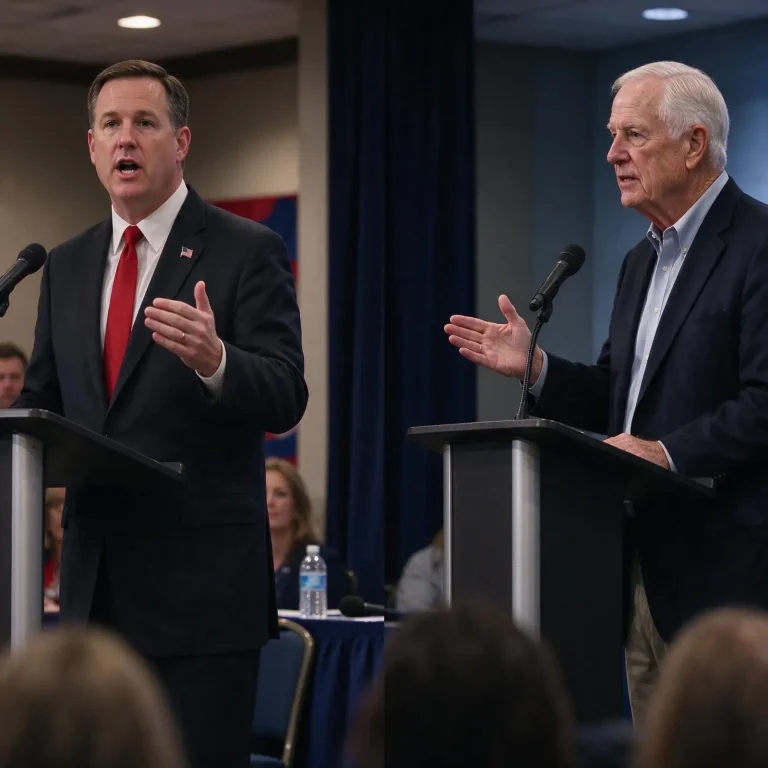
Tuberville Tells Alabama Mayors State Will ‘Stay Out of Your Business,’ Hinting at Home Rule
Speaking to the Alabama League of Municipalities in Mobile, GOP governor nominee Tommy Tuberville urged officials to set partisanship aside and said cities need control of their own money, though he offered no specific home rule plan.
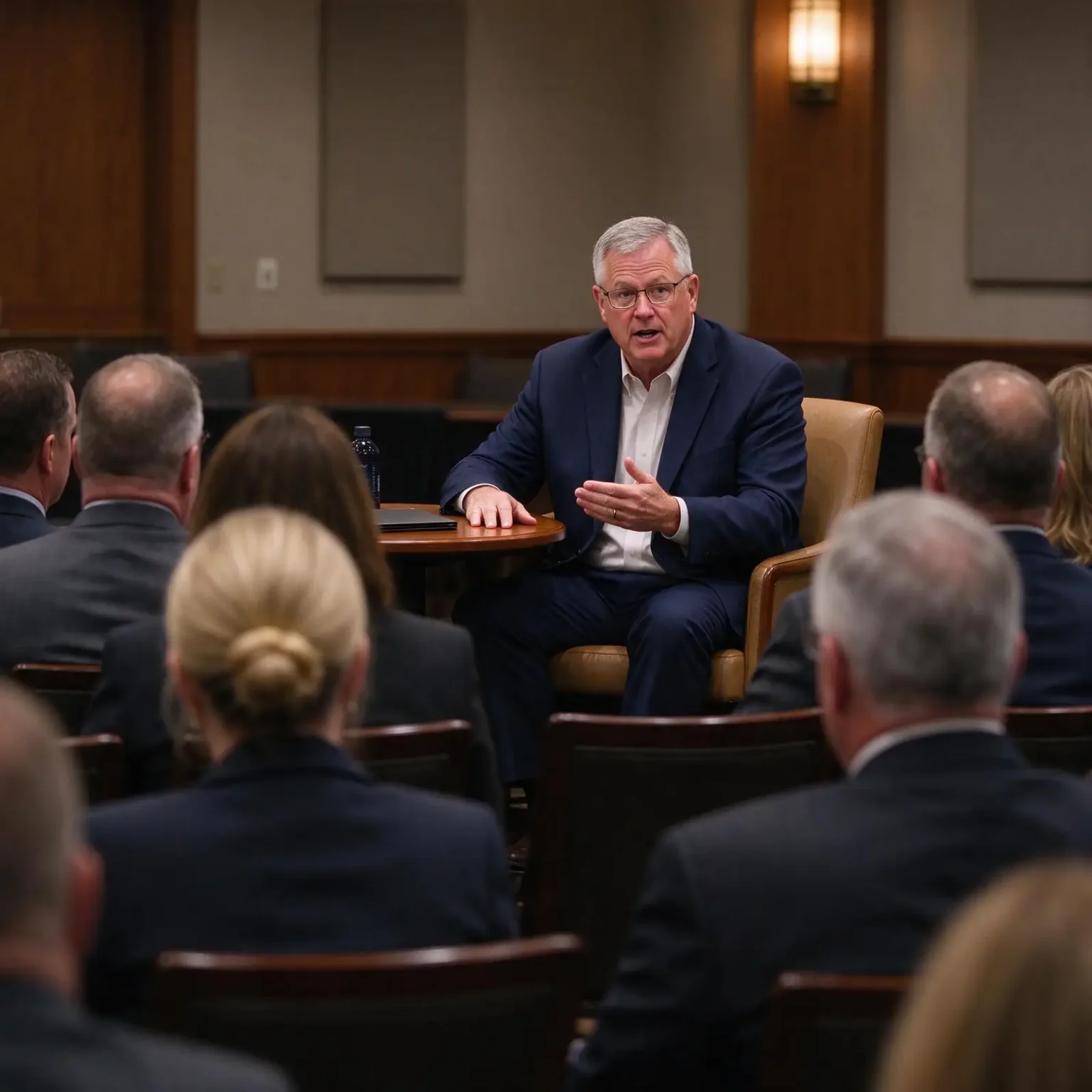
MOBILE, Ala. — U.S. Sen. Tommy Tuberville told a room of mayors and city council members in Mobile on Wednesday, Oct. 21, that state government under his leadership would “stay out of your business,” offering a hint of support for home rule for Alabama cities as he made his case to local officials less than two weeks before the governor’s race is decided.
The Republican nominee for governor spoke for about an hour in a fireside-chat format at an Alabama League of Municipalities conference. He reflected on his six years in the U.S. Senate, urged elected officials across the state to set partisanship aside, and suggested that cities should have more control over their own money and decisions. He did not offer a specific home rule proposal.
The tone was noticeably calmer than the one Tuberville struck the night before, when he addressed Republican supporters at a campaign dinner at Moe’s Original BBQ in downtown Mobile. There, he criticized “socialism” and “communism” and transgender ideology and urged Christian pastors to speak more boldly and publicly about their faith. A reporter was also escorted out of that event after trying to ask Tuberville a question while the senator was posing for photos with supporters.
Before the municipal leaders on Wednesday, Tuberville did not bring up socialism or communism, and the conversation did not turn to hot-button social issues.
‘We all have to be on the same page’
Much of Tuberville’s message focused on cooperation. He told the audience he does not see state and local politics as having the same partisan divisions that define Washington.
“I look at this way, the federal politics, you have a diverse group with two or three sides of Democrats, Republicans and Independent,” Tuberville said. “I don’t look at state politics like that.”
He continued: “We are a state of 5 million people. We all have to be on the same page. You might have a city council that is half Democrat and Republican, but that doesn’t make any difference.”
“At the end of the day, you will vote for what is best for your city or town. That needs to happen. It doesn’t need to be about politics. And state politics doesn’t need to be about politics. We win as one,” he said. “We want to win for the entire state of Alabama. That is what I will try to bring.”
The point carries particular weight for the audience he was addressing. Municipal elections in Alabama are nonpartisan, meaning candidates for mayor and city council do not run under a party label. County commission races, by contrast, are partisan, as are races for the Legislature and statewide offices such as governor.
Tuberville also spoke about the need to work with lawmakers across the aisle during his Senate tenure, including some of the chamber’s most liberal members, such as independent Sen. Bernie Sanders of Vermont and Democratic Sen. Elizabeth Warren of Massachusetts.
“You still have to be able to communicate with them even though they might be on a different side than you are on,” Tuberville said. “You might need them to sign off on something. You need their vote.”
He also credited President Donald Trump with playing a crucial role in securing the large federal loan needed to move the $4.15 billion Interstate 10 Mobile River Bridge and Bayway project forward. The bridge and a new, higher Bayway across Mobile Bay have been a top transportation priority for the Mobile and Baldwin County area for many years, intended to relieve chronic congestion at the George Wallace Tunnels and on the existing Bayway.
A hint at home rule
The comments that drew the most attention came when Tuberville addressed the relationship between Montgomery and the state’s cities and towns.
“State government is going to stay out of your business, I promise you,” Tuberville told the room, drawing applause.
“Everyone has their own problems. You need to have your own money. You know what you need. You need to be able to do what you need,” he said.
Tuberville said that the less state government has to manage local issues, the more time it will have “to take care a lot of other things we need to take care of.”
“We are going to count on you to do what you need to do,” he said. “We need to make sure we take care of city water, sewer, law enforcement, fire departments and all of those things that we need to take care of. There is not enough money out there in the state and federal governments to cover the bills.”
Tuberville did not explain how that philosophy would translate into policy, particularly when it comes to taxes, and he did not lay out a home rule plan during the session.
How home rule works in Alabama
Home rule refers to how much authority local governments have to manage their own affairs without first getting permission from the state. It has been debated in Alabama for generations.
Alabama applies a version of Dillon’s Rule, a legal principle named for 19th-century Iowa judge John F. Dillon. Under that approach, cities and counties generally have only the powers the state has granted them, rather than broad authority to govern themselves. As a practical matter, that means many local decisions in Alabama require action by the Legislature.
That limitation extends to money. Cities and counties have the taxing powers granted to them under state law, but they do not have unlimited fiscal home rule that would let them create new taxes or new sources of revenue on their own. Property taxes face particularly tight limits under the state constitution, which caps rates and requires voter approval for many increases.
The system has long produced a heavy volume of local legislation in Montgomery. Lawmakers routinely pass bills that apply only to a single city or county, and Alabama’s constitution includes hundreds of local amendments that deal with matters in individual counties. Supporters of broader home rule argue that local officials and voters are better positioned to make those decisions themselves. Others have argued that state oversight helps prevent tax increases and keeps a check on local governments.
The distinction is sharper for counties than for cities. Alabama municipalities have broader general powers under state law than counties do, which is one reason county home rule in particular has been a recurring subject of debate in Montgomery.
Where the candidates stand
Home rule has surfaced as an issue in the race between Tuberville and his Democratic opponent, former U.S. Sen. Doug Jones. Jones has called for expanding home rule authority for Alabama cities and counties, giving local governments more power over taxation, ordinances and other local decisions.
Tuberville’s remarks on Wednesday suggested an inclination to give local governments greater responsibility over their own affairs, though he stopped short of endorsing a particular approach. Neither candidate has released detailed legislation on the issue, and any significant change to the balance of power between the state and local governments would require action by the Legislature and, in some cases, approval by voters through a constitutional amendment.
The two candidates are running to succeed Gov. Kay Ivey, who has served since 2017 and is barred by term limits from seeking another term. Tuberville, a former head football coach at Auburn University, was elected to the Senate in 2020 by defeating Jones, who held the seat at the time. Jones, a Birmingham attorney and former U.S. attorney, won the seat in a 2017 special election.
Why it matters to cities and towns
The Alabama League of Municipalities represents hundreds of cities and towns across the state and advocates for local governments at the Legislature. Questions about how cities pay for basic services are central to its members’ work.
Many of the services Tuberville listed on Wednesday, including water and sewer systems, police and fire protection, are among the largest responsibilities facing local governments. In South Alabama, those pressures have grown with rapid population growth in Baldwin County, aging infrastructure in older communities and recovery costs from storms such as Hurricane Isaias, which caused heavy damage in parts of the region earlier this month.
For mayors and council members, how much freedom they have to raise and spend money locally can determine how quickly they can respond to those needs. Whoever wins the governor’s race will help shape that debate, along with the Legislature, through budget priorities and any proposals that reach the governor’s desk.
What comes next
Alabama’s general election is Tuesday, Nov. 3. Polls statewide are open from 7 a.m. to 7 p.m., and voters must bring an acceptable photo ID.
- Check your registration: Voters can confirm their registration status and polling place through the Alabama Secretary of State’s website or by contacting their county board of registrars.
- Absentee voting: Voters who qualify under state law can request an absentee ballot from their county absentee election manager, subject to state deadlines.
- Governor’s race: Republican Tommy Tuberville faces Democrat Doug Jones.
Both campaigns are making their closing arguments across the state in the final days before the election, and local officials will be watching for more detail from either candidate on how they would handle the relationship between Montgomery and Alabama’s cities and counties.