Coast Guard Rescues Five After Vessel Capsizes in Mississippi Sound Off Gulfport
A Coast Guard boat crew rescued five people after their vessel capsized in Mississippi Sound about two miles south of Gulfport Harbor.
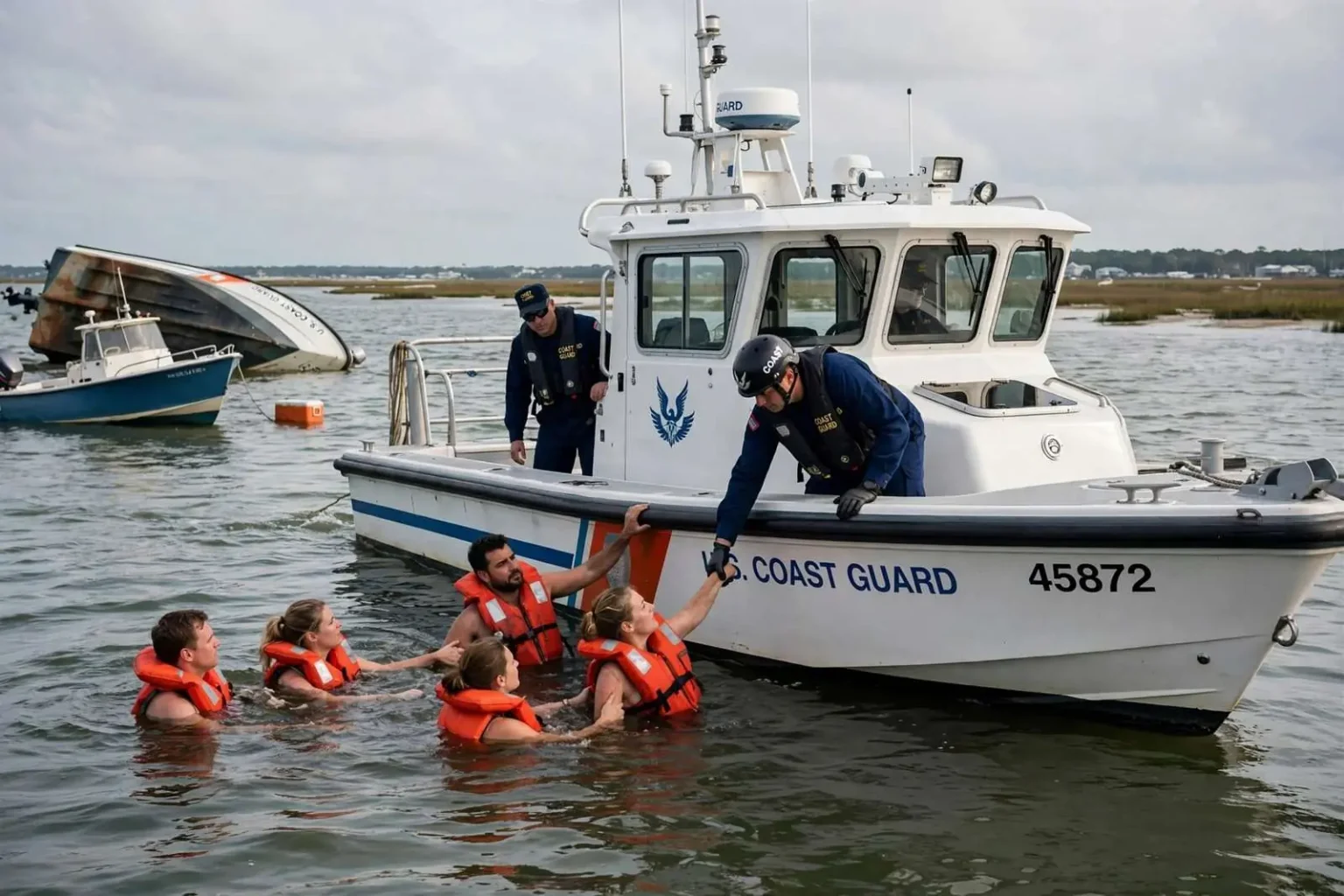
NEW ORLEANS — A Coast Guard boat crew from Station Gulfport rescued five people after their vessel capsized in Mississippi Sound about two miles south of Gulfport Harbor. Watchstanders at Coast Guard Sector Mobile received a report at 2:55 p.m. Saturday that an unknown number of people had gone into the water after the vessel went over. The boat crew pulled the five survivors from the water and transported them to Station Gulfport in stable condition.
The case unfolded quickly. The report to Sector Mobile, which coordinates Coast Guard operations across the central Gulf Coast from its Mobile, Alabama headquarters, set a rescue boat crew from Station Gulfport in motion within minutes. The station’s position at the harbor gave its crews short access to the waters where the capsizing occurred, and the two-mile distance meant the response boat could be on scene fast, which matters greatly when people are in the water.
By the time the crew arrived, five people were in the water where their vessel had gone over. The Coast Guard crew recovered all five and carried them back to Station Gulfport, where they arrived in stable condition. Authorities did not report serious injuries. What caused the vessel to capsize was not immediately detailed, and the identities of those rescued were not released, which is standard in cases where the people involved are uninjured and the incident ends without loss of life.
The waters where it happened
Mississippi Sound is the long, shallow body of water that runs along the Mississippi Gulf Coast, protected from the open Gulf by a string of barrier islands that includes Ship Island, Horn Island, and the Petit Bois chain. Gulfport, Biloxi, and the other coastal cities front directly on the Sound, and its waters are busy on weekends with fishing boats, pontoon boats, jet skis, and pleasure craft of every size running between the mainland and the islands.
The Sound’s conditions can deceive boaters who are new to it. It looks calm compared to the open Gulf, and on most days it is, but its shallow depths mean that wind builds up steep, choppy waves quickly, and afternoon summer storms can turn the water dangerous in minutes. The area two miles south of Gulfport Harbor is open water with no shelter nearby, so when a vessel goes over there, the people with it are exposed until help arrives.
Those realities make a capsizing in the Sound a genuine emergency even close to shore. Water in the region can present hazards for swimmers, and a person in the water even in warm weather loses body heat over time. Distance is deceptive on open water as well; two miles from a harbor can feel close to someone on a boat and look impossibly far to someone floating beside a hull that is slowly going under.
How the response works
The structure behind this rescue is the standard Coast Guard arrangement along the Gulf Coast. Sector Mobile, headquartered in Mobile, Alabama, serves as the command center for a broad sector covering the coasts of Alabama, Mississippi, and the western Florida Panhandle. Its watchstanders staff communication channels around the clock, taking distress calls over VHF marine radio and telephone and directing the resources of the stations beneath them.
Station Gulfport is one of those units, located at the port on the Mississippi coast. The station’s boat crews train continuously for exactly this kind of call: a vessel in distress, people in the water, and a limited window to get to them. When the report came in at 2:55 p.m. Saturday, the process that followed, dispatch, launch, transit, and recovery, is one the crews rehearse until it is routine, because on the water it must be.
Getting the report early in the event made the outcome possible. A call that reports people in the water immediately, with a location even approximate, lets responders calculate a search pattern and get underway while the scene is still fresh. Cases where rescuers learn about a capsizing hours later turn into searches; this one stayed a rescue because the watchstanders learned of it while all five people were still together and findable.
Why boats capsize in the Sound
Capsizing is one of the most common boating accidents on the Gulf Coast, and it rarely requires dramatic weather. Small vessels flip when they take waves broadside, when weight shifts badly, when they are overloaded, or when a sudden squall catches a crew that was running in calm conditions moments earlier. The shallow, steep chop of Mississippi Sound is particularly good at producing these conditions on windy afternoons, especially for smaller open boats.
Once a boat goes over, the situation is different from most accidents on land. Hulls float temporarily and then often sink, leaving people with whatever is buoyant: coolers, cushions, life jackets if they were worn or stowed within reach. The Coast Guard’s standing advice is to stay with the vessel when it is safe to do so, because a hull is a much larger target for rescuers than scattered swimmers, and to wear a life jacket rather than merely carry one aboard. In a sudden capsizing there is rarely time to put one on after the fact.
The other critical tool is the radio. VHF marine radio, with channel 16 reserved for distress traffic, reaches the watchstanders at Sector Mobile and any other vessels nearby in a way cell phones often cannot, particularly offshore or in the chaos of people in the water. A caller who can give a position, a description of the vessel, and the number of people aboard gives responders nearly everything they need. That is essentially what happened in this case: the report reached Sector Mobile with a location, and the station crew went to work.
Five pulled from the water
Recovering five people from open water is a demanding evolution even for a trained crew. Rescuers must approach without endangering their own boat or the people in the water, get each person aboard, check them for injury and exposure, and account for everyone reported to be on the vessel, since the initial call may not have known how many were aboard. The fact that an unknown number was reported makes a careful count on scene essential; crews search until they are certain everyone is recovered.
All five survivors made it, and all five arrived at Station Gulfport in stable condition, which is the outcome every element of the system exists to produce. Cases on the Gulf Coast do not always end this way. Capsizings with delays in reporting, or without life jackets, or in colder months, regularly produce serious injuries and deaths, which is why the Coast Guard treats each report as urgent regardless of the apparent size of the incident.
The transport to Station Gulfport also serves as the handoff point. Once survivors reach the station, they can be evaluated further, reunite with family, and connect with local EMS if needed. The Coast Guard’s role ends at the transfer, and the station’s location at the harbor keeps that part of the process short.
What boaters on the Mississippi Coast should take from it
The rescue is a straightforward reminder of the basics that keep a day on the water from becoming a tragedy. Wear the life jacket rather than stowing it. File a simple float plan with someone ashore who knows where you are going and when to expect you back. Carry a VHF radio and know how to use it. Check the forecast before leaving the dock, and remember that on the Sound the afternoon wind and the afternoon storm are both predictable features of the climate, not surprises.
It is also a reminder of what is out there on any given Saturday. Station Gulfport’s crews and the watchstanders at Sector Mobile stand by around the clock, and the waters of Mississippi Sound are watched over by a system that has been rescuing Gulf Coast mariners for generations. On this afternoon the system worked as designed: a report came in, a crew launched, and five people who went into the water went home.
For the five boaters involved, the difference between a story and a statistic came down to timing and equipment. The report was made quickly, the crew was close, and everyone was recovered in time. Every boater heading out of Gulfport Harbor into the Sound operates with the same variables, and this case shows both how fast things go wrong and how well they can end when the basics are done right.
The Coast Guard’s presence on the central Gulf Coast
This rescue also illustrates the layered search-and-rescue network that covers the northern Gulf. Sector Mobile in Alabama oversees stations and assets positioned along the coast so that no stretch of water is far from a responder. Station Gulfport handles the Mississippi Sound and the near-shore Gulf, working alongside sister stations and, when cases grow larger, boats and aircraft from other units. The system is built on geography: a capsizing two miles off Gulfport is minutes from one station, and the sector’s watchstanders know exactly which resource to send.
Local responders join the effort in many cases as well, with county marine patrols, fire departments, and volunteer boats assisting on scene. On a busy weekend Saturday, help is often closer than it appears, with other boaters among the first to hear a distress call on the radio and the first able to mark a position or pull someone from the water. The formal rescue from Station Gulfport was the backbone of this response, but the margin of safety on the Sound comes from all of these layers together.
For the families of the five people rescued, the afternoon ended with a phone call that Gulf Coast families of missing boaters do not always get to make. The vessel is gone, but everyone who went out on it came back, and that is the measure by which a Saturday on Mississippi Sound can be called a good one.