Column: A Tomboy Childhood Spent Outdoors, Before Screens Filled Every Pocket
A personal column reflecting on a tomboy childhood spent around horse stables, motorcycles and ball fields, long before screens filled every pocket.
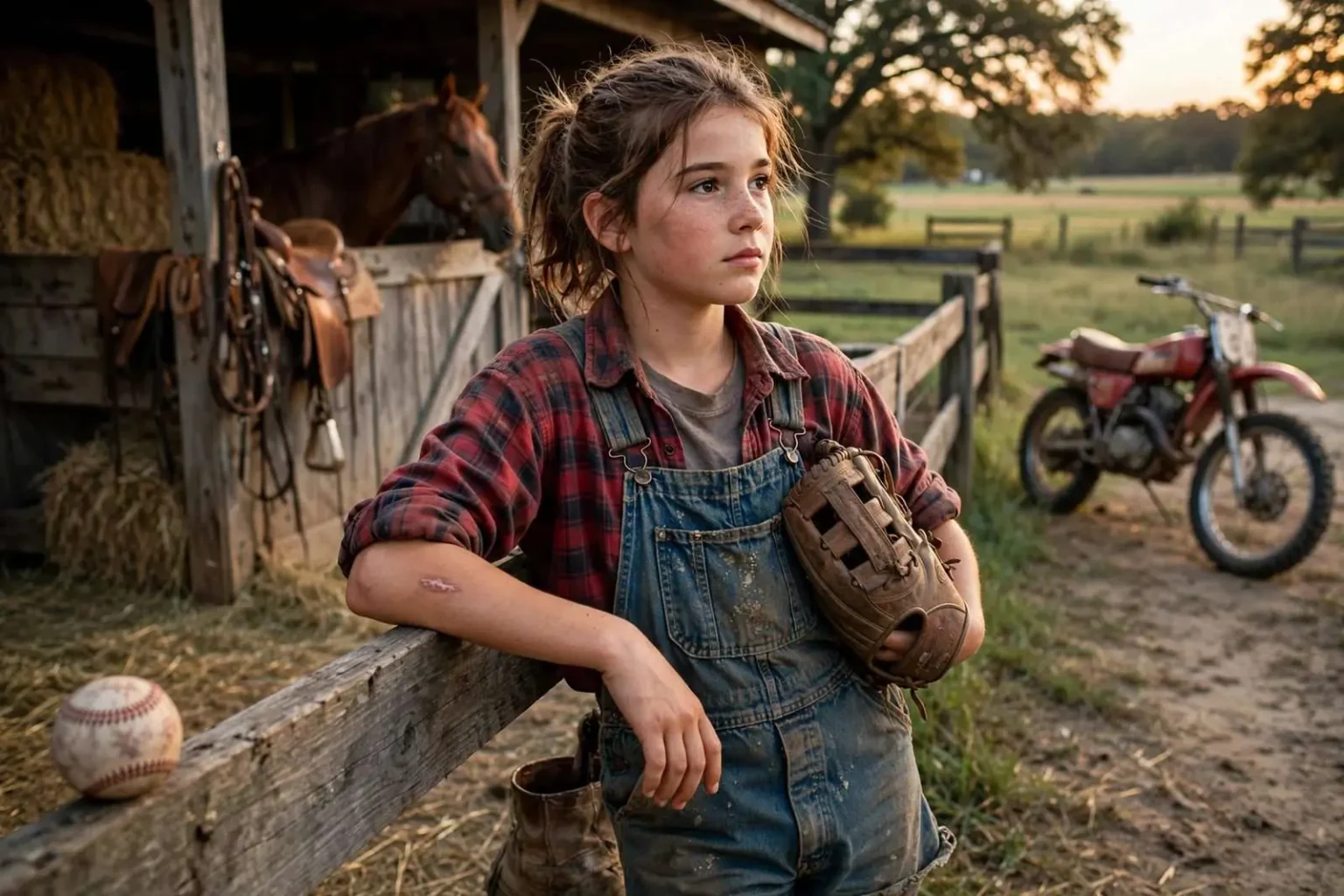
Growing up, I was quite the tomboy. While other kids I knew were content to sit indoors, I spent a lot of time around horse stables, participated in horse shows, rode motorcycles, played ball, and pretty much did anything that involved being outdoors, getting dirty, or doing something that probably would have made my mother nervous had she known about it beforehand.
We didn’t have video games in our pockets back then. There was no screen to retreat into when the weather turned warm and the days stretched long. The days were filled instead with the kind of hands-on adventure that comes from being outside and taking a few chances — the sort of childhood that, looking back now, seems almost like it belonged to another country.
It’s worth saying plainly: I wouldn’t trade it. The scrapes, the sunburns, the bruises and the mud were tuition payments on an education no classroom could provide. What follows is a look back at that way of growing up, what it taught me, and what children today — with a world of entertainment available in a device smaller than a deck of cards — may be missing.
The Stables Taught Everything First
Horses were my first teachers. Around the stables, you learn quickly that these are animals with their own minds, their own moods and their own opinions about the day’s plan. A horse can tell whether you’re confident or scared, patient or rushed, and it will respond in kind. There is no talking your way out of a bad first impression with a half-ton animal.
Caring for a horse meant arriving early and staying late. Feed, water, groom, tack up, ride, cool the animal down, clean the stall — the work came before and after any fun, and the fun was inseparable from the work. That’s a lesson a lot of adults spend years relearning in their first jobs, but around a stable it arrives naturally, carried on the smell of hay and leather.
Horse shows added another layer. Preparing for one meant weeks of quiet discipline: practicing patterns, polishing tack, learning how to present yourself in front of judges and strangers. On show days you learned to handle nerves, to take a disappointing ribbon without collapsing, and to win without gloating. Those weekends in the ring — dust, ribbons, announcers on loudspeakers — built a kind of steady composure that has lasted far longer than any trophy.
Motorcycles, Ball Fields and Two-Stroke Freedom
Then came motorcycles. Riding a motorcycle as a kid is freedom with a throttle on it. You learn the trails, learn the machine, and learn your own limits — usually by bumping into them at low speed first. Falling off, dusting yourself off and getting back on is not a metaphor out there; it’s just what you do. Nobody wrote a book for us about resilience. We were too busy demonstrating it.
Ball fields carried the same spirit. Pickup games required no leagues, no schedules and no registration fees — just a ball, whatever bases were at hand and enough kids to make it interesting. You learned to settle disputes on the spot, choose teams fairly and keep playing until the streetlights or the supper bell intervened. The rules were negotiated fresh every afternoon, and the games were better for it.
The Things That Made Mama Nervous
I’ll admit there were a few exploits my mother would have halted on the spot, had she known about them beforehand. Every childhood has those — the plans hatched in whispers, the dares accepted at the edge of a field, the small rules bent in the name of adventure. I won’t itemize them here; some confessions are better left as a general amnesty.
But those calculated risks were doing quiet work. Deciding for yourself whether a creek crossing was safe, whether a jump was too big, whether a horse was ready to canter — that was judgment being built in real time, with real consequences and no algorithm to make the call for you. Kids who are permitted a few supervised chances to be brave become adults who can be trusted to be sensible.
Before Screens Filled Every Pocket
The great difference between that childhood and this one is the screen. Today the games, the videos, the messages and the whole roaring carnival of the internet ride along in a device that fits in a jeans pocket. When children get bored now, the cure arrives in three seconds, and boredom — that raw material of imagination — never gets a chance to do its work.
In the days I grew up in, boredom had to be solved with your hands and your head. A dull afternoon demanded an invention: a fort, a race, an expedition to the far edge of the property, a new trick to attempt on the bike. Boredom was the starting line, not a condition to be medicated. Some of the best afternoons of my life began with nothing to do.
I’m not here to condemn the phones entirely; that would be both hypocritical and useless. The screens brought wonders. But they arrived so completely that they displaced the outdoors rather than accompanying it, and displacement is different from addition. A child can spend an entire week of daylight indoors and never feel the lack — and that, I’d argue, is the real loss.
What the Outdoors Actually Teaches
Consider the catalog of skills an outdoor childhood delivers, none of them on a test. Weather literacy: knowing what a rising wind and a green sky mean, and when to head for the porch. Mechanical sense: the motorcycle that runs until it doesn’t, and the discovery that things can be understood, fixed and maintained. Spatial judgment: the depth of a creek, the height of a climb, the speed of a horse.
Outdoors, the consequences are real but gentle. A fall on grass hurts for a day. A wrong guess about the weather costs a soaking. These are rehearsals for a world that will not always be gentle, conducted in a setting where the stakes are as low as they will ever be. I don’t know how that rehearsal happens on a couch.
A Southern Childhood, Out of Doors
Growing up in this part of the world made the outdoors a year-round proposition, which is its own gift. Long summers meant long evenings, the kind where the air stays warm past suppertime and the daylight holds on generously. Springs arrived loud with birds and sudden with storms. Even winter was brief enough to barely interrupt the schedule of fields and trails and ball games.
The South’s outdoor traditions ran through our play whether we noticed them or not. Fishing holes and hunting woods. Gardens tended by grandparents who could name every plant on the place. Church picnics, county fairs, rivers and ponds, porch conversations that drifted into the yard. Children raised in that setting absorb a sense of belonging to a landscape, not merely living on top of one.
That belonging matters. People protect what they know and love, and children who grow up catching lightning bugs and wading creeks tend to become adults who want those things to still be there for the next set of kids. An outdoor childhood quietly plants conservation, community and memory in the same bed.
The Tomboy Label, Reconsidered
I wore the word tomboy like a badge, and I still think the qualities it described were worth having. But it’s worth noting that what I actually was — a girl who liked horses and motorcycles and ball and dirt — was never strange at all. Plenty of girls my age did the same, and plenty of boys preferred books and quiet rooms, and both groups turned out fine. The label mattered less than the living.
What the label pointed to, really, was independence. A tomboy was a girl who didn’t wait for permission to be interested in the world — who went out and got dirty, took chances and came home with stories. That independence is not a childhood phase to be outgrown. It’s a foundation, and I’ve stood on it all my life.
If the word is fading now, perhaps that’s because fewer children of any description are being raised the way we were — with the run of the outdoors and the expectation that they’d manage it. The tomboys and their indoor brothers and sisters have a common enemy these days, and it isn’t each other. It’s the couch.
What Today’s Children Might Be Missing
Watch a child these days and you’ll see extraordinary competence with devices and, sometimes, a certain hesitancy with the physical world — how to climb, how to fall, how to read a trail or hold a ball or handle an animal. These are learnable skills, and they require the one thing a screen cannot supply: repeated, unstructured contact with the outdoors.
The benefits of outdoor time are no secret. Sunshine and exercise for growing bodies. A settling of the nervous system that no app quite replicates. Sleep that comes easier after a day of running. And for parents, a practical bonus that deserves more respect than it gets: children who have spent the afternoon outdoors are, empirically, easier to be around at suppertime.
None of this requires a horse or a motorcycle. It requires only that we hand over some hours and some trust. A backyard, a ball field, a greenway, a creek bank — the equipment of an outdoor childhood is, fittingly, mostly free. What costs us is the willingness to tolerate scrapes, mud and a certain amount of not knowing exactly where the children are at 4 o’clock.
Taking a Few Chances, Then and Now
The heart of my upbringing, I’ve come to believe, was permission — permission to take a few chances. The adults around us assumed we would be mostly all right, and because they assumed it, we rose to it. That trust was the invisible curriculum. Everything else, from stable work to trail riding, was just the classroom.
Chance-taking scales up over a life. The child who learned to try the jump is the adult who applies for the job, starts the business, speaks up in the meeting. Courage is not taught in a lecture; it is accumulated in small deposits, made early, in bodies and minds that are still forming. Deprive a childhood of all risk and you don’t get safety. You get an adult facing real risk for the first time at twenty-five.
So when I say we took chances outdoors, I don’t mean recklessness. I mean the measured daring of the young — chances sized to the moment, with a margin for error that the fields and stables quietly provided. My mother’s nerves, had she known, would have been real. Her daughter’s judgment, which she was actually building, turned out to be sounder than either of us knew.
Looking Back From Here
From the far side of childhood, the memories come back in textures more than scenes: the creak of saddle leather, the smell of two-stroke exhaust, the specific ache of shoulders after a long afternoon of throwing. Nobody photographs any of this now, and no one did then. We simply lived it, and it lived in us.
I feel fortunate to have grown up on the last side of a great divide — old enough that the outdoors was the default, young enough to have watched the change arrive. My generation is a bridge between two childhoods, and standing on that bridge gives you a view in both directions. The old country was rougher, dirtier and better for us than we realized at the time.
My advice, for whatever it is worth from a onetime tomboy: open the door. Hand the child a ball, a bike, a shovel, a pair of boots. Let them get dirty, let them take a few chances, and let them come home with an appetite and a story. The screens will always be there. The fields won’t. And the child, given the choice more than once, might just surprise you — the way a horse knows, and the way the outdoors never forgets.