

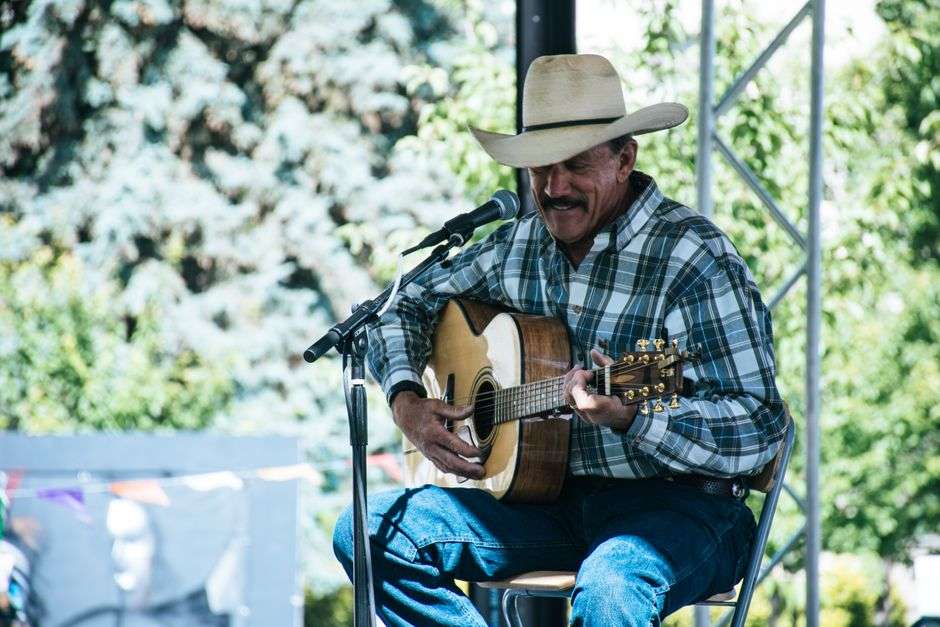
A singer-songwriter who grew up on the Eastern Shore is building a career in Nashville’s country music scene, drawing on a childhood spent around Baldwin County churches, cover bands and community stages to shape a sound rooted in the storytelling style of 1990s country radio. Aaron Parker, a Daphne native, said his love of country music took hold early. He sang alongside his mother, who played piano, at South River Park Church of God on County Road 32 near Fairhope, and later picked up guitar lessons at Jubilee Music. He also spent time performing in a cover band called Slap Out with members who would go on to form The Mulligan Brothers. Throughout those years, the songs of artists such as Tracy Lawrence and George Strait stuck with him.
By the time he was singing in the choir at Faulkner State Community College, Parker said he knew he wanted to pursue country music as a career. Like generations of aspiring country artists before him, Parker eventually packed up and moved to Nashville to chase the dream. The transition wasn’t easy, and Parker said he was well aware of how many hopeful musicians never turn a move to Music City into a career. Rather than try to replicate the massive arena shows and big production budgets that defined 1990s country’s commercial peak, Parker said he focused on what actually drew him to that era of music in the first place: the songwriting.
Why the Songwriting Matters
“I noticed that there was a lyrical content or lyrical level that was probably the reason I fell in love with them,” Parker said. “When I came to Nashville, I was interested in finding songs and writing songs that had that level of lyric.” Parker said he drew much of his early material from his own life, writing songs about growing up in Baldwin County and about the process of maturing into adulthood. A turning point came when he was offered the chance to contribute a song to the soundtrack of an independent film originally titled “Thriftstore Cowboy” and later released as “Born Wild.” That placement gave him one of his first professional credits and introduced his work to listeners outside the traditional Nashville songwriting circuit. The film soundtrack, distributed through a small Nashville label, has continued to find new listeners online, and Parker said it remains one of the most common ways new fans discover his music.
The Debut EP
Parker’s debut EP collects several of the songs he wrote during his first years in Nashville, along with a few co-writes with other songwriters he met through the city’s busy open-mic and writer’s night scene. The project was recorded in a modest Nashville studio and was released independently, with distribution handled through the major streaming platforms. Parker said the goal of the EP was to introduce himself to listeners rather than to chase radio airplay, an approach he believes gives new artists more control over how their work is presented. The songs themselves range from up-tempo country rockers to slow, acoustic-driven ballads, with lyrics that lean on specific details of life on the Gulf Coast.
Baldwin County as a Muse
Several of the songs on the EP reference places and experiences that will be familiar to anyone who grew up on the Eastern Shore. There are references to back roads, summer evenings and small-town football games. There are also more personal references, including Parker’s memories of singing at his family’s church and of the older musicians who mentored him when he was first learning to play. Parker said he tries to write songs that could only come from where he grew up, rather than songs that could be about anywhere. That approach is consistent with the 1990s country tradition he admires, a tradition that prized local color and specific storytelling over generic themes.
The Road Ahead
Parker is already working on a full-length album that he expects to release later this year. The project will include several songs he has written with collaborators he met through the Nashville songwriting community, along with a few that he wrote entirely on his own. He is also planning a return trip to Baldwin County for a series of shows, including a stop at a venue in Daphne that he described as one of his favorite places to play. The hometown shows, he said, are the most important gigs of the year, both because they let him see family and old friends and because they remind him why he started writing songs in the first place.
A Larger Eastern Shore Music Scene
Parker is one of several songwriters from Baldwin County who have made careers in Nashville or in other music cities. The Eastern Shore has long produced musicians who go on to professional careers, particularly in country and gospel. Local venues, including the bars and restaurants along the Causeway and in downtown Fairhope, have provided stages for aspiring performers for decades. Parker credits that local infrastructure, along with the encouragement of his family, for giving him the confidence to try to make it in Nashville. Without the years of performing at home, he said, he never would have developed the stage presence and the songwriting discipline that the move required.
What Listeners Will Find
For new listeners, the EP is a good introduction to Parker’s strengths as a lyricist and as a vocalist. His voice is warm and unforced, with a slight country grain that suits the material. The songs are tightly constructed, with choruses that stick in the mind and verses that reward repeated listening. Production is deliberately understated, putting the lyrics front and center rather than burying them in instrumental tracks. That production choice is consistent with Parker’s stated admiration for the songwriters of the early 1990s, an era when lyrics mattered as much as hooks. If the EP succeeds on its own terms, it will introduce Parker to listeners who care about songwriting as much as they care about radio hits.
Parker’s approach is unusual among young Nashville artists, who more often chase the contemporary sound of mainstream country radio rather than the lyric-driven sound of two decades ago. He is betting that there is still an audience for songs that reward careful listening, and that the streaming era, which has flattened many of the old barriers between artists and listeners, will reward that approach. The early response to his EP, which has accumulated several million streams across the major platforms since its release, suggests he may be right. The numbers are modest by Nashville standards, but they are growing steadily, and the listener demographics skew toward fans who actively seek out new songwriters rather than passive consumers of radio playlists.
Coming Home to Baldwin County
For all his time in Nashville, Parker says he still considers Baldwin County home. He comes back several times a year to see family and to play shows, and he has been involved in efforts to support young musicians on the Eastern Shore. He has played benefits for local schools and has donated instruments to church music programs. Those efforts are partly a way of giving back to the community that raised him, and partly a recognition that the next Aaron Parker is probably out there right now, learning to play guitar in a living room somewhere between Daphne and Fairhope. If that kid makes it to Nashville a few years from now, Parker wants there to be a clearer path than the one he had to find on his own.
Why the 1990s Sound Still Matters
Country music in the 1990s was defined by artists who were as much songwriters as performers. The era produced a remarkable run of hits that depended as much on the quality of the lyrics as on the strength of the melodies. Names like Tracy Lawrence, George Strait, Alan Jackson and Mark Chesnutt became stars partly because their songs told stories that listeners could see themselves in. Parker’s music sits squarely in that tradition, with songs about small-town life, family, heartbreak and the kinds of everyday moments that defined 1990s country. The sonic trappings are modern, but the bones of the songs are recognizably old-fashioned, and that is exactly the point.
Whether Parker’s career continues to grow will depend on a number of factors, including the reception of his upcoming album and the response from radio programmers and live-music bookers. But the foundation he has built with his debut EP is solid, and the loyal following he has developed on the Eastern Shore and in Nashville gives him a runway to keep building. For now, he is doing what he set out to do: writing songs that matter to him and finding listeners who care about the same things he does. The rest, as they say, will take care of itself.