

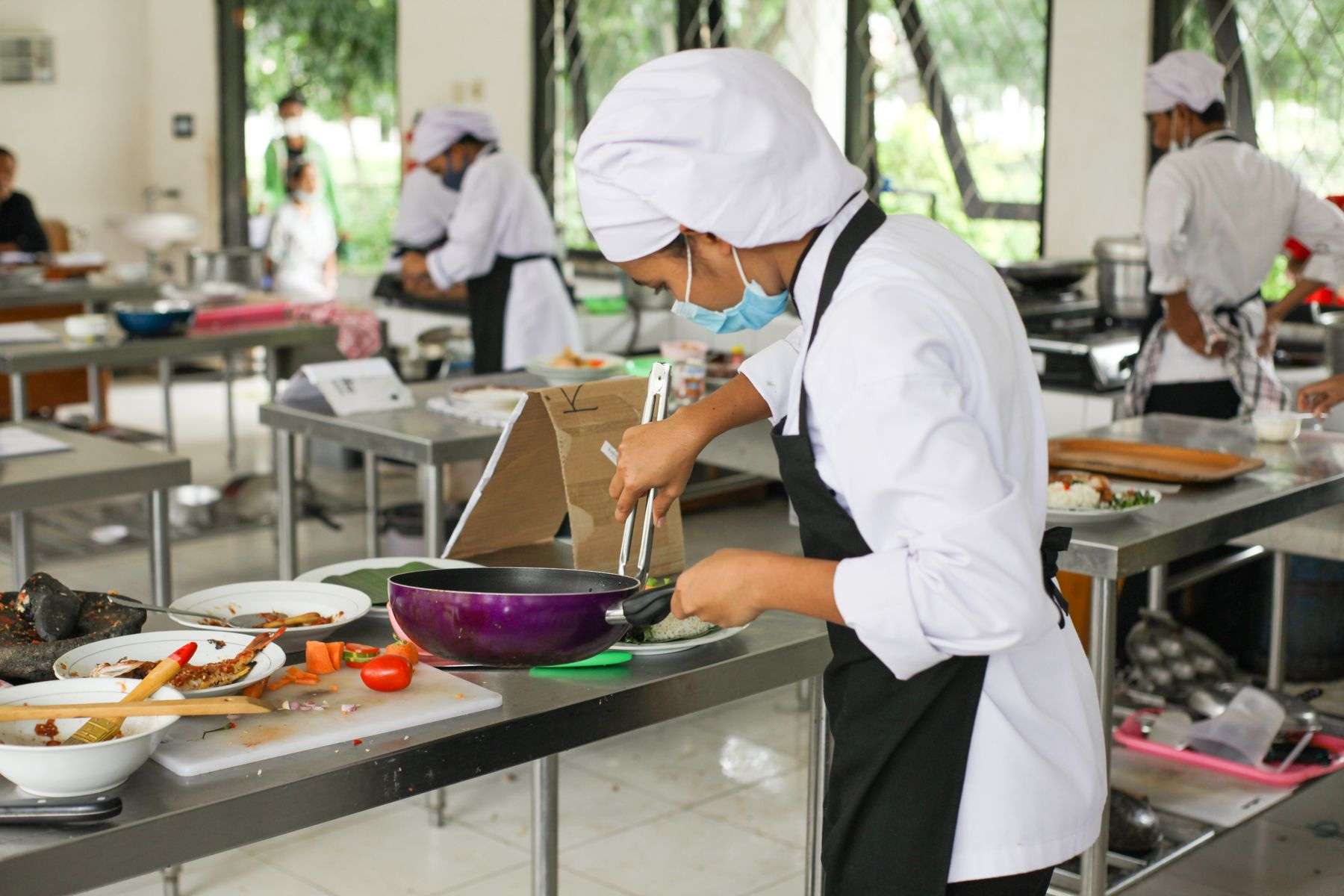
Davidson High School’s culinary arts team claimed the Golden Spoon Award in a weekend cooking competition that pitted student chefs from six Mobile-area high schools against one another, with the winning team going on to showcase its dishes on local television afterward. The victory capped weeks of preparation for the Davidson students, who practiced their menu outside of class hours while balancing coursework and other school commitments in the run-up to the contest.
The Golden Spoon Competition gives local high school students the chance to compete for a scholarship to Culinard, the Culinary Institute of Virginia College, turning what might otherwise be an extracurricular cooking club into a genuine pathway toward a culinary career. The scholarship component has made the contest one of the most anticipated events of the school year for students in the district’s career and technical education programs, many of whom go on to work in the Gulf Coast’s busy restaurant and hospitality industry.
Teams from Baker, Citronelle, Davidson, Murphy, Vigor and Williamson high schools took part in this year’s contest, with Team Davidson ultimately coming out on top. The six schools represent the breadth of the Mobile County Public School System, from long-established west Mobile campuses to community schools like Citronelle in the county’s northern reaches. Each team arrived with its own menu concept and practiced lineup, giving judges a wide field of dishes to evaluate over the course of the weekend.
A Menu Rooted in the Gulf Coast
The Davidson team built its winning menu around Gulf Coast ingredients familiar to any South Alabama kitchen, including citrus from the region’s beloved satsuma orange crop. Satsumas, the seedless mandarin oranges that give the Mobile County town of Satsuma its name, ripen in the late fall and have been a signature crop of the Gulf Coast for more than a century. Local growers revived the industry in recent decades after hard freezes damaged earlier orchards, and the fruit now anchors everything from farmers market stalls to school lessons on regional agriculture.
Their spread ran from a chilled cantaloupe-satsuma gazpacho shooter, blended smooth with lemon, mint and a touch of sugar, to a grilled salmon plated over a warm lentil salad dressed with a reduced citrus-and-herb marinade and topped with arugula and parsley. The chilled shooter opened the menu with a balance of sweetness and citrus brightness, while the salmon course demonstrated the team’s command of temperature and timing — cooking fish evenly while reducing a marinade into a glaze without letting it burn.
The students also prepared an Andalusian-style bean and satsuma salad tossing white beans, citrus segments, cucumber and bell pepper with olive oil and vinegar, along with handmade empanadas filled with sautéed spinach, onion, garlic and goat cheese, wrapped in a from-scratch pastry dough flavored with satsuma and lemon zest. The empanadas, in particular, showcased the kind of technique that takes months to develop: rolling dough to a consistent thickness, sealing the fillings without splitting the pastry and frying or baking each piece to an even golden finish.
Skills That Go Beyond the Classroom
Competitions like the Golden Spoon give culinary arts programs at Mobile County high schools a chance to demonstrate skills that go well beyond home economics basics, including knife work, sauce reduction, dough-making and plating technique. Students on competition teams spend months refining those fundamentals, learning the discipline of mise en place, the timing required to send multiple dishes to a table at once and the presentation standards that separate a professional plate from a home-cooked meal.
The judging in such contests typically weighs taste, technique, presentation and teamwork, with culinary professionals from the region evaluating each plate the way they would in a working restaurant. For the students, the experience of cooking under a clock while experienced chefs watch closely is often described as the most demanding — and most valuable — part of the competition, offering a realistic preview of the pace and pressure of a professional kitchen.
For students considering a future in the restaurant or hospitality industry, the scholarship on the line adds real stakes to the event and offers a direct bridge from high school culinary classes to formal training at a professional cooking school. Culinard, based in Birmingham, has long operated programs designed to move students from classroom fundamentals into externships and working kitchens, and scholarships of this kind remove a significant financial barrier for students from families who might otherwise be unable to afford culinary education after graduation.
The Gulf Coast economy gives that pathway particular weight. From the tourist restaurants of Gulf Shores and Orange Beach to the established dining scenes in downtown Mobile and the Eastern Shore, the region supports thousands of hospitality jobs, and employers regularly report difficulty finding trained cooks and kitchen staff. Programs like Davidson’s — and competitions like the Golden Spoon — feed that pipeline, giving local restaurants a reason to hire graduates who arrive already versed in professional standards.
From the Competition to the Kitchen Studio
Following the win, members of the Davidson team brought their recipes to a local television program to demonstrate the winning dishes for viewers, giving the team a second round of recognition beyond the competition itself and putting a spotlight on the caliber of culinary instruction happening in Mobile County high schools. The studio segment required the students to condense their competition routines into a broadcast-friendly demonstration, talking through their techniques while preparing dishes for the cameras.
Teachers and mentors behind the Davidson program credited the students’ hours of practice and their willingness to accept criticism during trial runs as the foundation of the win. Culinary arts instructors across the district note that competitions also elevate their programs within their schools, drawing new students into electives they might not otherwise consider and giving younger classmates visible goals to work toward.
The other five schools that competed — Baker, Citronelle, Murphy, Vigor and Williamson — each brought distinctive menus of their own, and organizers emphasize that the contest’s purpose extends well beyond naming a winner. For students from campuses across Mobile County, the event is a chance to see peers from different neighborhoods tackle the same challenge, swap ideas about ingredients and technique, and build the kind of peer network that carries into culinary school and the restaurant industry.
Community support has played a growing role in the competition’s success as well. Local chefs, restaurant owners and food distributors have lent judges’ time, ingredients and equipment in past years, and the television exposure that follows the event gives the district’s career and technical programs a visibility that ordinary classroom budgets could never buy.
For the Davidson students, the weeks ahead will involve savoring the win, filing scholarship paperwork and, in some cases, planning the next step toward a culinary career. Their winning menu — from the satsuma gazpacho shooter to the goat cheese empanadas — now stands as an example for next year’s teams across Mobile County, and as proof that a high school kitchen classroom can produce plates worthy of any professional dining room on the Gulf Coast.
Culinary Education Across Mobile County
Culinary arts instruction in Mobile County high schools has grown steadily over the past two decades as the district has expanded its career and technical offerings. Campus kitchens are equipped with commercial ranges, steam tables and prep stations that mirror working restaurants, and instructors drawn from the hospitality industry bring firsthand experience of the standards students will face after graduation. Coursework covers food safety certification, costing and menu planning alongside hands-on cooking, giving participants both the practical skills and the credentials employers look for when hiring young cooks.
The Golden Spoon adds a competitive layer to that instruction each year, and former participants have gone on to work in kitchens across the Gulf Coast and beyond. Educators point to the event as an example of how competitions can motivate students who respond to hands-on challenges more than traditional testing, with the scholarship prize transforming an afternoon of cooking into a tangible investment in a student’s future.
The satsuma theme at the heart of Davidson’s winning menu also carried a local agriculture lesson into the competition kitchen. South Alabama’s satsuma industry, concentrated in orchards across Mobile and Baldwin counties, has become a point of regional pride, celebrated each year through festivals and school programs that connect students to the growers in their own communities. Building an award-winning menu around the fruit gave the Davidson team a story as well as a flavor profile — one that judges and television viewers alike could recognize as distinctly Gulf Coast.
Organizers say next year’s Golden Spoon is expected to draw the same six schools back to the competition floor, with the returning teams hungry to unseat the champions. For now, the trophy — and the scholarship opportunity that comes with it — sits at Davidson, where the winning menu will be studied by the next class of student chefs preparing to take their own shot at the title.