

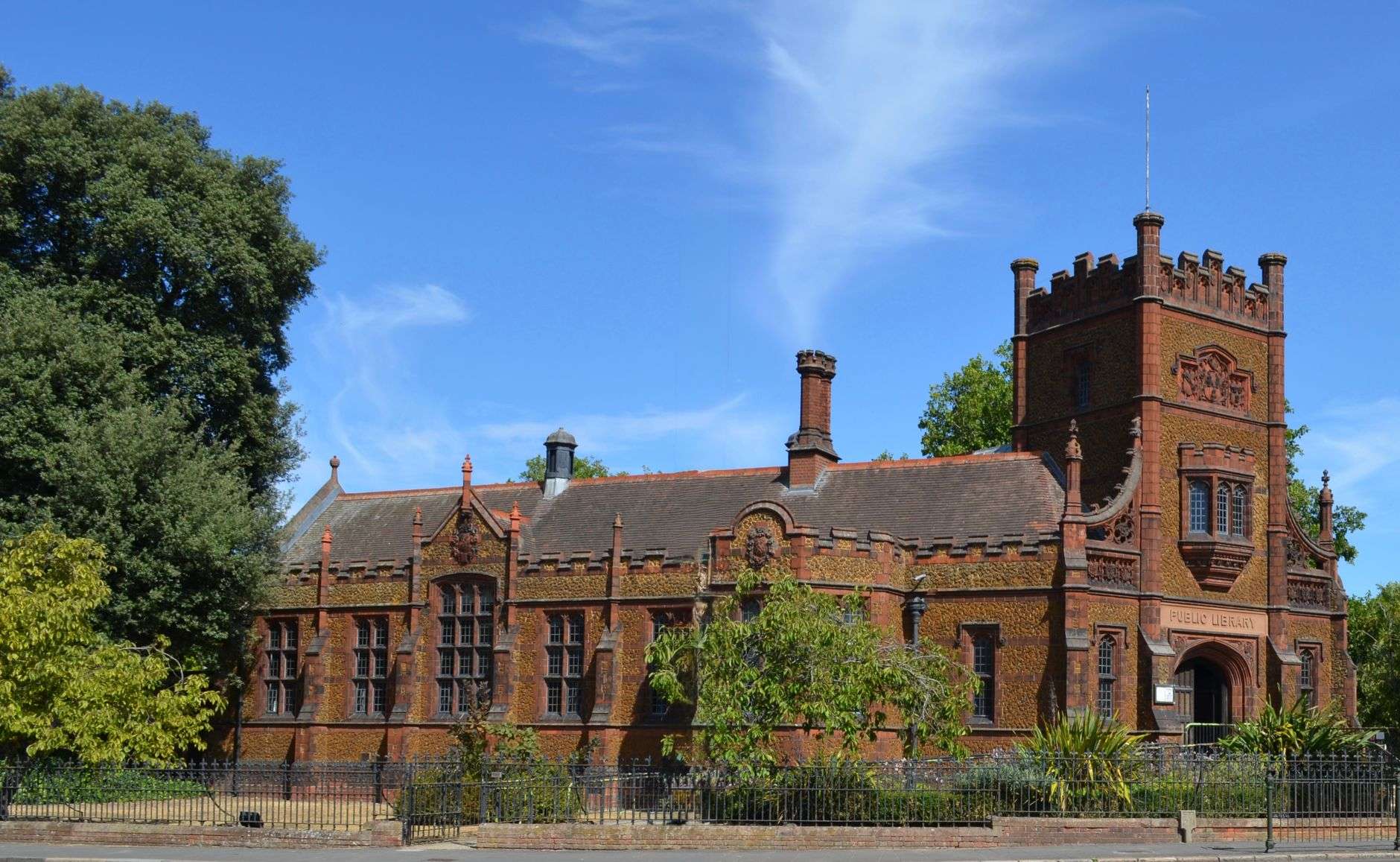
THOMASVILLE, Ala. — Democratic gubernatorial nominee Doug Jones brought his campaign to the Clarke County city of Thomasville on Saturday, Sept. 26, telling roughly 50 people gathered at the Thomasville Public Library that he supports a one-year moratorium on new data centers, a state lottery and the expansion of Medicaid if voters elect him governor on Nov. 3.
The stop came the day after Jones spoke to a crowd at Brewton City Hall in Escambia County and as data center development has become a local issue in Clarke County, where residents have been watching a possible project near Thomasville.
“We want to change state government … we want state government to be responsive to you,” Jones told the audience.
Jones faces Republican U.S. Sen. Tommy Tuberville, who is widely considered the frontrunner, and independent candidate Ronald Brunette Jr. in the general election. Gov. Kay Ivey is term-limited and cannot seek re-election.
At a glance
- Who: Doug Jones, Democratic nominee for governor, joined by Democratic secretary of state nominee Wayne Rogers
- Where: Thomasville Public Library, Thomasville
- When: Saturday, Sept. 26
- Crowd: About 50 attendees
- Issues highlighted: A data center moratorium, Medicaid expansion, reopening Thomasville’s hospital, a state lottery, help for new businesses and prison reform
- Election Day: Tuesday, Nov. 3
A one-year pause on data centers
Data centers took center stage in Thomasville, as they have at several of Jones’ town hall-style stops across the state. Jones repeated his call for a one-year moratorium on new data center projects in Alabama, saying the state needs more review and more “guard rails” before additional facilities are approved.
He also argued that data center developers should not receive tax incentives or abatements, saying the companies “make plenty” of money on their own. For facilities that are built, Jones said the state should require strict agreements with the companies, and he promised enforcement if those terms are broken.
“If they violate what they tell you, we will doggone hold somebody accountable,” Jones said.
Jones also characterized Tuberville as dismissive of concerns about the industry, telling the audience that Tuberville has called those concerns “bull crap” and believes data centers are good for Alabama.
Tuberville has laid out a markedly different approach. Speaking to reporters earlier this year, he said Alabama should move aggressively to become a national leader in data centers and artificial intelligence, describing the competition as “the Space Race for the 21st century.” He has called data centers a potential “gold mine” of tax revenue, pointed to Google’s facility in Scottsboro as a model, and argued that much of the opposition has been fueled by misinformation. At the same time, Tuberville has pledged that no Alabamian would pay “a single cent more” on an energy bill because of a data center, said developers should be required to use recycled water rather than fresh drinking water, and said technology companies, not ratepayers, should pay for grid improvements their facilities require.
Jones first laid out his moratorium proposal in a July op-ed, arguing that a pause should be used to answer questions about water use, electricity demand, tax incentives and the number of jobs created, and to strengthen ethics and transparency laws around the projects.
Why data centers matter in Clarke County
The issue is not abstract in Thomasville. A proposed data center has been rumored for a site just outside the city limits, and many residents have voiced opposition, citing possible effects on residents and local infrastructure.
At a city council meeting earlier this month, Thomasville Mayor Sheldon Day said there had been no significant movement on the potential project. A study of the area’s power supply remains underway and is not expected to be finished until January at the earliest. At the same meeting, Day reported progress on a separate economic development prospect, a confidential wood products project the city and Clarke County are pursuing that officials said could bring more than $100 million in investment and more than 100 jobs.
Across southwest Alabama, communities have been wrestling with similar questions. A $6 billion data center has been proposed in Calvert in north Mobile County. In Prichard, a proposed data center has drawn organized opposition and a dispute between the developer and the city, and the city recently approved the developer’s site plan after the company said the facility would not use city water. In Baldwin County, Foley paused data center applications for six months before any had been filed.
Medicaid and the Thomasville hospital
Jones repeated his pledge to expand Medicaid eligibility, a policy he has said he would pursue on his first day in office. In Thomasville, he tied that promise to a local concern: the shuttered Thomasville Regional Medical Center.
Jones said he would “do our doggoniness” to help reopen the hospital.
The hospital opened in 2020 and closed in 2024, eliminating more than 100 jobs and leaving the city without inpatient care. Local officials have said the COVID-19 pandemic, which halted elective procedures that made up a large share of the hospital’s patient volume, was a major factor in its financial collapse. City leaders have since toured the facility with numerous prospective buyers, but as of this summer no deal had been reached, with potential purchasers citing concerns about the long-term finances of operating a rural hospital.
Medicaid expansion has been one of Alabama’s most persistent political debates since the Affordable Care Act allowed states to extend coverage to more low-income adults, with the federal government paying 90% of the cost for the expansion population. Alabama is one of a small number of states that have not expanded the program. Supporters, including Jones, argue expansion would bring federal dollars into the state and help stabilize hospitals that treat many uninsured patients. Republican leaders in Montgomery have long cited concerns about the state’s share of the long-term cost.
The Thomasville hospital has also been cited by other Democratic candidates this fall. U.S. Senate nominee Everett Wess pointed to its closure in criticizing Republican U.S. Rep. Barry Moore’s vote for the federal budget law that included Medicaid changes, while supporters of that law have pointed to the new federal Rural Health Transformation Program, which is sending Alabama about $203 million in its first year.
Lottery, small business and prisons
Jones also told the Thomasville audience that Alabama needs a state lottery. Alabama is one of only a handful of states without one. Voters rejected a lottery in a 1999 statewide referendum, and later proposals in the Legislature, including a broader gambling package considered in 2024, did not make it onto the ballot. At an earlier town hall in Mobile, Jones said lottery revenue, together with money redirected by phasing out the CHOOSE Act education savings account program, would help pay for raises for teachers and education support workers.
He said he wants the state to set aside money to help new entrepreneurs start businesses.
On corrections, Jones said Alabama’s prison system must be reformed and argued that new construction alone will not solve its problems.
“You can’t get out of the problem by building your way out,” he said, referring to the state’s prison construction program.
Alabama has been building a new men’s prison in Elmore County as part of a plan to replace aging facilities, a project whose cost has grown substantially since it was approved. The state’s prisons have also been the subject of a long-running U.S. Department of Justice lawsuit over conditions. Supporters of the construction plan have argued that modern facilities are necessary to improve safety for inmates and staff.
‘Shock some people’
Jones, who represented Alabama in the U.S. Senate from 2018 to 2021 after winning a 2017 special election, lost his 2020 re-election bid to Tuberville. He predicted that Democrats would “shock some people” on Nov. 3.
Republicans have dominated statewide elections in Alabama for nearly two decades. Aside from Jones’ 2017 special election victory over Roy Moore, no Democrat has won a statewide race since 2008, and the last Democratic governor, Don Siegelman, left office in 2003. Tuberville has pointed to polling showing him in the lead, and his campaign holds a significant fundraising advantage. Jones and his supporters argue that frustration over fuel prices, electricity rates and other household costs has made the race more competitive than early projections suggested.
Jones has campaigned at town halls across the state since July, including a Sept. 16 town hall at Bishop State Community College in Mobile, a Sept. 23 rally in downtown Mobile with musician Jason Isbell, and the Sept. 25 stop in Brewton. Tuberville, who has said he spends his time outside the Senate meeting with voters, businesses, farmers and veterans, is scheduled to introduce President Donald Trump at a rally at the University of South Alabama’s Mitchell Center in Mobile on Friday, Oct. 2.
Secretary of state candidate Wayne Rogers
Jones was accompanied in Thomasville by Wayne Rogers, the Democratic nominee for Alabama secretary of state and a Thomasville native. Rogers is an attorney and serves as executive assistant to Jefferson County Sheriff Mark Pettway.
Rogers told the audience that Alabama should restore the protections of the Voting Rights Act and offer early voting and Saturday voting, among other changes to election procedures.
Alabama does not offer no-excuse early in-person voting; voters who cannot make it to the polls on Election Day must qualify for an absentee ballot under one of the reasons allowed by state law. Supporters of the current system have argued that it protects election security and that the absentee process already accommodates voters with legitimate conflicts.
Rogers faces Republican Caroleene Dobson in the race for secretary of state, the office that oversees elections, voter registration records and business filings in Alabama. Dobson, an attorney, was the Republican nominee in Alabama’s 2nd Congressional District in 2024.
What voters should know
- Voter registration deadline: Monday, Oct. 19.
- Absentee ballot applications: Due by Oct. 27 by mail or Oct. 29 in person.
- Election Day: Tuesday, Nov. 3. Polls are open from 7 a.m. to 7 p.m.
- Photo ID: Alabama requires voters to show an acceptable photo ID at the polls.
Voters can check their registration status, find their polling place and view sample ballots through the Alabama Secretary of State’s office. In Clarke County, absentee ballot applications are handled by the circuit clerk, who serves as the county’s absentee election manager.
This article reports statements made by candidates at a campaign event and does not constitute an endorsement. Voters can review the positions of all candidates on the November ballot through their official campaign materials.