

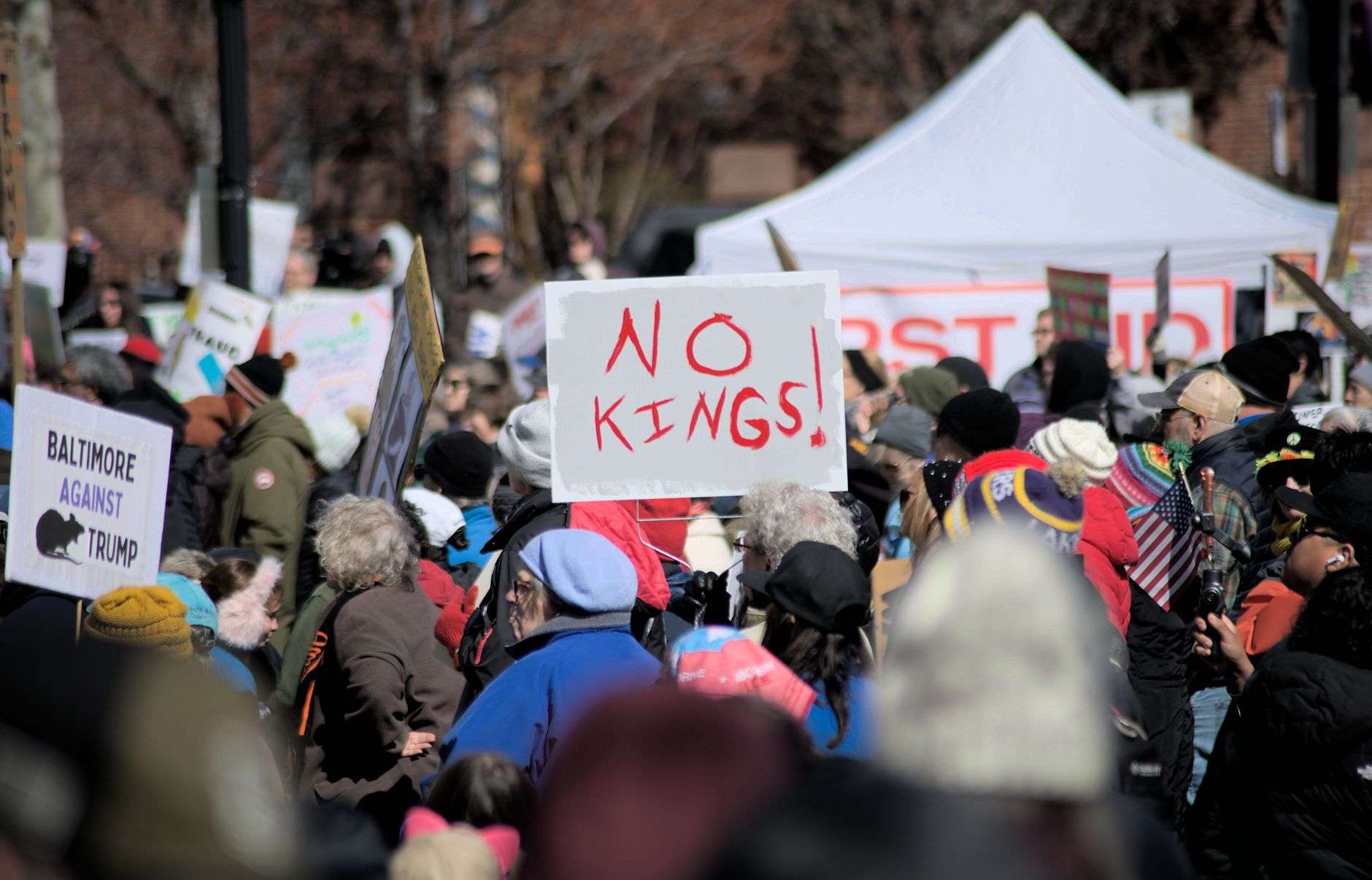
MOBILE, Ala. — Democratic gubernatorial nominee Doug Jones opened the last stretch of his campaign Wednesday night, Sept. 23, with a “Rally for Alabama” at Crown Hall in downtown Mobile. Grammy-winning Alabama musician Jason Isbell performed, and Jones told supporters that fuel prices, electricity rates and household costs should be at the center of the governor’s race. His Republican opponent, U.S. Sen. Tommy Tuberville, pushed back on those arguments this week, saying Democratic energy policy is to blame for high fuel prices.
A crowd of a couple of thousand people came to the free event, which filled the downtown venue. Jones’ campaign called the Mobile stop the start of its final push before the Nov. 3 general election and said more rallies are planned around the state between now and Election Day.
The event came one week after Jones and lieutenant governor nominee Phillip Ensler held a town hall at Bishop State Community College in Mobile. It also fell the night before Isbell and his band, the 400 Unit, were scheduled to headline the Halstead Amphitheater in Fairhope.
Jones Puts Diesel and Daily Costs Up Front
In an interview during the rally, Jones said making everyday life more affordable for Alabama families is one of his top priorities. He focused especially on diesel fuel.
“Last week when I was here, gasoline prices skyrocketed, diesel fuel prices continue to rise,” Jones said.
He said higher diesel prices are squeezing some of the state’s key industries and pointed to Gulf Coast shrimpers, farmers and truck drivers. Jones also talked about his proposal to eliminate state taxes on fuel, which he said could help bring prices down.
According to AAA, the average price of a gallon of diesel in Alabama hit $6.16 this week, about 80% higher than a year ago.
Electricity costs are another major part of Jones’ message. He has raised concerns about how growing demand from data centers could affect power rates and nearby communities. At last week’s Bishop State town hall, he said he has called for a one-year moratorium to put “guardrails” on data centers. His other campaign themes include health care, child care, housing and lowering day-to-day costs.
“We decided that it was time,” Jones said. “It’s time that Alabama started sending a message to folks in Montgomery.”
He said he wants Alabama to stop ranking near the bottom of lists that measure good outcomes and near the top of lists that measure bad ones.
Wages, Benefits and Local Control
Jones said part of addressing cost-of-living worries is how the state invests in its workers, including when it offers incentives to businesses.
“We’ve got to do a cost benefit and make sure that we are getting a good value for that. And that means, again, investing in the workers, not just for the folks sitting in the boardroom or the C-suite. We want to make sure that they’re giving good benefits, they’re giving good wages,” Jones said.
He also said cities such as Mobile should have more say over their own affairs. Alabama’s constitution gives the Legislature broad control over local government, so cities and counties often need legislation passed in Montgomery to make changes that local officials in many other states can make on their own.
“I actually want to give the mayor and city council a little bit more authority than what our legislature does. We need to open this government up,” Jones said. “So, they don’t have to be running in Montgomery to get the least little thing done.”
Tuberville: Energy Policy Is the Cause
Jones has recently tied rising fuel costs to President Donald Trump’s policies and to Tuberville. In a news release Monday, he said the impact reaches all the way to the coast.
“The farmers, the truckers, even shrimp boats, the shrimpers down on the coast are docking their boats and can’t get out, so people are struggling right now and they see it,” Jones said. “And they see the blame goes directly to Trump and his enablers like Tommy Tuberville, who is my opponent.”
He made the same argument at last week’s Mobile town hall and in Monday’s release. “You have shrimpers at the dock right now who cannot afford the diesel costs,” Jones said. “You have not heard Tommy Tuberville say one word about any of that.”
Tuberville rejected the criticism. In a statement, he said he hopes the war in Iran ends soon and argued that the country needs to be ready for future emergencies.
“I hope President Trump finds a way to bring this conflict to an end,” Tuberville said. “But Democrats need to remember something when it’s over: you’ve got to prepare before the group gets here. There will be another crisis. There always is.”
Tuberville said Democratic energy policies helped drive up today’s fuel prices, and he renewed his call for more domestic oil production. He cited Democratic opposition to projects such as the Keystone XL Pipeline and said the country needs “more American energy.”
“Doug Jones shouldn’t be talking about higher gas prices,” Tuberville said. “He ought to be apologizing for them.”
Tuberville also said he fought for shrimpers and fishermen during his time in the U.S. Senate. “They feed our families, support our communities, and keep Alabama moving,” he said. “And you’re damn right they deserve affordable fuel. But Americans also deserve to be safe from nuclear terrorism.”
A Coastal Republican Defends Tuberville’s Seafood Record
State Rep. Chip Brown, R-Hollingers Island, came to Tuberville’s defense on commercial fishing. Brown said Tuberville has consistently backed Gulf Coast seafood interests, especially efforts to require country-of-origin labeling for imported seafood.
“My neighbors do not need another speech about how much we love the Gulf,” Brown wrote in an op-ed this week. “They need a governor who will fight the same fights we have been fighting in Montgomery: fair markets for our seafood, honest labeling, healthy habitat, and a port busy enough to keep this region growing.”
Country-of-origin labeling rules require sellers to tell customers where seafood was harvested or farmed. Domestic shrimpers have long argued that clearer labeling, especially at restaurants, helps customers tell Gulf shrimp from cheaper imports.
Shrimpers Were Struggling Before Fuel Prices Rose
Industry leaders say high fuel costs have made things harder for a Gulf shrimp fleet that was already under pressure from low prices and imports. According to the Southern Shrimp Alliance, more than 90% of frozen shrimp imports come from four countries.
The alliance’s surveys have found that some shrimpers are using fuel they bought earlier, or are fishing at little or no profit, to keep their crews working while they wait for diesel prices to drop.
“Recognizing that every American is coping with rising fuel costs, we aim to find solutions that are in the national interest for America’s food producers,” Blake Price, director of the Southern Shrimp Alliance, said in March. “To the maximum extent possible, America needs to be able to feed itself. That is a matter of national security. Current fuel prices cannot be the reason America loses its infrastructure and capacity to harvest its vast resources.”
The industry’s losses started before the latest fuel price increases. Using National Oceanic and Atmospheric Administration data, the alliance reports:
- Total Gulf shrimp revenue fell more than 50% in two years, from $489 million in 2021 to $221 million in 2023.
- An estimated 1,300 jobs were lost on federal shrimp vessels over the same period.
- A 2025 State of the Industry report found the 2024 shrimp harvest was the smallest since the 2000s.
For Mobile and Baldwin counties, home to working seafood fleets in Bayou La Batre and elsewhere along the coast, fuel prices and imports are local economic issues, not abstract policy debates.
What Rally-Goers Said
Supporters at Crown Hall described a mix of priorities. Mobile resident Austin Finkley said education was his main concern. “Education is really important for me because I want historically accurate textbooks,” he said.
Ashton Mack said household costs affect people across the state and in Mobile. “Gas, cost of living, food, all of that fun stuff. Those are things that affect people every day, regardless of you’re a single person like me or you’ve got five kids. It affects everyone,” Mack said.
Mobile resident Chris Bryant also named cost of living. “The main thing that I’m looking at is cost of living, quality of life, those types of things,” he said. “What folks don’t realize with the cost of diesel right now is going to affect you a lot more down the road.”
One voter at the rally said she is a Republican who has decided to support Jones. “I’m actually a Republican, and I started showing up and listening to what he was saying, and it made a whole lot more sense than what my party is saying,” she said. “I believe he’s there for the people and the hope of the people.”
A Rematch Six Years Later
The governor’s race is a rematch. Jones won a 2017 special election for the U.S. Senate, defeating Republican Roy Moore, and served from 2018 to 2021. He lost his 2020 re-election bid to Tuberville, the former Auburn University football coach, who has served in the Senate since 2021 and is now the Republican nominee for governor.
Isbell has campaigned with Jones before. The singer-songwriter from the Muscle Shoals area headlined a free get-out-the-vote concert in Huntsville before the 2017 special election and played an acoustic fundraiser for Jones in Birmingham during the 2020 race.
Mobile County, the state’s second-largest county by population, has often mattered in statewide races. Jones carried the county in 2017 but lost it in 2020. Both campaigns have spent time in the area this fall.
Key Dates for Voters
Alabama’s general election is Tuesday, Nov. 3. Sample ballots are available through the Alabama Secretary of State’s Office. Important deadlines:
- Absentee voting: began Sept. 9 for qualified voters.
- Voter registration and updates: Oct. 19.
- Absentee applications by mail: must be received by Oct. 27.
- Absentee applications delivered in person: due by Oct. 29.
- General election: Nov. 3.
Jones’ campaign says more rallies are planned across Alabama before Election Day. Voters will choose between Jones and Tuberville for a four-year term as governor.