

Where horses do the therapy
Pull into DreamCatcher Farm in Silverhill at the right hour of the morning and you may meet Gavreel, a Friesian horse cooling off after a workout, his name — chosen deliberately — meaning “relationship.” That word is the organizing principle of the farm, the equine therapy program Susie Foster built in Silverhill for children and adults with special needs, where the horses, the volunteers and the riders all do the work together.
The farm is seven years into a dream that started long before it. Foster was directing the Mobile-area YMCA’s special populations program when she began looking for ways to give her participants experiences beyond the clinical settings she calls the “white coat” environment. She had heard about horses being used in therapy. A West Mobile veterinarian let her bring special-needs kids to work with some of his horses. “They had a blast,” she says — and the seed was planted.
A program built one rider at a time
DreamCatcher serves children and young adults across a wide range of needs: children on the autism spectrum, and riders with cerebral palsy, Down syndrome, ADHD, spina bifida, and emotional challenges like anxiety. Everything is individualized. Foster assesses each participant and builds the session to fit, keeping classes to no more than three clients working on similar skills. Business comes entirely by word of mouth, and the program runs on volunteers — side-walkers, horse leaders, groomers — who routinely describe the work as among the most rewarding things they have ever done.
The therapy itself starts on the ground. Feeding a horse a carrot, grooming, simply standing close — all of it is deliberate. “We work on social skills,” Foster says. Groundwork, in her experience, is where horses do their most revealing work: “Horses will pull the issues out of you. If you’re in a big hurry, they will make you patient.”
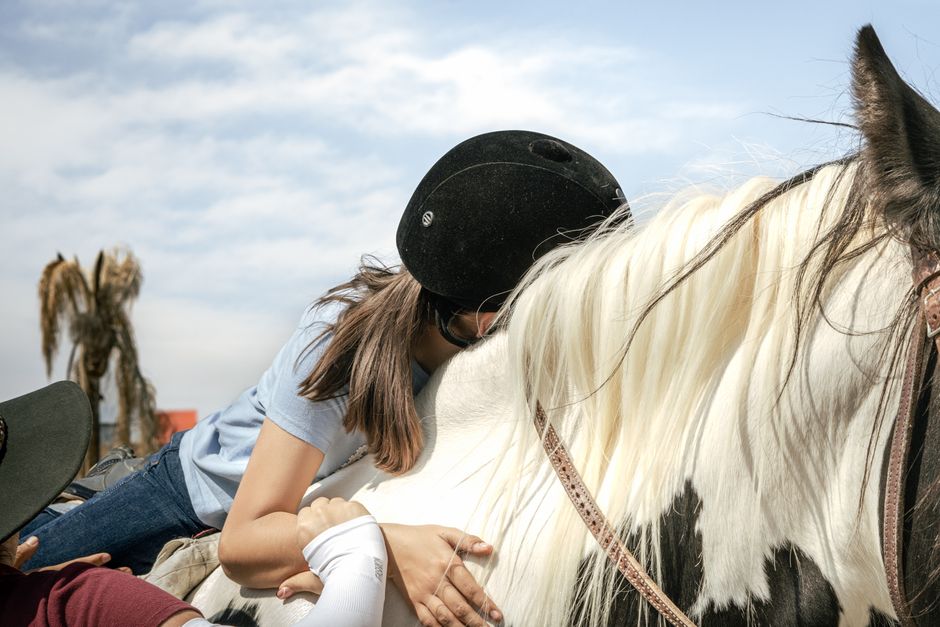
When riders are ready, mounted work begins — bareback first, so the rider can feel the horse and steer with the body rather than rely on a saddle. The exercises target core strength, balance and spatial awareness; some riders close their eyes, building confidence and independence. Obstacles, arena work and trails vary the routine, and safety governs everything: helmets always, volunteers alongside, and a barn where every session is designed around the horse-rider relationship first.
Why it works
The calming effect is the phenomenon Foster points to most. Many of her participants live with high anxiety and overstimulation, and a horse’s rhythm does something no clinical room can. “A child or adult riding a more active horse can experience a calming effect as their emotions connect with the rhythm of the horse and they relax almost immediately,” she says.
Her credentials match the ambition. Foster is PATH-certified — Professional Association of Therapeutic Horsemanship — as a therapeutic riding specialist, and Eagala-certified as an equine therapist. Beyond riding, she runs a groundwork program called Horse Powered Reading and Math, which uses horses to help students strengthen reading and math skills, and she has partnered with Full Life Ahead to teach life skills to young adults 18 and older.
Every participant’s dream
The name on the sign is the mission statement. Foster wants, in her words, “every participant’s dream to come true,” and Silverhill was where she chose to build the place where that could happen — a stable, a ring, trails, and a herd that includes a Friesian who personifies what the whole operation is about.
For the families who bring their riders week after week, the results are measured in small victories: a child who speaks to a volunteer for the first time, an adult who finds the anxiety quieting as the horse settles into a walk, a teenager who learns to steer with her whole body and beams about it afterward. “Everyone involved is like family,” Foster says. “The horses do the therapy.”
Baldwin County has no shortage of barns. What it has only a few of is a place built, session by session, around the idea that a horse can reach a person that nothing else can. DreamCatcher Farm is the evidence, one relationship at a time.