Escatawpa Parents Face Felony Charges After Mobile Hospital Reports Teen in Grave Condition
Jackson County, Mississippi, deputies arrested an Escatawpa couple on child abuse and drug charges after Mobile hospital staff reported concerns about a teenager in intensive care and the parents removed him.
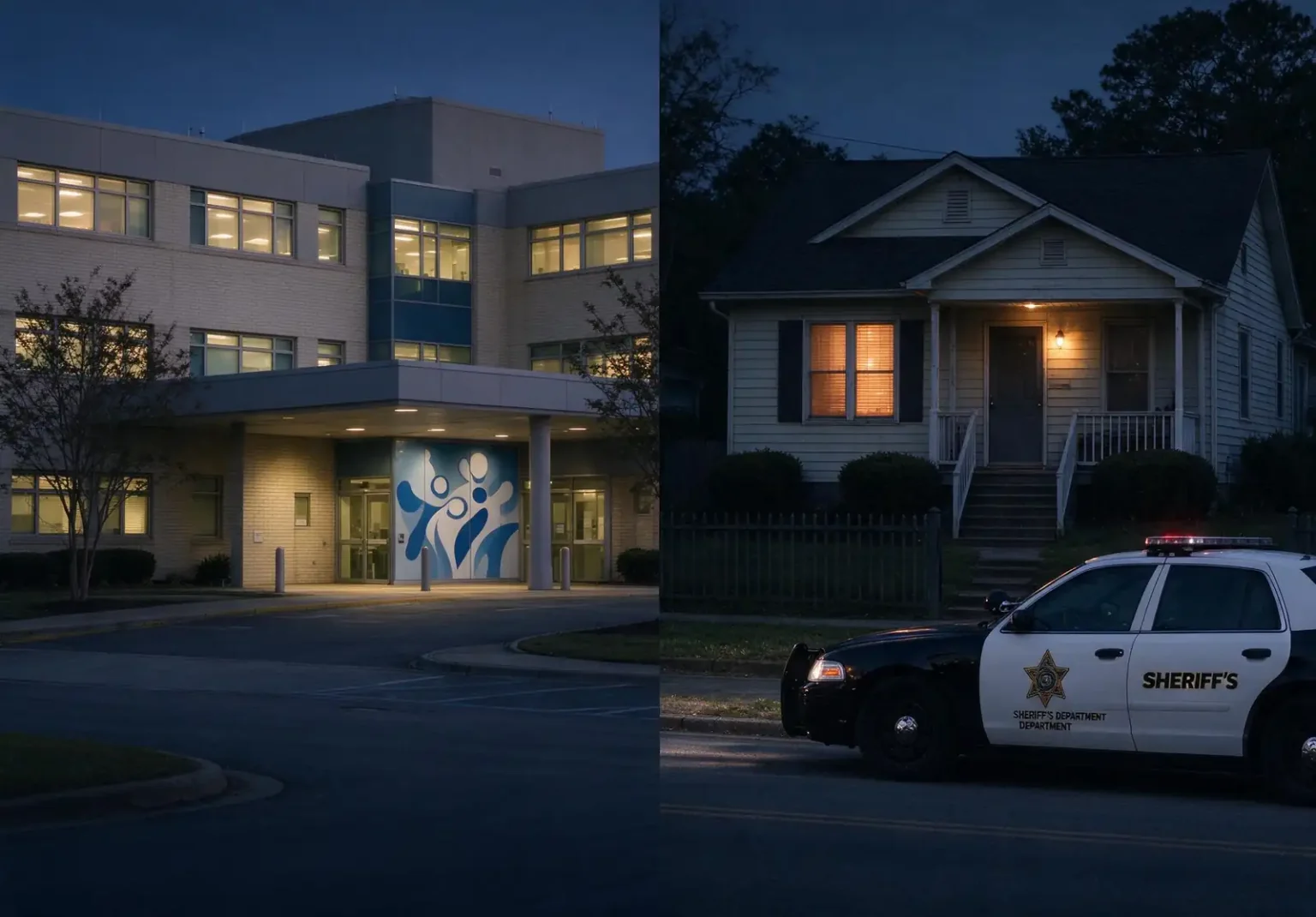
ESCATAWPA, Miss. — An Escatawpa couple faces felony child abuse charges in Jackson County, Mississippi, after staff at a Mobile children’s hospital raised alarms about the condition of a teenager in their care and then, according to the Jackson County Sheriff’s Department, the pair removed him from the hospital before treatment was complete.
Deputies arrested a 51-year-old man and a 49-year-old woman, the teen’s parents, at their home in Escatawpa this week. Both now face two felony counts apiece: one alleging child abuse and one alleging possession of methamphetamine. Both are presumed innocent unless and until they are proven guilty in court.
The teenager is now back under medical care. To protect his privacy, this article does not identify him or his parents by name and does not include details that could point to the family.
How the case came to light
The Mississippi child abuse arrest began with a call from across the state line. On Friday, Nov. 20, 2026, employees at USA Health Children’s & Women’s Hospital in Mobile contacted the Jackson County Sheriff’s Department to report that they suspected a teenage patient had been abused. The teen had been admitted to the hospital’s intensive care unit.
According to the sheriff’s department, hospital staff informed deputies that the teenager was suffering from severe malnourishment and showed additional physical problems that appeared to be the result of possible neglect. The department has not released further medical details, and none are included here.
Three days later, on Monday, Nov. 23, the parents took the teen and left the hospital, the sheriff’s department said.
A search warrant and a return to the hospital
Given how serious the teen’s condition was, deputies moved quickly. They carried out a search warrant at the family’s home in Escatawpa, where they took both parents into custody. Deputies then brought the teenager back to the hospital so he could continue receiving treatment.
In addition to the child abuse counts, each parent was charged with felony possession of methamphetamine. The sheriff’s department has not said publicly how much of the drug was involved or exactly where it was found, and its announcement of the arrests did not address bond or first court appearances.
Why a Mobile hospital called Mississippi deputies
Although the family lives in Mississippi, it is common for patients from the Mississippi Gulf Coast to receive care in Mobile. Escatawpa is an unincorporated community in eastern Jackson County, near Moss Point and only a short drive from the Alabama line along Interstate 10. For many families in that corner of Mississippi, Mobile is the closest major medical center.
USA Health Children’s & Women’s Hospital is part of USA Health, the academic health system of the University of South Alabama. The hospital provides specialized pediatric and newborn care, including intensive care, for children from across the central Gulf Coast, so it regularly treats young patients who live in Mississippi and northwest Florida as well as Alabama.
When hospital staff suspect abuse or neglect, the report generally goes to the agencies that have authority where the child lives. That is why, in this case, the call went to the sheriff’s department in Jackson County, which covers the unincorporated areas of the county, including Escatawpa, rather than to police in Mobile.
Health care workers as mandatory reporters
Every state requires certain professionals to report suspected child abuse and neglect, and doctors, nurses and other hospital staff are among them in both Alabama and Mississippi. Those workers do not need proof that abuse occurred; reasonable suspicion is enough to trigger a duty to report. State laws generally protect people who report in good faith from civil or criminal liability, even if an investigation later finds no abuse.
Pediatric hospitals often have dedicated child protection teams, typically made up of physicians, nurses and social workers who are trained to recognize signs of maltreatment and to work with law enforcement and child welfare agencies. Their role is to make sure a child is safe, to document medical findings and to connect families with services, while investigators determine whether a crime was committed.
What the charges mean
Mississippi law treats child abuse as a felony in its more serious forms, including cases involving serious harm to a child, and the statute also reaches certain kinds of neglect. Penalties depend on the specific conduct alleged and the harm involved, and can include lengthy prison terms upon conviction.
Felony drug possession in Mississippi is likewise graded by the type and amount of the substance. Methamphetamine is a controlled substance under both state and federal law.
An arrest is the start of the court process, not the end of it. In Mississippi felony cases, a defendant usually makes an initial appearance before a judge, who addresses bond and appointment of counsel. The case can then be presented to a grand jury, which decides whether to issue an indictment. If an indictment is returned, the case proceeds in circuit court, where it can be resolved by trial, plea or dismissal.
Child protective services and what happens to the teen
Alongside the criminal case, Mississippi’s child welfare system has its own process. The Mississippi Department of Child Protection Services is the state agency responsible for investigating reports of abuse and neglect and for making decisions about a child’s safety and placement. In cases involving a hospitalized child, that work typically involves coordination among caseworkers, medical providers and law enforcement.
Details of any child welfare case are confidential under state and federal law, so the agency generally does not discuss individual families. What is known publicly is that deputies returned the teen to the hospital for further medical care.
Recognizing signs of neglect
Neglect is the most commonly reported form of child maltreatment in the United States, according to the federal Children’s Bureau, and it can be harder to spot than physical abuse because it often develops over time. Child welfare agencies encourage relatives, neighbors, teachers, coaches and others to watch for warning signs such as:
- A child who appears consistently hungry, seems to be losing weight or is noticeably underweight.
- Untreated medical or dental problems, or missed medical care for an ongoing condition.
- Poor hygiene or clothing that is regularly inappropriate for the weather.
- Frequent absences from school or a sudden withdrawal from friends and activities.
- A child who says no one is home to provide care, or who seems fearful of going home.
Older children and teenagers can be affected just as younger children can. Because teens may be less visible to outside adults, particularly if they are not attending school regularly, experts say it helps for adults in their lives to stay alert to changes in health, weight or behavior.
How to report suspected abuse
Anyone who believes a child is in immediate danger should call 911. For other concerns, both states run hotlines that accept reports around the clock:
- Mississippi: The Mississippi Department of Child Protection Services takes reports at 1-800-222-8000 and through its online reporting system.
- Alabama: Reports can be made to the county office of the Alabama Department of Human Resources or to local law enforcement.
- National: The Childhelp National Child Abuse Hotline, 1-800-422-4453, offers crisis counseling and can help callers find the right agency to contact in any state.
People who call do not have to be certain abuse is happening, and they do not have to investigate on their own. Caseworkers and law enforcement are responsible for looking into the situation once a report is made.
Resources for families under strain
Substance use is a known risk factor for child neglect, and both Mississippi and Alabama offer resources for people struggling with addiction. The federal Substance Abuse and Mental Health Services Administration operates a free, confidential National Helpline at 1-800-662-4357 that provides referrals to treatment and support services around the clock. On the Gulf Coast, community mental health centers and hospital-based programs can also help families find treatment.
Parents who are overwhelmed, whether by money problems, health issues or caregiving stress, can call 211 in either state to be connected with local assistance programs for food, housing, utilities and counseling.
What comes next
The Jackson County Sheriff’s Department is handling the criminal investigation. The parents’ cases will move through the Jackson County court system, and any formal charges that follow will depend on the evidence gathered by investigators and reviewed by prosecutors.
The teenager was returned to the hospital for further treatment. Authorities have not provided a public update on his condition.