

For people caring full-time for a spouse or parent with dementia, the hardest thing to find is often not information or medical advice. It is time. A few free hours to buy groceries, see a doctor of their own, sit in a quiet room or simply catch their breath. In Fairhope, a volunteer-driven program called Shepherd’s Place exists to give caregivers exactly that, and its board chairman, Armand DeKeyser, says the Fairhope respite program has room for more families and more volunteers.
Shepherd’s Place offers adults living with cognitive challenges such as Alzheimer’s disease and other forms of dementia a structured, social day out, while their primary caregivers get a regular break from round-the-clock responsibility. According to DeKeyser, it is the only program of its kind in Mobile or Baldwin County, and families travel from as far as Mobile, Satsuma and Foley to take part.
What a Day at Shepherd’s Place Looks Like
Sessions run from 9 a.m. to 1 p.m., Monday through Thursday. Over those four hours, volunteers spend time with the people enrolled in the program, who are known as participants, through activities designed to feel familiar and enjoyable rather than clinical. DeKeyser describes a day that can include:
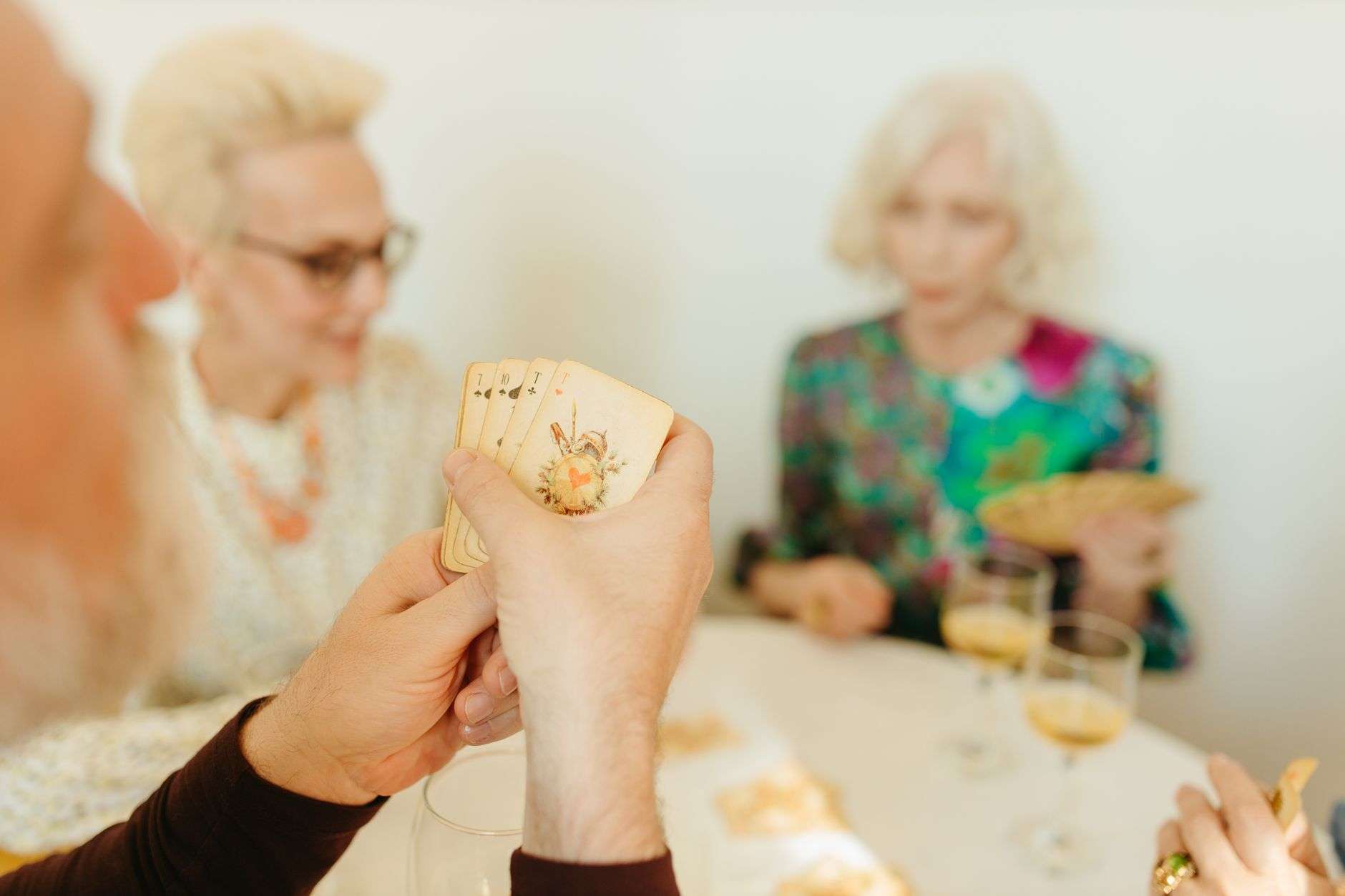
- Simple card games
- Arts and crafts
- Music
- Chair yoga and light exercise
- A nutritious noon meal
The larger goal, he said, is to give participants some measure of normalcy. “It’s a great thing for people with cognitive issues. Most are well functioning but need around-the-clock care.”
The cost is $50 per day, which works out to $12.50 per hour. That fee helps cover the purchase and preparation of meals that are appropriate for participants. A director oversees daily activities, and the program recently added a food service manager. DeKeyser explained the reason for that change: “Before COVID, the Director and Board worked with the local restaurant community to provide meals once a month, or even once a week. That became problematic, and we hired a Food Service Manager.”
On a typical day, DeKeyser said, the program averages four to six volunteers and eight to 15 participants. Attendance can shift with the seasons. “Most caregivers of people with cognitive issues are the adult children of the participants, and often during the summer, they are traveling on vacation, so the schedule is more fluid,” he said.
What Respite Care Is, and What It Is Not
The word “respite” simply means a short period of relief, and in the caregiving world it refers to services that temporarily take over the duties of a family caregiver. Respite can take many forms, from in-home aides to overnight stays at a care facility. The model Shepherd’s Place follows is a social day program: participants come to a welcoming, supervised setting for a few hours, and caregivers use that time however they need.
DeKeyser is careful to draw a line around what the program does not do. “We don’t offer medical advice or administer any medicine. We are not medical caregivers or providers in that sense. Cognitive diseases are difficult. We have to be careful. Until you are faced with it, it is hard to comprehend the challenges.”
That distinction matters for families weighing their options. A social respite program is not a substitute for medical treatment, skilled nursing or adult day health services that provide clinical care. What it offers instead is companionship and engagement for the participant, and a dependable window of rest for the caregiver. For many households, that combination can make it possible to keep caring for a loved one at home for longer.
The need is significant. The Alzheimer’s Association estimates that more than 100,000 Alabamians aged 65 and older are living with Alzheimer’s disease, and the organization has long reported that the large majority of dementia care in the United States is provided by unpaid family members and friends. Caregivers frequently report high levels of stress, fatigue and isolation, and regular breaks are widely recommended by aging and caregiving organizations as one way to reduce burnout.
Part of a National Model Born in Alabama
Programs like Shepherd’s Place trace their approach to the Respite for All Foundation, based in Auburn, which promotes a nationwide model for volunteer-powered respite ministries. The model centers on giving caregivers, often spouses, a four-hour break a couple of times a week so they can run errands, rest and step away from their responsibilities.
There are around 80 Respite for All-type programs across the country, according to DeKeyser. Not every respite program falls under the Respite for All umbrella, however, and each one operates independently with its own board, staff and funding.
In Alabama, the first such program began in Montgomery. A similar program in Birmingham, Encore Community Respite, opened soon after and operates at Canterbury Methodist Church in Mountain Brook. Like Shepherd’s Place, Encore relies on volunteers who commit a few hours each week to spend time with participants and engage them in social activities, while protecting participants’ privacy and dignity.
Why Churches Make Good Hosts
Shepherd’s Place meets at Fairhope United Methodist Church, but DeKeyser emphasizes that the program is not church-affiliated. The church provides the setting, and Shepherd’s Place pays all the expenses needed to run the program without requesting funding from the congregation.
That arrangement is common. Most respite programs of this type use church facilities, and the reasons are practical. The programs operate on weekdays, when many church buildings are otherwise quiet, and churches typically already have kitchens, meeting rooms and tables suited to group activities and shared meals. The churches themselves are generally not responsible for running the programs; they are simply well suited to house them.
Fairhope United Methodist Church sits in the heart of downtown Fairhope, a location that is familiar and easy to find for families across the Eastern Shore, which can matter a great deal for participants who do best in consistent, comfortable surroundings.
Funding, Governance and Room to Grow
Shepherd’s Place is overseen by an 11-member volunteer board drawn from throughout Baldwin County, with DeKeyser currently serving as chairman. Beyond the daily fees, the program’s major fundraiser is the annual Shepherd’s Place Golf Tournament, which raises between $25,000 and $30,000 each year. Donations are always welcome.
The program’s biggest need is people. Shepherd’s Place aims for one volunteer for every two or three participants, and DeKeyser would like to strengthen that ratio. “Shepherd’s Place has room to grow,” he said. “We provide four hours for the primary caregivers to do other things. Ideally, we would like to grow our volunteer network to offer one volunteer for every two participants. We have room to take on more participants.”
For volunteers, the commitment is straightforward: time, patience and a willingness to share a conversation, a card game or a song. Volunteers do not provide medical care. Their role is to offer friendship and a sense of ordinary life to people whose world has often narrowed because of their illness.
The Man Leading the Board
DeKeyser brings a long career in public service and civic work to the role. He grew up in Mobile, where his family also had a home on Dauphin Island, and his roots in the region run deep. In 1900, his great-grandfather, Sebastian Gonzalez, founded and operated the Star Fish and Oyster Company.
He earned a degree in Spanish with a minor in business administration from Auburn University. Beginning in 1997, he spent 15 years in Washington, D.C., where he served as chief of staff to Jeff Sessions, the Alabama Republican who represented the state in the U.S. Senate for two decades and later served as U.S. attorney general. DeKeyser counts Sessions as a close friend.
After his Senate service, DeKeyser worked in government relations for a number of clients. He sums up that varied legislative portfolio as “the Three Ps”: the Poarch Creek Indians, Pizza Hut and the U.S. territory of Puerto Rico.
DeKeyser was in the White House on Sept. 11, 2001, when the terrorist attacks occurred. He recalls the response on Capitol Hill that followed. “We volunteered our communication services to the overwhelmed New York delegation to help get correspondence written and answered. It was all hands on deck, and it didn’t matter what political party you were affiliated with. Washington was a much more cohesive place at the time. People worked together. It wasn’t as divided.”
He left Washington in 2012 for Birmingham and served until 2020 as executive director of the Alabama Humanities Alliance, the state’s affiliate of the National Endowment for the Humanities. The organization promotes civic engagement, lifelong learning and storytelling to help Alabamians better understand one another. “Alabama Humanities Alliance funds grants for schools, museums, teachers, architecture, literature, and history,” DeKeyser said.
Now retired in Fairhope with his wife, Torrey Van Antwerp, who is also from Mobile, DeKeyser is an avid golfer, which makes the program’s annual golf tournament a natural fit. His current work with Shepherd’s Place carries forward the same spirit of pitching in that he described from his years in Washington, now focused on families in the coastal communities of Baldwin and Mobile counties.
How Families and Volunteers Can Get Involved
Shepherd’s Place welcomes three kinds of support:
- Families: Caregivers of a loved one with dementia or another cognitive condition who could use a regular four-hour break can contact the program about enrolling a participant. Sessions run Monday through Thursday, 9 a.m. to 1 p.m., at $50 per day, lunch included.
- Volunteers: Residents who can give a few hours a week to spend time with participants are needed to help the program reach its goal of one volunteer for every two participants.
- Donors: Contributions, including support for the annual golf tournament, help cover meals, staffing and the costs of running the program.
Caregivers considering any respite program may want to visit in person, ask about volunteer training and ratios, and talk with the staff about their loved one’s needs and routines. As DeKeyser put it, cognitive diseases are hard to comprehend until you are faced with them. For families living that reality every day in Baldwin and Mobile counties, Shepherd’s Place offers four hours at a time of relief close to home.