

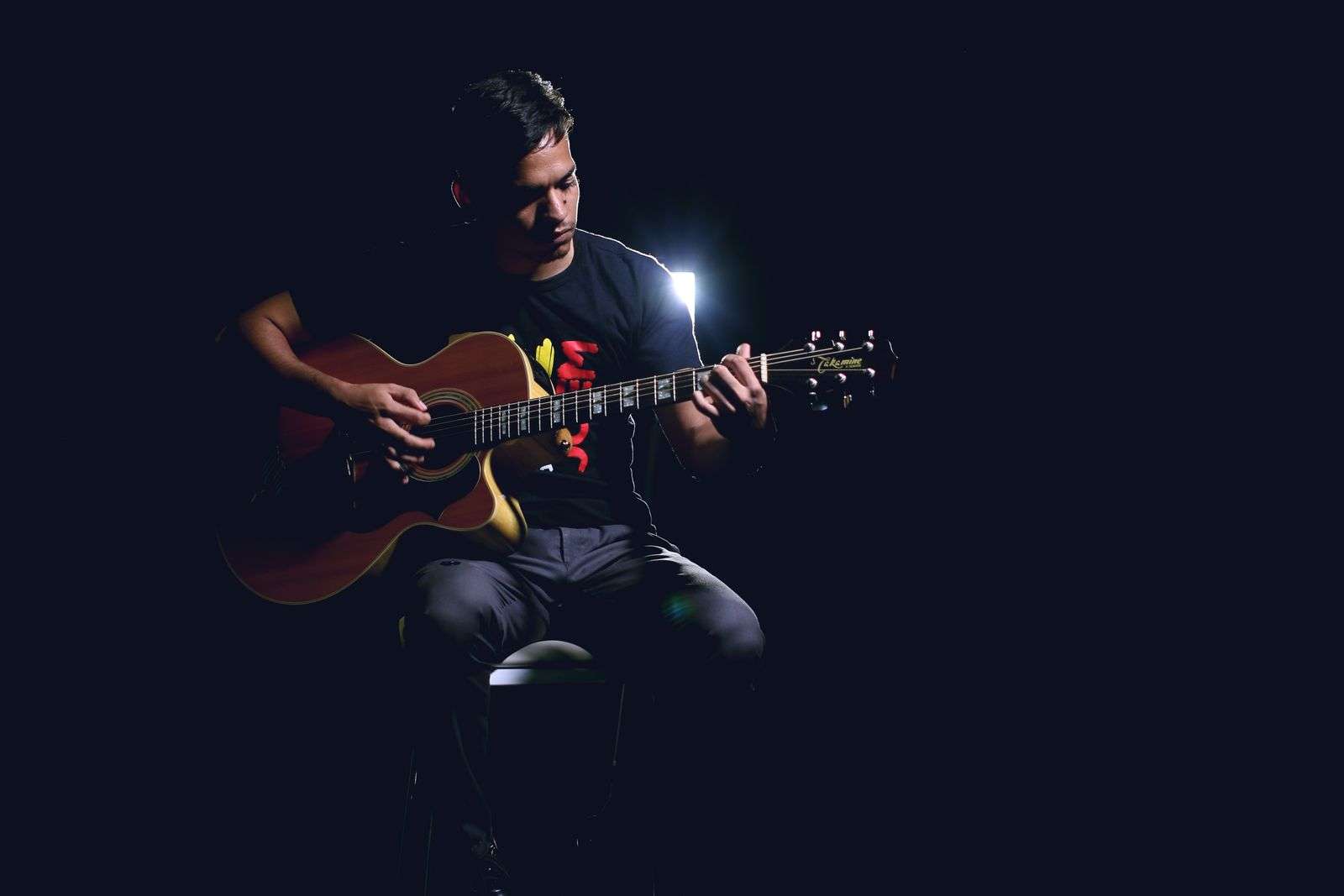
Fairhope singer-songwriter Nick Gill has released a new, self-titled EP recorded in New Orleans, the latest step in a music career that started when he was a fifth-grader selling homemade CDs to classmates.
Gill began playing piano as a young child and picked up guitar and drums in the fifth grade, when he started a band called The GB’s. He recorded his first solo album, “‘Cause It’s True Love,” while in the eighth grade, followed by “Through the Straight and Narrow,” which he supported with a 50-show tour across the Mobile and Baldwin County area.
Few artists can trace their catalog back to elementary school, and fewer still can trace their business instincts there too. Selling burned CDs to classmates is a fifth-grader’s version of merchandising, and by the time most young musicians are finding their footing in a garage band, Gill had already fronted one, recorded two albums and booked a fifty-date tour — all before reaching high school graduation.
From a Christmas Show to a New Orleans Studio
Gill’s connection to his new record traces back about a year, when he met radio DJ and program director Gene Murrell, who invited him to play the “2nd Annual All Star Christmas Bash” at the Blue Gill alongside the local band Peek.
The booking was the kind of break that local radio people create every season along the Gulf Coast. Murrell’s annual Christmas bash at the Blue Gill — the well-known waterfront venue on Mobile Bay’s Eastern Shore — had become a fixture for local acts, and sharing a stage with Peek, one of the area’s working bands, put the young songwriter in front of exactly the musicians and audience he needed. Local radio personalities remain among the most important gatekeepers in the regional music business, and an invitation onto a holiday bill is both a vote of confidence and a networking opportunity.
After that show, Gill connected with Peek drummer John Hamilton about rerecording tracks from his debut album. That collaboration led Gill, Hamilton and bassist Garrott Hall to Fudge Recording Studio in New Orleans in August, where they worked with producers Jack Miele and Jacques DeLatour on the new EP.
The journey from a rerecording conversation to a New Orleans studio session moved fast, and it reflects how regional musicians actually work. Rather than booking expensive studio time in Nashville, a Gulf Coast artist can drive two hours west to New Orleans, a city with a deep pool of engineers, producers and session players. Fudge Recording Studio has served as a working home for rock and pop projects in the city, and producers like Miele bring both the technical craft and the scene connections that turn a batch of songs into a releasable record.
The self-titled EP that resulted gathers rerecorded material from across Gill’s young catalog, giving the songs the polished treatment that a home or school recording could not. For an artist whose earliest recordings were made as a middle schooler, hearing the same material through professional microphones, with a seasoned rhythm section behind it, amounts to a before-and-after demonstration of how far his craft has traveled.
What’s Next
Gill said he plans to head out on another 50-show tour through Baton Rouge, New Orleans, Gulfport, Mobile, Fairhope, Daphne, Tuscaloosa, Auburn, Pensacola and Tallahassee to promote the new record, after which he intends to relocate to Nashville to continue his music career.
The tour routing reads like a map of the young artist’s natural circuit: the Gulf Coast corridor from Baton Rouge through the Mississippi coast, the Mobile and Baldwin County hometown base, the college towns of Tuscaloosa and Auburn, and the Florida panhandle out to Tallahassee. Fifty shows across that stretch of the South is the classic apprenticeship of a regional songwriter — building an audience city by city, venue by venue, one repeat appearance at a time. College towns in particular reward that persistence; a songwriter who plays well at Tuscaloosa or Auburn bars can count on a growing crowd each return trip as students cycle through.
The planned move to Nashville represents the standard next step, and the timing makes sense. Music City remains the industry’s center of gravity for songwriters: publishing companies, demo studios, open writers’ rounds and the daily collisions that turn co-writing sessions into careers. Gill’s catalog of original material, his touring resume and his studio experience give him a stronger starting position than most arrivals — he would not be moving to Nashville to find out whether he can write and perform, but to place what he already does in front of the industry that lives there.
In the meantime, he is working on a “2nd Tuesday” event planned for March 2010 and will keep playing regularly around Baldwin County and Mobile, including at Serda’s Coffee Company in Mobile and the Windmill Market in Fairhope. Fans can find updates on upcoming shows at Gill’s official sites.
The Eastern Shore Scene That Raised Him
Gill’s route through Fairhope’s music community is worth noting for what it says about the Eastern Shore scene. The Windmill Market, the Fairhope gathering place where he plays regularly, has functioned as a marketplace and community venue for local vendors and musicians, and Serda’s Coffee Company in downtown Mobile has long hosted singer-songwriter nights that give acoustic acts a stage suited to original material. Coffeehouse circuits like these are where young songwriters learn to hold a room without a full band — the quiet test of whether the songs can carry the night.
The Blue Gill, the venue that connected him to Peek, sits on the Mobile Bay waterfront on the Eastern Shore and has been a reliable stage for local bands. The network of venues — coffeehouses, markets, waterfront bars and annual festivals — forms the ecosystem that let a Fairhope teenager record two albums, book fifty dates and graduate to sessions in New Orleans without ever leaving the region.
That ecosystem is also what the “2nd Tuesday” event he is planning represents: an attempt to give something back to the scene by creating a recurring showcase, the kind of regular night that gives songwriters a dependable stage and gives music fans a habit. If Gill follows through before his Nashville move, he will leave behind not just recordings but infrastructure — the mark of an artist who came up through a community and took its lessons with him.
Between now and the tour, the EP is out and the schedule is filling. For a songwriter who started by selling CDs out of his backpack, the new record is the latest entry in a career that has always run on the same engine: write the songs, book the shows, and keep moving.
An Unusual Start
It is worth pausing on how early Gill’s career began, because the details explain the confidence of everything that followed. A child who starts piano young absorbs music as a first language rather than a hobby; adding guitar and drums in the fifth grade gave him the multi-instrumentalist’s ear that lets a songwriter arrange as he writes. Forming The GB’s that same year meant he was learning band dynamics — rehearsal, setlists, the give and take of playing with others — years before most of his peers picked up an instrument at all.
Recording “‘Cause It’s True Love” in the eighth grade set the pattern of his career: write, record, release, then go out and support it. The follow-up album and its 50-show tour across Mobile and Baldwin County meant that by his mid-teens he had already done the hardest thing in music — played to rooms of strangers who did not know his name — dozens of times over. Touring one’s home region at that age also builds a skill Nashville industry people notice immediately: an artist who has survived fifty nights of local crowds knows how to work an audience, fill dead air and win over the table that came for dinner, not the show.
The homemade-CD economy of his school years deserves its own footnote. Selling burned albums to classmates trained him in the fundamentals of the music business — product, pricing, customers — before he could drive. Artists who come up that way tend to treat the commercial side of music without embarrassment, booking their own shows, managing their own promotion and treating each performance as both art and work.
Why New Orleans Was the Right Studio Town
The choice of New Orleans for the EP sessions gave the record advantages beyond convenience. The city’s studio culture is unlike anywhere else in the region: engineers and producers there work across soul, funk, rock and jazz, and the session players carry a rhythmic sensibility that has defined Gulf Coast music for generations. For a songwriter whose material sits in the singer-songwriter and pop tradition, recording a short drive from his home town, in a city with that depth, let him upgrade his sound without relocating it.
Working with Miele and DeLatour put the young artist under experienced ears. Production on a debut EP is as much teaching as recording — choosing takes, shaping arrangements, deciding what to leave imperfect — and an artist who has only recorded himself benefits from someone else’s judgment. The rhythm section of Hamilton and Hall brought the same value from the other side: players who have held down a working band’s groove for years make a young songwriter’s songs sound like themselves on the first try.
The EP now heads into the world with a 50-show tour behind it, a Nashville move ahead of it, and a hometown scene that watched the whole thing happen. Gill’s story so far suggests the pattern will hold: write the songs, book the shows, keep moving — from Fairhope to New Orleans, and from there, toward Nashville.