

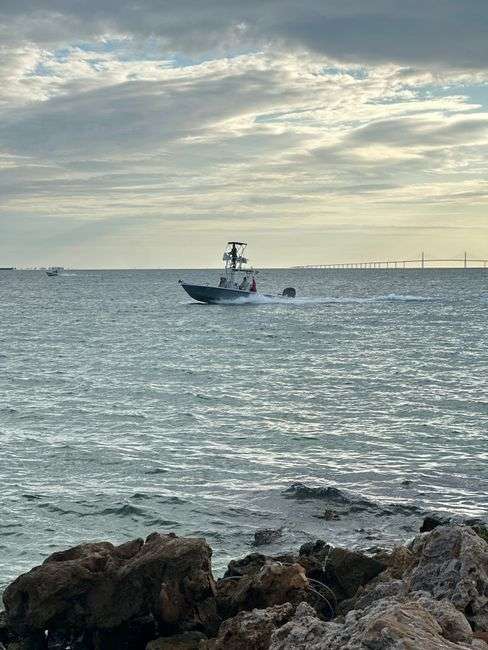
MOBILE, Ala. — A tense Sunday morning on the water ended with good news after the Mobile Big Game Fishing Club confirmed that a tournament boat in distress near Horn Mountain had been reached and its crew was safe. The club had posted an urgent appeal on its Facebook page Sunday morning asking for help locating a tournament boat that needed emergency assistance near Horn Mountain, a popular offshore fishing area, and within a short time the organization was able to report the situation resolved.
The initial post asked anyone in the area, or anyone with information that could help, to contact one of several emergency numbers provided by the organization and to share the post widely so it would reach boaters who might be nearby. In the offshore fishing world, that kind of rapid broadcast matters: on a weekend morning during tournament season, dozens of boats may be spread across the same stretch of the Gulf, and any one of them could be in a position to render aid faster than a vessel dispatched from shore.
“UPDATE: The boat has been reached and everyone is safe,” the organization wrote, thanking everyone who shared the post, reached out or offered to help. The club singled out Team Lay Days for reaching the vessel quickly and assisting the crew.
“This is what our fishing community is all about,” the organization said, crediting the fast response from fellow anglers on the water that morning. “The response from our fishing community was incredible, and we’re grateful for everyone who stepped up to help,” the Mobile Big Game Fishing Club said.
Why Horn Mountain draws so many boats
Horn Mountain is one of the best-known offshore destinations for anglers launching from Alabama’s Gulf Coast. Lying well south of Mobile Bay in the federal waters of the Gulf of Mexico, the underwater rise is surrounded by lower-relief bottom, which concentrates bait and the reef fish and game fish that feed on them. On weekends during fishing season, the area routinely hosts a crowd of recreational boats from Mobile, Baldwin County and the Florida Panhandle, all drawn by the chance at red snapper, amberjack, and the billfish and wahoo that pass through deeper water in the warmer months.
That popularity is exactly why an emergency there can mobilize help quickly. A boat in trouble near Horn Mountain is rarely truly alone; the question is which of the vessels around it is closest, has the fuel range to assist, and is monitoring the right channels. Club posts like Sunday morning’s effectively turn the entire fleet into a search and rescue network, with each member watching the same waters.
Distance compounds every problem offshore. Horn Mountain sits roughly in the range where a run from Mobile Bay or Perdido Pass takes a couple of hours in good conditions — far enough that a disabled boat cannot simply limp home, and close enough that a good-Samaritan assist is practical if a nearby vessel has the capability. Fuel management, radio communication and float plans all matter more the farther a boat gets from the ramp, and seasoned captains drilling new crew members on those habits is a familiar ritual on the Alabama coast.
Summer crowds and the arithmetic of assistance
During the heart of snapper season, weekend traffic around Horn Mountain can be dense enough that a distress flare or radio call is heard by a dozen boats at once. Each of those crews makes a quick calculation: their fuel state, the sea conditions, the size of their vessel, and whether they are the closest and best able to assist. Good Samaritan responses are common enough that most offshore anglers have either rendered one or benefited from one, and the etiquette of the fleet is well established — the nearest capable boat stands by while others relay information, and nobody leaves the scene until a crew is accounted for.
Weather adds another layer. Summer afternoons along the Gulf Coast regularly produce squalls that build fast over open water, and a boat dealing with a mechanical problem as a storm line approaches faces two problems at once. That math is why the community response on Sunday morning moved so quickly once the appeal went out; the window to reach a vessel in trouble is not always generous, and the boats already on the water are the ones positioned to beat it.
The role of fishing clubs along the Gulf Coast
The Mobile Big Game Fishing Club is part of a tight network of organizations along the northern Gulf Coast that anchor the region’s offshore fishing culture. Clubs in Mobile and Baldwin County and across the state line in Pensacola and Orange Beach run tournaments, publish rules and standings, and maintain the kind of member-to-member communication channels that made Sunday’s rescue possible. During tournament season those channels carry weigh-in updates and leaderboard changes — and, when necessary, calls for help.
Tournament weekends put more boats on the water at once than almost any other time of year, and they concentrate those boats around the same proven fishing spots. The fleet that gathers near features like Horn Mountain includes a wide mix of vessel sizes and experience levels, from long-range sportfishers with professional crews to smaller center consoles making their first serious offshore run. A community that keeps an eye out for one another is part of the culture that has grown up around that traffic.
Emergency response offshore is a layered system. The U.S. Coast Guard responds to distress calls from its Gulf Coast stations, commercial towing services operate in the region, and good Samaritan vessels are frequently the first on scene simply because of proximity. Anglers are reminded that the fastest help is often the boat already fishing a quarter mile away, which is why clubs stress the value of working marine radios, keeping channels monitored, and sharing word of a vessel in trouble as widely and quickly as possible.
How offshore anglers prepare for trouble
Veteran offshore captains along the Alabama coast preach preparation before every long run. That includes checking weather and sea state forecasts before leaving the dock, filing a float plan with someone ashore, carrying redundant communication equipment such as VHF radio and EPIRB, and making sure life jackets and flares are accessible rather than buried in a storage locker. Cell phone coverage, which many newer anglers treat as a given, can be unreliable at offshore distances, making radio discipline essential.
Mechanical problems are the most common trigger for situations like Sunday’s. Offshore running puts sustained load on engines and fuel systems, and a boat that leaves the dock in perfect condition can still lose power miles from help. The standard practice in the fishing community is to anchor or drift while awaiting assistance, monitor the radio, and conserve what resources remain — steps that are far easier to execute calmly when a crew knows help is close.
Sunday’s outcome showed that system working from every direction at once. The club spread the word, boaters within reach responded, and Team Lay Days made the assist that brought everyone home safe. It was the kind of morning that ends with a story told at the dock for years — and a reminder of why the community around Alabama’s offshore fishing grounds watches out for its own.
What comes after a safe resolution
With the crew confirmed safe, attention in situations like this typically shifts to the boat itself. A vessel disabled offshore has to be recovered, towed or repaired on scene, and the logistics of getting it home can take longer than the rescue itself. Salvage and towing operators working the Gulf Coast handle dozens of such cases each season, and insurance requirements for offshore anglers usually address exactly this scenario. The club’s update focused on what mattered most, though: people were safe, and the community response had worked.
The episode also served as an informal public service announcement for everyone who follows the club’s posts. Anglers who saw the Sunday morning appeal got a real-time demonstration of why it pays to keep a radio on and monitor the water when offshore, and why sharing a call for help costs nothing and can save lives. The club thanked the members and non-members alike who passed the word along, noting that the reach of a shared post is what put the nearest vessels on notice within minutes.
For its part, the Mobile Big Game Fishing Club continues its seasonal schedule of tournaments and events, drawing anglers from across the central Gulf Coast and feeding the local economy that surrounds offshore fishing. Marinas, bait camps, tackle shops and charter operations from Bayou La Batre to Orange Beach all ride the rhythm of the tournament calendar, and the community spirit on display Sunday morning is the same one that shows up at the weigh-ins, the kids’ fishing rodeos and the conservation projects the region’s clubs support throughout the year.
As for the crew of the boat near Horn Mountain, they got the best possible ending to a difficult morning: a fellow team’s arrival on scene, a safe resolution, and a story that ended well. In the words the club used to close out its update, the response showed what the fishing community is all about — and served as a reminder to every angler heading offshore next weekend that the boats around them are part of the safety plan.