

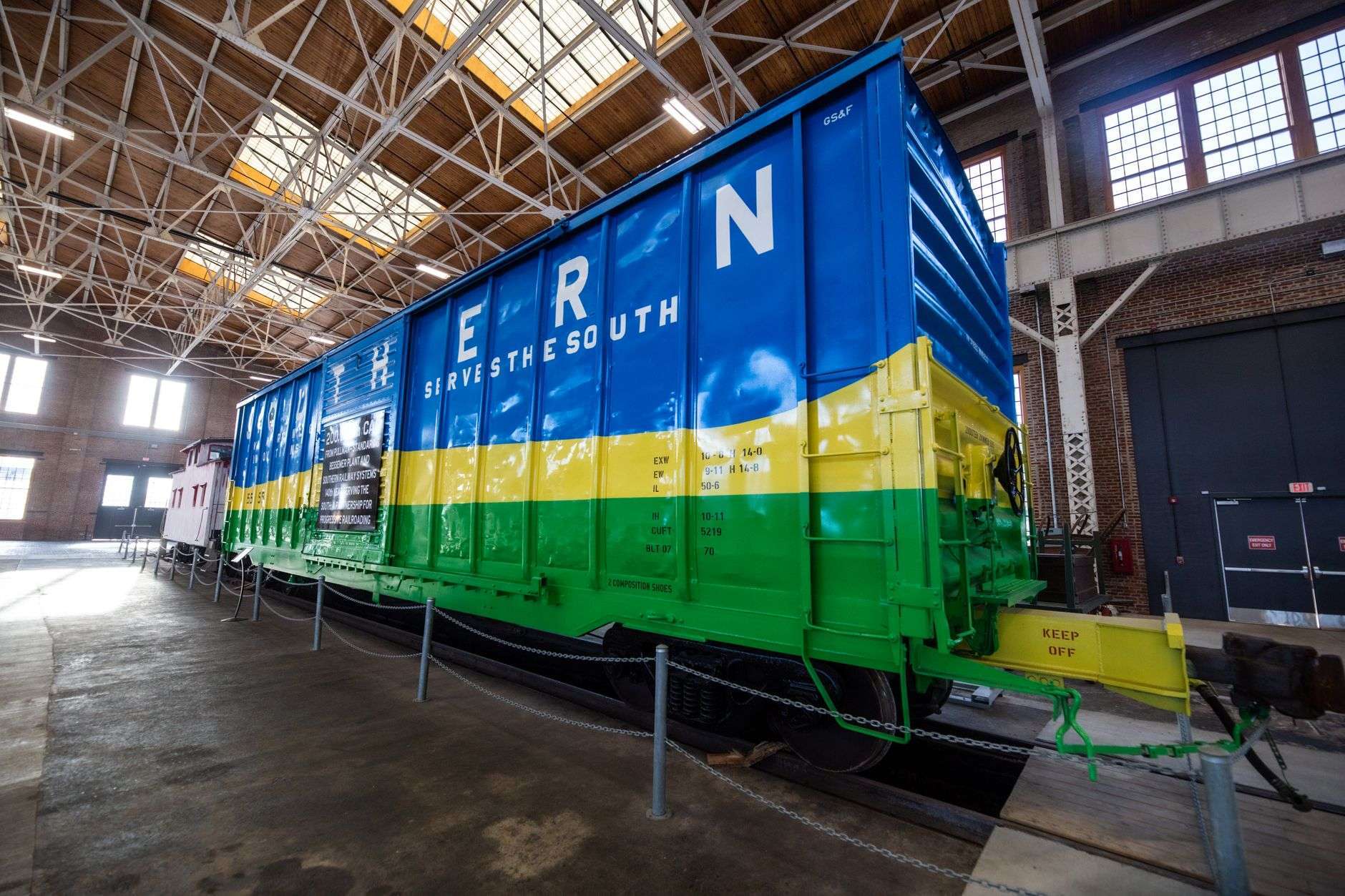
FLOMATON, Ala. — Catharine Jeter appeared before the Flomaton Town Council asking that the Alabama Welcome Center and Railroad Museum be reopened, and left with an answer the council framed as arithmetic rather than unwillingness.
The Board Found Out by Word of Mouth
“I am here tonight representing the railroad museum board and we come before you with several questions and concerns,” Jeter said.
She said the board heard through word of mouth that the facility had been closed.
“We would like to know if that is true?” she asked. “If we have been closed, we would like to understand why.”
Jeter also asked what the town’s plans are for the facilities going forward. She noted the railroad museum board is responsible for the artifacts, exhibits and historical items inside the museum, and said that if decisions are being made about the closure or the museum’s future, the board should be notified.
That is a substantive governance point rather than a procedural complaint. A museum board holding custodial responsibility for a collection has obligations regarding its security, climate conditions and condition monitoring — obligations that do not pause when a building closes. Learning of a closure informally leaves that board unable to discharge duties it still carries.
The Case for Reopening
“The railroad helped build this community,” Jeter said. “The museum helps preserve that story.”
She asked the council to look for solutions before allowing the facilities to remain closed or forgotten, and made an economic argument alongside the historical one.
“When visitors stop to see the historic railcars, walk the museum grounds or learn about Flomaton’s railroad history, they also have the opportunity to buy gas, eat at our restaurants, visit local businesses and spend money in our town,” Jeter said. “Flomaton has a story worth telling. We have history worth preserving and we have a community worth investing in.”
The argument has real grounding in Flomaton’s case. The town exists substantially because of the railroad — it developed as a junction point, and the name itself reflects that history. A welcome center on a route carrying travelers between Alabama and Florida is positioned to capture stops that a museum alone would not.
The Council’s Answer
Councilman Roger Adkinson said he made the motion to close the welcome center and railroad museum because of needed repairs and the cost of staffing the facility. He added that he would like to see it reopened in the future.
The building problems are specific. The roof leaks and the air conditioning unit is not working.
Councilwoman Kay Wagner said a previous administration allowed the roof on the log cabin to deteriorate, and noted the cabin is rotting down.
“They can’t stay open all the time,” Wagner said. “People are just coming in to use the bathroom and the house leaks from the ceiling.”
Wagner added that nobody has come forward to volunteer to help keep it open, and said it cost the town about $500 a month to run the air conditioner.
“I could go on and on,” Wagner said.
A Roof Is the Real Problem
Of everything described, the leaking roof is the item that determines whether the question remains open. Water intrusion into a building housing historical artifacts causes damage that is cumulative and frequently irreversible — paper, textiles, photographs and wood absorb moisture, and mold follows.
A non-functioning air conditioner compounds it. Climate control in a humid Gulf Coast environment is not a visitor comfort feature for a collection; it is preservation infrastructure.
Deferred maintenance on a public building follows a familiar curve: the cost of repair rises faster than the cost of doing nothing appears to, until the building itself becomes the loss.
‘People Will Help If You Ask’
Jeter said the town never asked the museum board, “Do you need help?”
“I know it takes money but people will help if you ask,” Jeter said. “People are willing to donate.”
Mayor Arthur Odom said the problems with the buildings predate his time as mayor.
“If we can make it work with donations, we will make it happen,” Odom said. “But we’ve got to have money.”
Adkinson noted the town is in a funding crunch and needs help to address the museum and welcome center.
“I’m totally on your side to see it open, but where’s the money?” Adkinson said to Jeter.
Where It Stands
The council did not announce a reopening date or a repair plan. Jeter’s offer — that donors and volunteers exist if asked — and the council’s position that repairs require funding the town does not have represent the two halves of a conversation that has not yet been held formally.
Residents or organizations interested in contributing to the facilities can contact Flomaton Town Hall or the railroad museum board.