Florida’s Back-to-School Sales Tax Holiday Ends Tonight
Florida's back-to-school sales tax holiday ends at midnight, giving Panhandle-area shoppers a last chance to buy clothing, school supplies and electronics tax-free.
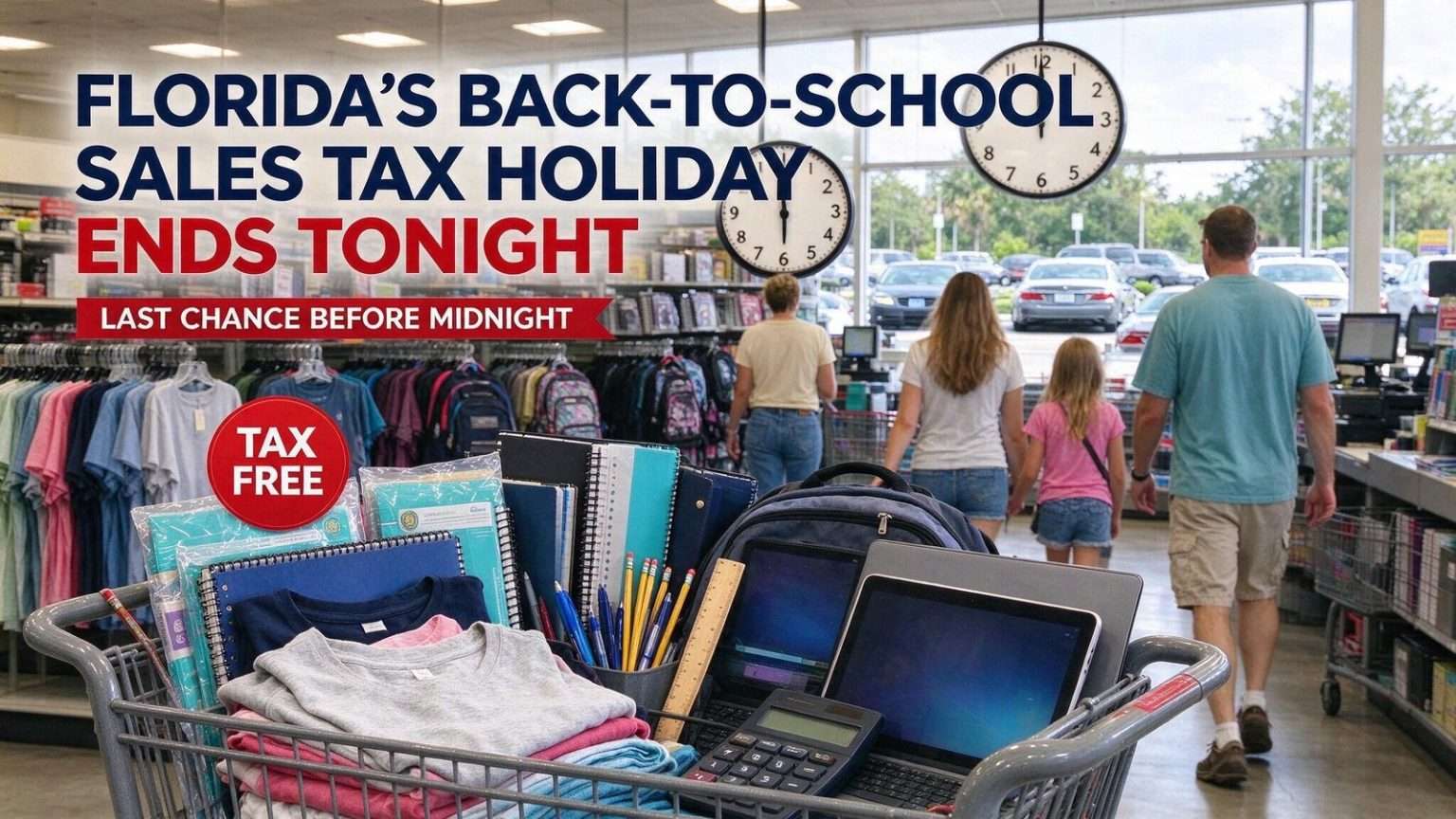
Shoppers along the Gulf Coast have just hours left to take advantage of Florida’s back-to-school sales tax holiday, which wraps up at midnight tonight. For families in the Florida Panhandle — and for South Alabama residents who regularly cross the state line to shop in Pensacola and other nearby Florida communities — the deadline means a last chance to save on clothing, school supplies and select electronics before classes get into full swing.
The tax-free period began July 20 and runs through August 20, giving Florida shoppers a full month to stock up on qualifying items without paying the state’s sales tax. Once the clock strikes midnight, standard sales tax rates resume on all purchases.
The month-long window is one of the longest back-to-school tax breaks in the region, and its timing has made the Panhandle a regular destination for bargain hunters from the Alabama line. For families in Baldwin and Mobile counties, the drive to Pensacola-area stores is short enough that a single shopping trip can cover a semester’s worth of clothes, supplies and electronics — with the savings from Florida’s waived state sales tax adding up faster the bigger the cart, particularly on laptops and other big-ticket items that would carry meaningful tax in either state.
Retailers along the border counties have come to count on the holiday each year, stocking aisles heavily for the July-to-August window and often running their own promotions stacked on top of the state’s exemption. Parking lots in Pensacola shopping corridors reliably fill with cars bearing Baldwin and Mobile County plates during the final days, when procrastinating shoppers make their last runs.
What qualifies for the tax exemption
The holiday covers a wide range of everyday back-to-school essentials, each with its own price cap.
Clothing, footwear and accessories priced at $100 or less per item are exempt, including shirts, pants, dresses, shoes, boots and accessories such as belts, hats and scarves. Bags priced at $100 or less also qualify, including backpacks, diaper bags, fanny packs and handbags — though briefcases, suitcases and garment bags are excluded from the exemption.
Traditional school supplies carry a lower threshold of $50 or less per item. That category includes binders, notebooks, folders, crayons, markers, pencils, pens, scissors, rulers, glue, poster board and staplers, among other classroom staples.
Learning aids and jigsaw puzzles priced at $30 or less are also covered, including flashcards, memory games, puzzle books and interactive electronic books or toys designed to teach reading or math skills.
The per-item structure matters more than the category list. A single qualifying purchase is exempt if the item’s price falls under the cap, no matter how many items land in one transaction — a shopper buying four $75 outfits pays no Florida sales tax on any of them, but a $120 coat is taxed in full, even in the same cart. Sellers are responsible for applying the exemption at the register, and shoppers who spot a qualifying item taxed in error can ask for a refund from the store or file a claim with Florida’s Department of Revenue after the fact.
Price caps also mean the exemption follows the sticker price rather than discounts — an item reduced by a coupon qualifies based on its final sale price, which has made the holiday a favorite pairing with summer clearance events.
Price caps also mean the exemption follows the sticker price rather than discounts — an item reduced by a coupon qualifies based on its final sale price, which has made the holiday a favorite pairing with summer clearance events. Retailers frequently schedule their deepest markdowns to overlap with the tax-free window, and the combination of a discounted, exempt item is how many Panhandle families time their biggest purchases.
Computers and electronics included too
Bigger-ticket items get a break as well. Personal computers and certain computer-related accessories purchased for noncommercial home or personal use are exempt from sales tax if priced at $1,500 or less. That includes desktops, laptops, tablets, tower computers, calculators and electronic book readers.
Qualifying accessories include keyboards, mice, modems, monitors, routers, personal digital assistants and nonrecreational software.
The electronics category is where the holiday produces its largest single-item savings, and it is the main draw for college students gearing up for fall semester. A laptop priced just under the $1,500 cap can carry substantial tax in normal weeks, making the difference between the holiday and the following day genuinely noticeable for a family buying a machine that needs to last four years of schoolwork.
The exemption does not extend to cellphones, video game consoles, digital media receivers, or devices not primarily designed to process data. Furniture, recreational software and monitors with a built-in television tuner are also excluded.
The exclusions draw the line between tools and toys: a tablet used for homework qualifies, a gaming console does not; productivity software counts, recreational software stays taxable. Store staff along the Panhandle spend the holiday’s final days fielding exactly those questions at the register, since the categories can blur — a device that browses the web but is marketed primarily as a media player falls outside the exemption, no matter how school-like its uses might look at a kitchen table.
Where the exemption doesn’t apply
Not every purchase qualifies, even if the item itself is on the exempt list. The tax break does not apply to the rental or repair of any covered items, and it does not apply to sales made inside a theme park, entertainment complex, public lodging establishment or airport.
Those location-based exclusions rarely matter for a back-to-school run to a big-box store, but they catch travelers and tourists off guard. An exempt-priced shirt sold in a hotel gift shop or an airport terminal remains fully taxable, and a laptop rented for the semester — rather than purchased — gets no exemption at all. The rules treat the holiday as a retail sales event for residents and visitors buying in ordinary stores, not a blanket suspension of tax everywhere in the state.
The rental and repair exclusion also means the holiday covers ownership costs only. School bands renting instruments, families repairing laptops damaged over summer, and athletes replacing cleats through a rental program all fall outside the window’s benefits, however back-to-school their spending might be.
The rental and repair exclusion also means the holiday covers ownership costs only. School bands renting instruments, families repairing laptops damaged over summer, and athletes replacing cleats through a rental program all fall outside the window’s benefits, however back-to-school their spending might be.
Refund mechanics are worth knowing on the holiday’s last day. If a cashier applies tax to a qualifying item in error, the retailer can refund it on the spot; once the holiday ends, correcting a mistake made during the tax-free window requires going back through the store, which is one more reason to check receipts before leaving the parking lot tonight.
The final hours
For shoppers hoping to squeeze in a last-minute trip, the exemption applies at the point of sale, so purchases must be completed before midnight to qualify.
That detail — point of sale, not order date — matters for the ways people shop now. An online order placed today but processed for payment after midnight does not qualify; an order completed and paid for before the deadline does, provided the item qualifies and the seller ships to a Florida address. Shoppers lingering over carts online are better off completing checkout tonight than saving the order for tomorrow, and stores along the Panhandle typically stay open late for the final run.
After tonight, standard Florida sales tax will once again apply to clothing, school supplies and electronics purchases statewide.
For South Alabama shoppers, the rhythm of the Florida holiday has become part of the regional school calendar. Alabama runs its own back-to-school tax holiday on a different weekend earlier in the summer, and families along the state line have learned to play the two against each other — Alabama’s exemption for the first round of supply runs, Florida’s longer window for the bigger purchases that benefit most from the cross-border trip.
The savings themselves are not trivial. Sales tax on a back-to-school cart — a laptop, a few outfits, backpacks and a semester of supplies — can run to a meaningful sum, and the exemption removes Florida’s state share from every qualifying item in the transaction. Multiplied across the thousands of families who time their spending to the window, the holiday shifts a measurable slice of late-summer retail traffic toward the Panhandle’s stores, which is precisely the effect the exemption was designed to produce.
Once midnight passes, the aisles quiet down, the taxable receipts return, and the region’s back-to-school shopping moves into its final stretch — with the first day of school waiting on the other side of the last tax-free checkout of the summer.