Anonymous Donor Cuts Foley Youth Mental Health First Aid Class to $30 for Parents, Teachers and Coaches
Thanks to an anonymous gift, adults can take a full-day Youth Mental Health First Aid course at Baldwin Health in Foley on Dec. 9 for $30, lunch included.
FOLEY, Ala. — Adults who spend time with teenagers and children can learn how to spot a young person in emotional distress and steer them toward help during a full-day Youth Mental Health First Aid course on Wednesday, Dec. 9, at Baldwin Health in Foley, and an anonymous gift has cut the cost of a seat to $30.
The Jennifer Claire Moore Foundation is hosting the training and is urging parents, teachers, coaches and other adults who young people rely on to sign up. The regular registration fee of $130 was reduced by $100 thanks to the donor, and the $30 price includes lunch and all course materials.
Event Details
- What: A one-day Youth Mental Health First Aid certification course
- Host: Jennifer Claire Moore Foundation
- When: Wednesday, Dec. 9, 2026; class begins at 8:30 a.m. and wraps up at 4:30 p.m.
- Where: Education Room, Baldwin Health, 1613 N. McKenzie Street, Foley
- Cost: $30, down from the usual $130
- Included: Lunch and training materials
- Registration: Required in advance; seating is limited
Who the Course Is For
The foundation is aiming the session at the adults who are most likely to notice when something is off with a child or teen: mothers and fathers, grandparents, classroom teachers, school staff, athletic coaches, youth ministers, scout leaders, mentors and anyone else a young person trusts.
No clinical background is needed. The idea behind the program is that an ordinary adult who knows the warning signs and has a plan can make a real difference, even without having every answer. Organizers stress that the way an adult responds when a young person is struggling matters, and that recognizing trouble, opening a conversation and pointing the young person toward help are skills anyone can learn.
What Participants Will Learn
The curriculum prepares adults to notice signs that a child or teen could be facing emotional difficulties or problems with alcohol or drugs, to respond calmly and confidently, and to connect the young person with the right kind of support. Over the eight-hour day, the course covers:
- Adolescent development, including what typical teenage moodiness looks like compared with signs that something more serious may be happening.
- Common mental health challenges that affect young people, such as anxiety, depression and substance use.
- A five-part plan of action for helping a young person both in a crisis and in situations that are not emergencies.
The five-step plan
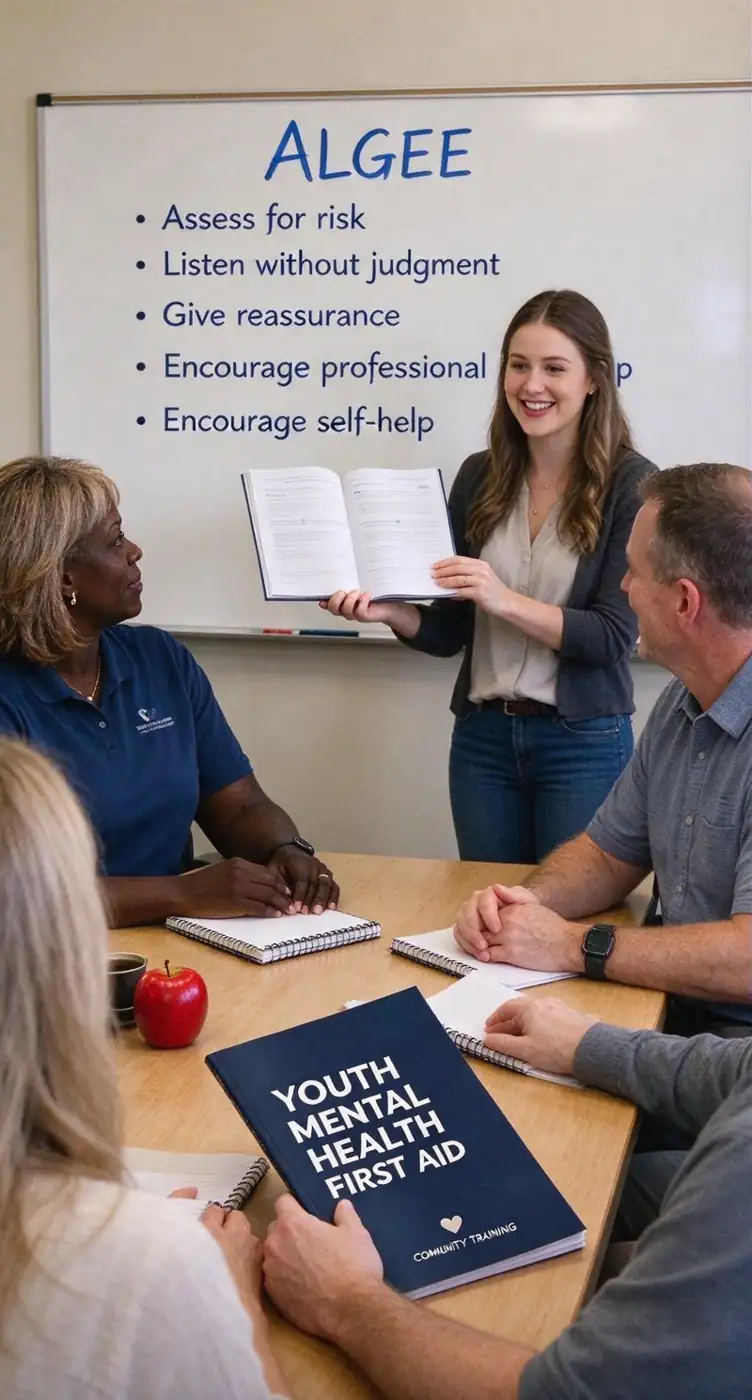
Mental Health First Aid courses in the United States teach a five-part action plan commonly remembered by the acronym ALGEE. In general terms, it asks the helper to:
- Assess for risk of suicide or harm.
- Listen without judgment.
- Give reassurance and information.
- Encourage appropriate professional help.
- Encourage self-help and other support strategies.
The steps are not always followed in strict order. Course instructors typically use role-play, videos and group discussion so participants can practice what to say and do in realistic scenarios.
Why the Training Matters
Mental health struggles among young people can be hard to recognize. A teenager who is withdrawing from friends, losing interest in activities, sleeping far more or less than usual, slipping in school or seeming unusually irritable may simply be going through a hard stretch, or may be facing something deeper. Many young people do not ask for help on their own, and the adults around them may not know how to bring the subject up.
That uncertainty is exactly what the course is built to address. Rather than turning participants into counselors, it gives them a framework for noticing changes, starting a caring conversation and knowing where to turn next, whether that means a school counselor, a pediatrician, a licensed therapist or emergency services.
Mental Health First Aid is often compared to traditional first aid and CPR classes. Just as a person trained in CPR is not a doctor but can help keep someone alive until paramedics arrive, a person trained in mental health first aid can offer initial support until professional care is available.
About the Program
Mental Health First Aid began in Australia in 2000 and was brought to the United States in 2008. It is managed nationally by the National Council for Mental Wellbeing, which certifies instructors and maintains the curriculum. The youth version is designed for adults who interact with young people, generally those between the ages of 12 and 18.
People who complete the course typically receive a certification as a Youth Mental Health First Aider that remains valid for three years.
Warning Signs Adults Can Watch For
While the course goes into far more depth, mental health organizations commonly list several changes that may signal a young person needs support:
- Pulling away from friends, family or activities they once enjoyed
- Noticeable changes in sleep, appetite or energy
- A sudden drop in grades or frequent absences from school
- Persistent sadness, worry, anger or irritability that lasts for weeks
- Talk of hopelessness, being a burden or wanting to disappear
- Signs of alcohol or drug use
- Giving away belongings or other behavior that seems like saying goodbye
Any single sign does not necessarily mean a young person is in trouble, but a pattern of changes, or any talk of suicide or self-harm, deserves attention right away.
Starting the Conversation
One of the biggest hurdles for adults is simply knowing how to begin. Common guidance from mental health educators includes choosing a private, relaxed moment; describing specific changes you have noticed in a caring way; asking open-ended questions; and listening more than talking. Asking a young person directly whether they are thinking about suicide does not plant the idea, research has shown, and can open the door to getting help. Avoiding lectures, quick fixes or dismissive comments helps a young person feel heard rather than judged.
A Lower Price, Fewer Barriers
Cost can keep busy parents and school employees from signing up for professional development on their own. By covering most of the fee, the anonymous donor has made it possible for community members to attend for less than a quarter of the normal price, with a meal provided.
The foundation says it hopes local residents will take advantage of the opportunity to become better prepared to help the children and teenagers they care about. Because space is limited and registration must be completed ahead of time, those interested should sign up early through the Jennifer Claire Moore Foundation.
Planning to Attend
- Plan for a full workday, since the class lasts eight hours.
- Look for the Education Room inside Baldwin Health on North McKenzie Street, one of Foley’s main north-south roads.
- Lunch is provided, but participants with dietary restrictions may want to contact organizers ahead of time.
- Educators and coaches may wish to ask their employers whether the training can count toward professional development requirements.
If a Young Person Needs Help Now
The training is meant to prepare adults for the future, but help is available any time a young person is in crisis:
- Call or text 988 to reach the 988 Suicide and Crisis Lifeline, available 24 hours a day, seven days a week, or chat online at 988lifeline.org.
- Call 911 if someone is in immediate danger.
- Reach out to a school counselor, pediatrician or family doctor for guidance on next steps and referrals to local mental health providers.
Adults who are unsure whether a situation is serious are encouraged to err on the side of asking questions and seeking help. Simply showing concern and listening can be an important first step for a young person who is struggling.