Oil Reached Fort Morgan and Mobile Bay in June 2010
A 2010 WKRG report documented oil reaching Fort Morgan's bay-side shoreline during the Deepwater Horizon spill.
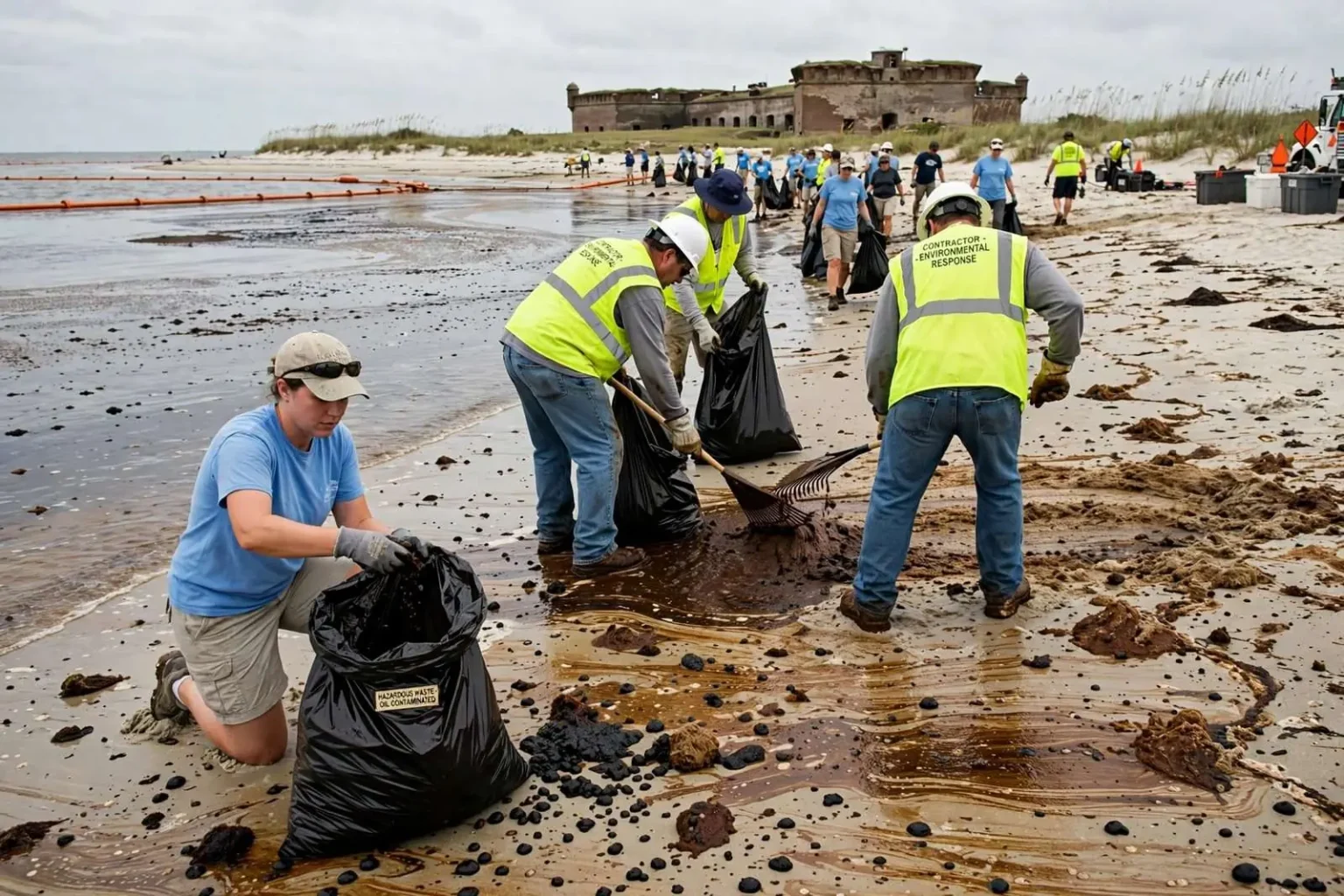
Oil reached the Mobile Bay shoreline and the beach at Fort Morgan in June 2010, according to a local news report from the height of the Deepwater Horizon spill. The report described coin-sized globs of oil in the water and brown material settling on the sand near the historic fort, the first tangible sign that the disaster offshore had arrived on Alabama’s shores.
A contracted cleanup crew was waiting nearby while volunteers began removing material from the shoreline. The report came as oil from the Deepwater Horizon spill spread toward Mobile Bay and the resort communities along Alabama’s coast, weeks after the rig explosion that started it all.
This is a historical summary of 2010 oil-spill reporting. It is not a current beach-condition report, and conditions on Alabama’s beaches today are unrelated to the events described here.
How the Spill Reached Alabama
The Deepwater Horizon drilling rig exploded on April 20, 2010, while working on an exploratory well in the Gulf of Mexico roughly 40 miles off the Louisiana coast. The blast killed 11 workers and triggered one of the largest marine oil spills in history, with oil flowing from the damaged wellhead on the seafloor for months while response teams worked to contain it.
For the first several weeks, Alabama’s coastline watched and waited. Wind and current patterns kept much of the floating oil to the west, toward Louisiana, Mississippi and the barrier islands. But as the volume of oil in the Gulf grew and weather shifted, forecast models began pointing the slick toward the eastern Gulf, and Baldwin County’s beaches and bay systems braced for impact.
By June 2010, that projection had become reality. The local report described coin-sized globs in the water off Fort Morgan and brown material on the sand near the fort itself, the kind of weathered tar and mousse that forms as crude oil mixes with seawater and rides the currents ashore. Fort Morgan occupies the end of a narrow peninsula that guards the mouth of Mobile Bay, which placed it among the first places in the area where arriving oil would make landfall.
The Response at Fort Morgan
The scene described in the June 2010 report reflected a response effort that had been staged well in advance. A contracted cleanup crew was waiting nearby as the material came ashore, part of the large contractor workforce mobilized along the Gulf Coast in the weeks after the explosion. Their role was to remove oil from the sand systematically once landfall was confirmed.
Alongside the contractors, volunteers began removing material from the shoreline. The volunteer effort became one of the defining images of the spill’s impact on Alabama: residents, students and visitors who showed up to walk the beach, collect tar balls and bag oiled debris, many of them after completing brief training on how to handle the material safely.
The division of labor mattered. Oil-contaminated material had to be handled as hazardous waste, bagged, tracked and hauled to approved disposal sites rather than left in ordinary trash. Crews worked in patterns, raking and sifting sand, scraping oiled layers where necessary and monitoring the tide line for new arrivals with each change of wind and current.
Fort Morgan’s geography made the work both urgent and difficult. The peninsula is low, narrow and ecologically sensitive, home to dune systems, shorebird habitat and the nineteenth-century fort that gives the community its name. Heavy equipment that removes oil can also remove the beach itself, so responders had to balance the speed of cleanup against the risk of doing lasting damage to the shoreline they were trying to protect.
What Was at Stake for the Coast
By the time the material came ashore, response staging along the Alabama coast had already been underway for weeks. Boom lines had been positioned at passes and sensitive shorelines, staging areas had been set up, and plans for beach cleanup were being refined daily as forecasts shifted. The arrival of the first globs converted those preparations into active operations almost overnight.
The spread of oil toward Mobile Bay put some of Alabama’s most valuable real estate and natural resources directly in the path of the spill. The barrier beaches of Gulf Shores and Orange Beach, the Fort Morgan peninsula and the bay itself support a tourism economy built almost entirely on clean water and white sand, along with working seafood industries and fisheries that depend on the same estuary.
Mobile Bay is where Alabama’s largest river system meets the Gulf, and it functions as a nursery for fish, shrimp, crabs and oysters. Oil entering that system threatens far more than a summer of swimming. Larval stages of commercial species, marsh edges, seagrass beds and the food web they support are all exposed when hydrocarbons arrive in bay waters, and the effects can linger in the ecosystem long after the visible tar is gone.
For the resort communities along the coast, June is the heart of the booking season. News that oil had reached the shoreline was therefore not just an environmental event but an economic one, with cancellations and uncertainty compounding the physical mess on the sand. Local officials spent the summer of 2010 trying to hold two fronts at once: the cleanup itself and the public’s confidence that the beaches would recover.
Weathering and Tar Balls on the Beach
The coin-sized globs described in the Fort Morgan report are a familiar product of spilled crude. As oil weathers in open water, its lighter compounds evaporate or dissolve, and the remaining material thickens into sticky patches and tar balls that can travel for miles. Depending on conditions, the material arriving on a beach can range from small pellets scattered across the sand to broad mats of brown, taffy-like residue.
That variability is why shoreline cleanup is measured in weeks and months rather than days. Each tide cycle can deposit a fresh layer of material, and buried oil can resurface long after a stretch of sand looks clean. Response crews therefore worked in repeating passes along the Alabama coast through the summer, adjusting their methods to whatever the Gulf delivered next.
Health guidance during the spill was consistent: beachgoers were advised to avoid contact with the material, and cleanup workers took precautions against breathing fumes and touching the oil directly. Pets were kept away from oiled stretches of beach for the same reasons.
The Well Is Capped, the Coast Recovers
The flow from the damaged well was finally stopped in mid-July 2010, after months of failed attempts and the eventual placement of a containment cap. Even after the well stopped flowing, the cleanup and monitoring continued for years, as teams patrolled Alabama’s beaches and bayous for residual oil and the legal and restoration processes unfolded on a scale the Gulf Coast had never seen.
Billions of dollars in settlement and restoration funding eventually flowed to the Gulf states, including Alabama, directed toward coastal restoration, economic recovery and environmental monitoring. Projects across the Mobile Bay area, from habitat restoration to improvements in local infrastructure, trace their funding to the response framework built after the spill.
The physical beach at Fort Morgan recovered, as did the tourism economy along Alabama’s coast, though the summer of 2010 remains a defining memory for the communities that lived through it. What the June 2010 report captured was the moment the distant disaster became a local one: the first globs in the water, the brown material on the sand, the contractors waiting and the volunteers already at work.
Why the June 2010 Landfall Mattered
The arrival of oil at Fort Morgan and along the Mobile Bay shoreline in June 2010 marked a turning point in how the spill was understood in Alabama. Until then, the disaster had been largely a televised event, unfolding over the horizon hundreds of miles away. Once weathered oil began washing onto local sand, the spill became a daily, physical presence in coastal life.
The Fort Morgan peninsula, guarding the western edge of the bay mouth, was geographically positioned to intercept material moving into the bay system. Its beaches, dunes and historic fort drew both response resources and public attention, and the images of tar-stained sand there helped shape the statewide and national response to the spill.
The response also forged relationships that outlasted the cleanup itself. Coordination between contracted crews, volunteer groups, municipal officials and state agencies during the summer of 2010 became the template Alabama relied on in later storm and spill responses, and the volunteers who bagged tar balls in June 2010 left behind a coastal community more organized and more watchful than the one that greeted the news that April.
More than a decade later, the episode stands as a reminder of how quickly conditions on the Gulf can change and how much the region’s environment and economy depend on the water that defines it. The June 2010 report of coin-sized globs and brown material near the fort is a small document of a very large event, but it records the exact moment the Deepwater Horizon spill reached Alabama’s shore.