

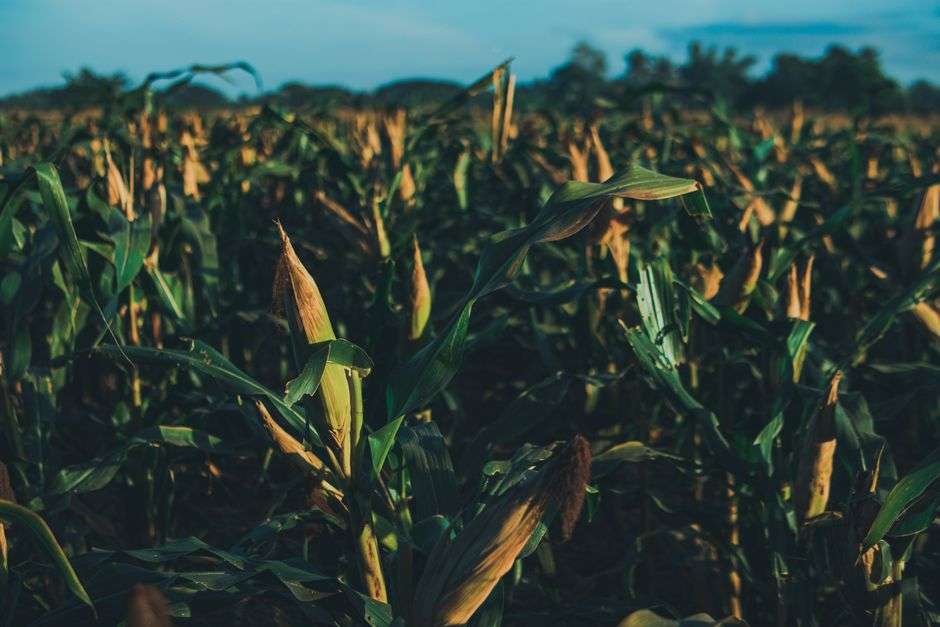
Summer on the Gulf Coast has a signature flavor, and for thousands of Baldwin County households it arrives by the half bushel: Devotion, the white supersweet corn hybrid that the Krupinski family of Foley has made famous across the county. The Krupinskis were the first in Baldwin County to grow the variety, and they have sold it directly to the public for 18 years, first by word of mouth, later through a Facebook following that draws first-time customers every season.
“I just put a sign on the corner that said ‘Sweet Corn’ and vacationers and locals would stop and buy it,” farmer Mark Krupinski recalled of the pre-social-media days. The family first grew Silver King, a white sweet corn variety, before switching to Devotion, which Mark considers better, not least because it takes South Alabama’s weather better than most, standing up to the winds when summer squalls blow through. Cooked simply, cut from the cob and sauteed in butter for about two minutes, it is the kind of corn that inspires loyalty and freezer-stashing.
From Nebraska to Foley, 1926
The farm’s story begins nearly a century ago. Mark’s Polish grandfather came to Baldwin County from Nebraska and bought the first 40 acres in 1926, growing mainly potatoes. The second generation was Mark’s father, John, who farmed into old age before dying last year at 90. Mark and his brother Joe now run the operation with Mark’s wife Diane and his mother Margaret. Mark’s son Alexander works on the farm, and younger son Nicholas was set to join the summer fields before heading to Auburn to study agriculture.
“This is a family farm,” Mark said. “I promised my dad that we would keep it going and my sons want that as well.” Four generations and almost 100 years later, the operation has scaled up and down with the county around it. The family once leased land where the Home Depot and Lowe’s on Highway 59 now stand, farming as many as 2,000 acres in that era, and grew strawberries for 20 years before stopping about four years ago.
Farm-to-Table Before It Was Trendy
The Krupinskis practiced selling fresh, local produce straight to consumers long before farm-to-table became a marketing term. Their first outlet was Margaret’s two-car farmhouse garage, where she sold mostly corn and tomatoes. Today the farm stand on the property at 18625 Charolais Road, between Highway 65 and Highway 59, sells everything the farm grows in season: squash, peppers, tomatoes, eggplant, watermelons, cantaloupes, cucumbers and more, alongside the corn. The location between the two highways makes beachgoers steady customers throughout the summer.
The market runs a seasonal calendar. It stays open until the end of July, closes through the hottest weeks, and reopens in October when fall vegetables like greens, broccoli and cabbage come in. Hours are Monday through Friday, 8 a.m. to 5:30 p.m., Saturday 9 to 4 and Sunday 10 to 2.
Picked at 6 A.M., Watered by Hard Hose
The labor model has not changed with the generations: family does the work. The picking starts in the field at 6 a.m., sometimes with an assist from the sons’ friends, and Mark jokes that by the end of the season he will have lost ten pounds and be in great shape. Irrigation relies on an old-style hard hose reel that waters about five acres at a time and takes roughly seven hours to drag into position, supplemented by drip systems plumbed to wells in some fields.
When a visitor hoped aloud that his sons would have sons, extending the farm to a fifth generation, Mark corrected her without hesitation: some of his best field hands were girls who worked several summers before leaving for college. “They had young backs and I was sorry when they left,” he said.
His sons are being trained to take over one day, and Mark’s teaching philosophy mirrors his own career: education helps, but hands-on experience is the best teacher. “The crops we grow are versatile and I learn something new every day,” he said. For Baldwin County shoppers, the proof is in the produce aisle, and in the sweet corn that sells out summer after summer, nearly a hundred years after a farmer from Nebraska first put a plow in the Foley dirt.