

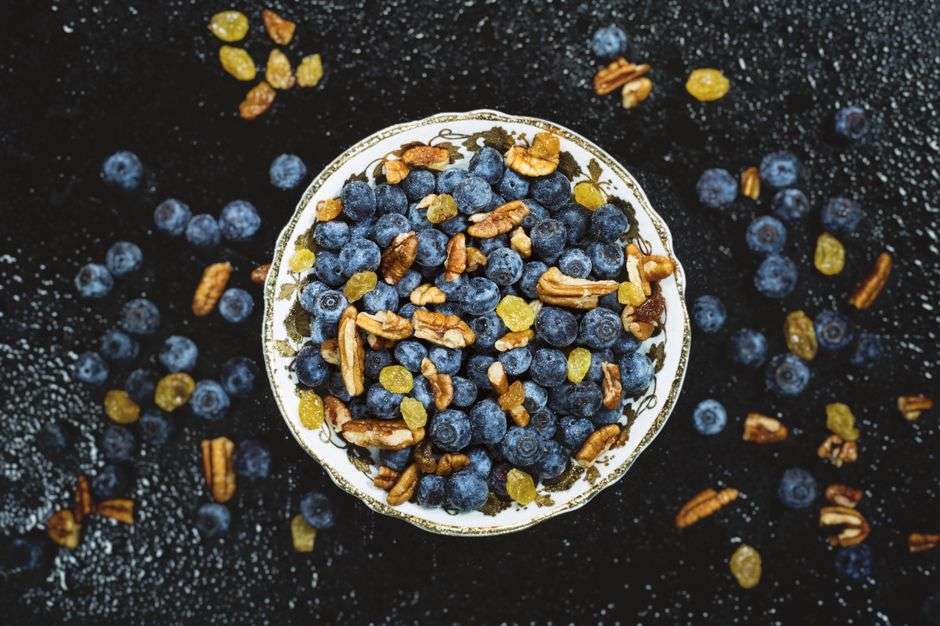
Pecans are Alabama’s official state nut, and in south Mobile County and Baldwin County, a couple of farming families treat them like a family inheritance — because that’s exactly what they are. At Dees Pecan Company in Grand Bay and B&B Pecan Company on Greeno Road in Fairhope, the same families have been growing, shelling, roasting and shipping pecans for a combined stretch of farming history that now approaches 165 years.
Mark Hatchett, who owns Dees Pecan Company, is a former Auburn University baseball player with a sharp eye and a deep well of pecan knowledge — the kind of grower who can explain, start to finish, what it takes to graft a tree so it produces a specific variety. His mentor and friend, Clarence Bishop of B&B Pecan Company in Fairhope, is still going strong in his 90s, a longevity Hatchett says comes with the territory. “The Godfather of the Pecan Industry in Alabama,” Hatchett calls him.
A tradition that started in 1925
The Dees family’s pecan tradition reaches back to 1925, when Hatchett’s maternal grandparents, DeWitt and Myrtle Dees, started the operation. “They never met a stranger,” Hatchett recalls — and the personality of the place hasn’t changed. The retail outlet, at the corner of Dawes Road and Grand Bay Wilmer Road in a historic building that smells permanently of roasted pecans, sells just about everything a pecan can become: roasted and salted, chocolate covered, chopped and ready for pies, plus ready-made pecan pies in classic, chocolate and sugar-free versions.
The shelves go well past the nuts themselves. Fresh-ground pecan coffee comes in bourbon, butter and chocolate pecan roasts. There are coffee mugs, T-shirts, gift baskets in the shape of Alabama, and corporate gifts — decorative pecan tree tins filled with homemade treats — that make the store a holiday-season destination. Dees ships its products to all 50 states.
Forty miles away, a fourth generation
In Fairhope, at 16151 Greeno Road along Highway 98, B&B Pecan Company is training its fourth generation. Brett Bishop, 24, a descendant of both the Bishop and Brown families — his grandmother was a Brown, hence the B&B — has been learning every facet of the business since he was a child, back when the family planted corn and beans between the rows of pecan trees. “When I wasn’t at football practice,” he says, “I was out in the fields picking up limbs, doing whatever my dad Doug needed me to do.”
His grandfather Clarence — “Paw Paw” to Brett — built the reputation Hatchett describes so respectfully. Brett has paired the hands-on education with a business degree, and he runs the modern half of the operation: updating the website between shifts in the groves, sweeping the rows, hand-grading nuts, and shaking down Elliotts at harvest.
The Elliott, as it happens, is the variety both farms treat as king. “It’s all about the oils, and Elliott pecans have more oil, which imparts a distinctively rich flavor,” Hatchett says. The stores carry a deep bench of other varieties, too — Pawnee, Choctaw, Gloria Grande, Stuart, Cape Fear, Schley and Jackson among them.
Neighbors, not rivals
On paper, Dees and B&B — more than 40 miles apart — might look like competitors. In practice they’re friends and collaborators. Both are proud members of the Southeastern Pecan Growers Association, and both lean on the same network of pecan-farming friends, particularly in Georgia, where the nation’s largest pecan production is concentrated.
“The Georgia pecan growers help us out when we need it. They have thousands of acres of pecan trees,” Bishop says. “We have 125 acres.” That ratio explains a lot about Alabama’s pecan industry: it is small, relationship-driven and quality-focused rather than volume-driven. “They do everything right,” Hatchett says of B&B.
Storms, seasons and endurance
pecan farming along the northern Gulf Coast is never easy, and Hurricane Sally offered a brutal reminder. In Grand Bay the trees themselves survived, but the storm’s timing could hardly have been worse. “It rained for eight straight hours,” Hatchett recalls. “Heavy, rain-soaked nuts broke tree stems, and when the nuts hit the ground a month ahead of harvest, they rotted.”
Growers here have endured several disappointing seasons, and endurance is the trait both families share. Hatchett is happy to share what he’s learned with customers, including the crop’s deep American roots: Native Americans were cultivating pecans long before European settlement, and the Pawnee people — for whom the Pawnee variety is named — uprooted saplings and carried them to replant along the Delta, an early act of agricultural ingenuity.
The Grand Bay–Fairhope connection — two family businesses linked by friendship, association membership and a shared variety of choice — has built something bigger than either farm: a support network that sustains both growers and the Alabama pecan industry as a whole, not to mention a lot of pecan pies.
If you’re planning a holiday table, both companies ship statewide and beyond — and a pecan from a fifth-generation, sixth-generation family farm tastes like exactly what it is: South Alabama, kept sweet.