

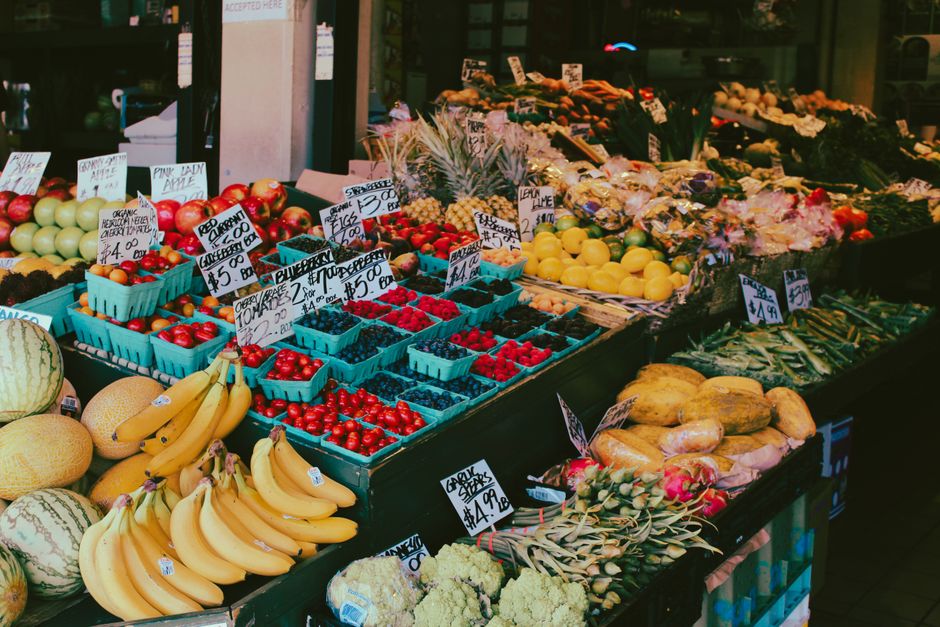
The Loxley Farm Market is easy to miss. It stands along one of those curves on Highway 59 as the road snakes through town, a rustic open-air structure with a concrete floor and tables that have held Baldwin County produce in the same spots for 30 years. Enough people have found it — and kept coming back — to keep the family business running strong since 1995, through a pandemic, a farm-altering January snowstorm and the closure of the bigger market up the road.
When Alescia Forland opened the stand, she brought deep roots to the counter. Though she married into the family, the Forland name had been attached to farming in the area for nearly a century. Her daughter Michelle is a fourth-generation farmer, and Michelle’s young daughters, Sarah Jean and Maggie Mae, are familiar happy faces at the market — fifth-generation candidates for the trade of selling vegetables and fruit grown in Baldwin County’s rich dirt.
From Norwegian homestead to Highway 59
The family land goes back to 1904, when Tormod and Kristina Forland arrived from Norway and bought 100 acres, joining a small wave of Scandinavian and Czech settlers who populated the Silverhill area. Alescia grew up in Mobile; when her family crossed the bay in 1975, they moved — by coincidence — into the very house that had been the Forlands’ original home.
Today the family farms land off County Road 54 in a rural pocket Alescia jokingly calls “the Tri-Cities Area” — not quite Loxley, Silverhill or Robertsdale. The list of what grows there is longer than the list of what doesn’t: a pecan orchard, and seasonal bounty that runs from squash, zucchini, peas, cucumbers, potatoes, corn, peaches and peppers in spring and summer to collards, turnips, kale, broccoli, lettuces and herbs in the cool months.
How the customers changed
The market’s customer base has transformed since 1995. “Most of our business was tourists when we first opened because Baldwin County was still very agricultural,” Alescia said. “Back then, almost everybody knew a farmer or lived on a farm themselves, so they didn’t have to go looking for fresh produce.”
In the decades since, much of the flat farmland along the highway has been developed with businesses and homes. Plenty of farming remains, but much of what is grown locally today heads to wholesale markets rather than neighbors’ dinner tables. The new residents of Baldwin County’s population boom, though, skew younger and more health-conscious — people who want to know exactly where their food comes from, a shift Alescia traces in part to the COVID-19 pandemic.
The pandemic also changed how the market operates. Home delivery began when customers couldn’t get out and supply-chain shortages made fresh food scarce. It never stopped. Orders arrive online or by phone, and Alescia loads her white van with boxes of fruits, vegetables and the market’s specialty items and runs routes around the county. On Saturdays she runs the Coastal Alabama Farmers and Fishermens Market in Foley, and in warmer months she vends at the Fairhope Outdoor Farmers Market.
The satsuma problem
One recent winter brought an unwelcome surprise. The historic January snowfall that delighted south Alabama with an improbable white landscape devastated the citrus crop — and locally grown satsumas, the small tangy fruits that are hugely significant to Baldwin County’s farming economy, all but vanished from the market’s shelves.
“They’re very disappointed when they come in looking for them, and we don’t have them,” Michelle said. “And it hurts us, too,” Alescia added, “because satsumas, along with pecans, are usually our main seller during the holidays.”
June is the market’s busiest month, when the most crops are in and schools are out. But the stand is open year-round and keeps diversifying: the original 30-year-old tables hold the produce, shelves carry jars of jams, jellies, salsas and relishes, and coolers along the perimeter hold cheeses, wild-caught fish and shellfish, and farm-raised beef and chicken.
After Burris
For most of the market’s life it operated in the shadow of a better-known competitor less than half a mile up the highway. Burris Farm Market — larger, more visible, with a popular bakery inside — was already established when the Loxley Farm Market opened. Burris closed almost two years ago, and its site is slated to become a Wawa convenience store.
Alescia and Michelle acknowledge they have seen more customer traffic since the closure, but they don’t draw a direct line. “His business was more tourist-driven, and tourists saw it first on their way down to the beach. Stopping there became a tradition for a lot of people,” Alescia said. “It’s the locals who have kept our lights on.”
Thirty years in, that is the Loxley Farm Market’s business model in one sentence: keep the locals coming, keep the family farming, and let the highway traffic discover what the curve hides — a fourth-generation farm stand that isn’t going anywhere.