

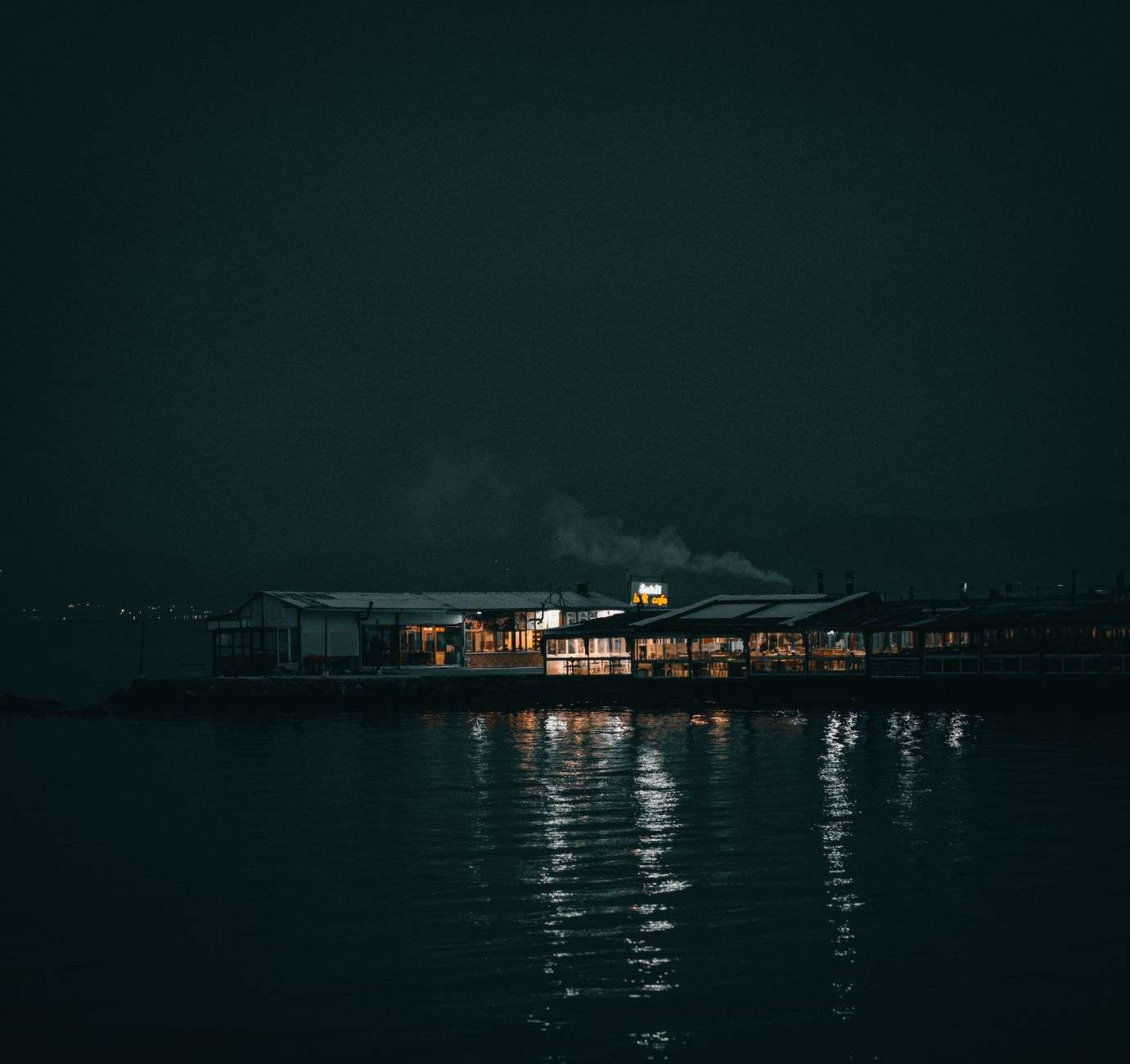
Downtown Pensacola today is lively, with restaurants, galleries, a minor league ballpark on the waterfront and historic buildings filled with businesses and events. It was not always that way. Few people have had a closer view of that transformation, or played a bigger role in it, than Collier Merrill, the Pensacola developer and restaurateur who, with his brothers Will and Burney, owns and operates Merrill Land Company and Great Southern Restaurants. In a spring 2023 conversation, Merrill traced his family’s century-long history on the Gulf Coast and explained how a hurricane, a sewer plant and a group of determined business owners helped set downtown Pensacola on a new course.
The conversation followed a lunch at The Fish House in Pensacola with Merrill and fellow community leaders Maria Goldberg and David Bear, all figures who have helped shape the city’s recent growth.
A Family Legacy Rooted in Timber
Merrill Land Company has been part of the Florida Panhandle’s business landscape for generations. Collier Merrill’s grandfather, Burney Henderson, moved to Pensacola in the 1920s after his father bought the lumber mill in Bagdad, Florida, a small community just northeast of Pensacola in Santa Rosa County. Bagdad was once one of the region’s busiest mill towns, part of the vast longleaf pine timber industry that shaped the economy of Northwest Florida and South Alabama in the late 1800s and early 1900s.
As large tracts of timberland in the Destin area changed hands for growing pine trees, Henderson took a different approach: he bought the beachfront property, which was cheap. “You can’t grow pine trees in the sand,” sellers would tell him, and they practically gave the land away. Henderson eventually assembled six miles of beachfront property, and Destin went on to become one of the Gulf Coast’s major vacation destinations.
Visitors to Destin may know Henderson Beach State Park, which sits in the heart of the city and was a gift to the State of Florida. Henderson was also instrumental in developing the Gulfarium Marine Adventure Park in Fort Walton Beach, one of the oldest continuously operating marine parks in the country, which Merrill said in 2023 remained family owned and operated.
From Subdivisions to Gulf Coast Condos
Over the years, the family has bought and sold property across the region. Merrill Land Company has developed subdivisions, apartments and condominiums from Destin to Gulf Shores, and it even crossed into Mississippi to develop a subdivision there.
The family also started and still operates Building Supply Center in Pensacola, which Merrill describes as the largest remaining family-owned building supply company in existence. It is where Collier cut his teeth, working there in his youth and after college. His father, a Boston native, was a Marine aviator stationed in Pensacola, where he met Collier’s mother and fell in love with both her and the city.
Merrill grew up on the timber side of the family business. In 1988, at age 27, he developed his first subdivision. He went on to serve as president of the Homebuilders Association, though he is quick to point out that he is a developer, not a home builder.
His condominium projects include:
- Crystal Towers on West Beach in Gulf Shores, which features the only skywalk across the road
- Crystal Shores and Crystal Shores West
- Spanish Key in Perdido Key
- Oceania in Destin
- The Tides of Destin
- Harbor Landing Condos in Destin
In 1996, Merrill Land Company built Crystal Lake, a 228-unit apartment complex in Pensacola.
Hurricane Ivan and a Turning Point
Then came Hurricane Ivan in September 2004. “The whole Gulf Coast was a mess,” Merrill recalled. Ivan made landfall just west of the Alabama-Florida line and brought devastating wind and storm surge to Pensacola and Escambia County, damaging tens of thousands of homes and businesses.
Merrill was rebuilding Crystal Lake with insurance money when a buyer approached him about purchasing the property.
“The complex was completely empty, but he was offering to purchase the property at the pre-storm appraised value as long as I completed the extensive renovation. He was smarter than me because he knew the area was about to take off,” Merrill said. And take off it did.
For downtown Pensacola, Merrill said, the storm had an unexpected upside. “Everything was a big mess, and we were already in the restaurant business,” he said. “God sent us Ivan. While tragic in many ways, it also boosted the redevelopment of downtown Pensacola.”
Moving “Big Stinky” Off the Waterfront
Before downtown’s revival began, the city’s sewer treatment plant sat on the waterfront property where the Blue Wahoos Stadium stands today. “It was called the Big Stinky, and the smell was truly awful,” Merrill said.
Relocating the plant carried a price tag of $300 million, an amount Merrill described as insurmountable for the community. After Ivan, however, FEMA helped fund the move. City leaders relocated the sewer plant out of harm’s way, which marked the beginning of downtown Pensacola’s comeback. The former plant site eventually became home to the ballpark and waterfront park that now anchor the downtown shoreline, and the Pensacola Blue Wahoos, a Double-A minor league baseball team, have drawn crowds there since the stadium opened.
Downtown business owners also stepped up. Before the renovations began, they agreed to add five mills to their property taxes to help pay for redevelopment. “We needed eyes on the streets,” Merrill said. “Arts, entertainment, and retail were a big part of the equation. We wanted a balance between daytime business and nighttime business.”
Another major step came when, under Merrill’s leadership, the University of West Florida took the city’s Historic Trust under its control. Merrill served eight years as the founding chair of the UWF Board of Trustees. “Once the buildings were maintained by UWF, we didn’t have to worry about maintaining the roofs and could now turn our attention to programs and enhancing cultural tourism,” he said. Today, UWF Historic Trust manages a collection of historic properties and museums in downtown Pensacola, including Historic Pensacola Village.
A History Buff’s City
Merrill is a devoted student of history, and it shows in his projects. He is fond of telling the story of Pensacola’s founding. In 1559, Spanish explorer Tristan de Luna y Arellano arrived with a fleet of ships and some 1,500 people to establish a colony on Pensacola Bay, decades before the founding of St. Augustine. Shortly after the colonists arrived, while ships still at anchor held most of their supplies, a hurricane struck and destroyed much of the fleet. The struggling settlement was abandoned about two years later. That early start is why Pensacola calls itself “America’s First Settlement,” though Spain did not establish a lasting presence there until the late 1690s.
That layered history, Spanish, French, British, Confederate and American, is a big part of what gives downtown Pensacola its character, and it is central to the cultural tourism that Merrill and others have worked to promote.
The Fish House and Great Southern Restaurants
Great Southern Restaurants includes The Fish House, Angelina’s, Jackson’s Steakhouse, Five Sisters Blues Cafe, Atlas Oyster House and The Palafox House event venue.
The Fish House, at Seville Harbour, occupies a site that was once the Beef and Ale. The Merrill brothers bought the property in 1988, at a time when little was happening along Pensacola’s waterfront. They saw it as a chance to create activity downtown and push forward a new vision for the district. The Fish House was the original restaurant that launched Great Southern and quickly became a popular local gathering place known for good food and entertainment. Joe Scarborough and his band, Regular Joe, played there often and eventually became the restaurant’s “house band.”
The brothers later expanded into the adjoining space and opened Atlas Oyster House, then added a large outdoor deck overlooking the harbor that is accessible by boat. Over the years, celebrities, athletes, politicians, astronauts, locals and visitors have all dined there, and the restaurants have collected numerous awards.
In September 2004, Ivan’s 12-foot storm surge heavily damaged the building. Atlas Oyster House reopened just three days after the storm, but the property needed extensive renovation. As part of the rebuild, the Merrills added a large deck with The Deck Bar and a bandstand for live entertainment.
In April 2008, the Merrills acquired Jackson’s Steakhouse, the award-winning restaurant on Palafox Street overlooking Plaza Ferdinand VII. The restaurant embraces the history of the square, where Andrew Jackson, who became the territory’s first American governor, accepted the transfer of Florida from Spain to the United States and first raised the American flag there in 1821. Jackson’s residence stood just a block north of the restaurant.
Merrill Land Company has also purchased two historic downtown buildings, Seville Tower and the Bass Building.
A Model for Coastal Leadership
Merrill’s record of civic service is long, and he has served on and led many boards that helped revitalize Pensacola, especially its downtown. His story illustrates how long-term private investment, public funding and community buy-in can work together. The Fish House opened on a quiet waterfront in 1988. Two decades later, after a devastating hurricane, a costly infrastructure move and a self-imposed tax by downtown property owners, Pensacola’s core had become a destination.
For other Gulf Coast cities working to revive their downtowns, including Mobile across the state line, Pensacola’s experience offers lessons: remove the barriers that keep people away from the waterfront, invest in historic assets, and aim for a mix of daytime and nighttime activity that keeps “eyes on the streets.” For Merrill, whose family has helped shape the coast from Destin to Gulf Shores for a century, the work continues.