

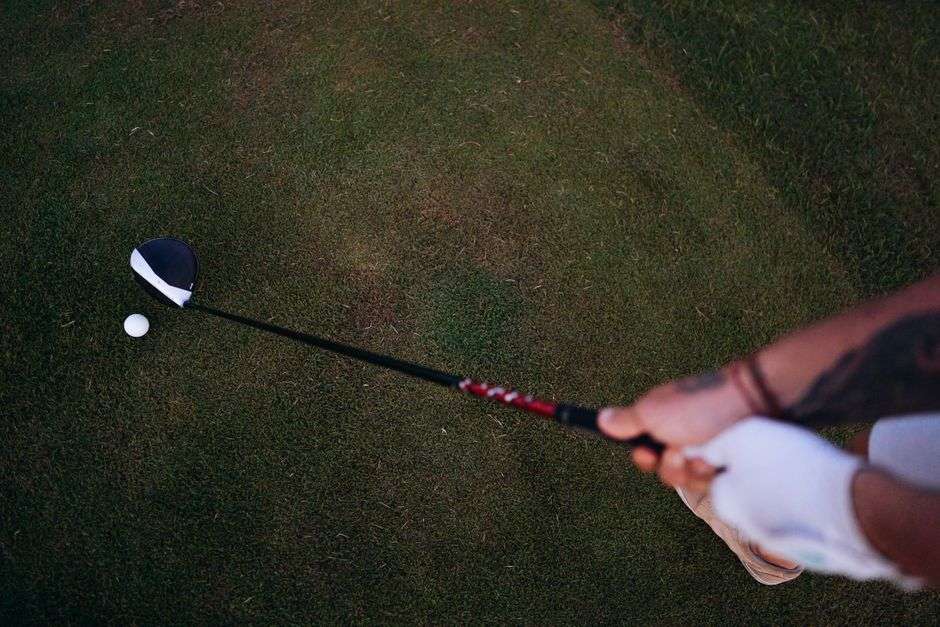
Amateur golfers will spend thousands of dollars on the newest clubs, state-of-the-art balls, premium shoes and a stack of lessons — then wonder why the handicap won’t move. Dana Toberer-Proctor, founder and owner of Fit 360 in Fairhope, has a one-word diagnosis: the piece of equipment most golfers ignore is their own body.
Fit 360 Personal Training and Sports Performance, based at Bayside Orthopaedic in Fairhope, specializes in golf fitness training for all ages. The studio also provides golf fitness work for members of The Lakewood Club and guests of the Grand Hotel — meaning the golfers on two of the Southeast’s most respected courses may be swinging better because of what happens in a training room a few miles from the first tee.
Why the body is the swing
Toberer-Proctor, along with Doug Proctor and Patrick McGovern, holds certification from the Titleist Performance Institute, the world’s leading educational organization for the study of how the human body functions in relation to the golf swing. Doug Proctor carries an additional TPI junior golf fitness certification, extending the program to young players. TPI, headquartered in Oceanside, California, counts more than 19,000 certified professionals worldwide, and its protocols are developed and tested with NCAA universities, major hospitals, fitness organizations, professional golf associations, national Olympic sports development programs and tour players.
The premise is straightforward: the golf swing is an athletic movement of unusual violence and precision, and conditioning it improves both. Consider what a golf swing actually asks of the body:
You address the ball with a weighted implement and accelerate it with maximal force in less than a fifth of a second. The force produced during a full drive often exceeds 90 percent of your maximal strength capacity. The lumbar spine is pushed to its limits throughout a round. The lateral force on the knees is comparable to a basketball player’s hard cut, and the arm speed of a full swing rivals a baseball pitcher’s delivery.
Put that way, golf stops being a pastime and starts being a power sport — one that applies massive, and potentially traumatic, force to the body hundreds of times per round of practice.
The screen that starts every program
Fit 360 begins with a free golf fitness evaluation built around the Functional Movement Screen, a series of movement tests that assess overall movement quality and asymmetry — ranges of motion, muscle control and balance. The screen identifies physical limitations that often explain swing tendencies: a golfer who can’t rotate through the hips will sway; one with restricted thoracic mobility will cast the club or hang back through impact.
After the screen, instructors walk each client through the results and connect them to the individual’s swing before a single training session begins. From there, training focuses on the components the golf swing demands: flexibility, mobility, balance, strength, power and endurance.
The promised payoff is the one every golfer wants — a longer drive, better control and lower scores — but the injury-prevention piece may matter more, especially for the lower back, where golf’s rotational loads concentrate.
Programs and pricing
Fit 360 offers golf fitness packages to fit different schedules and budgets: a 60-minute training session for $70, a 45-minute session for $55, a 30-minute session for $40, and a 60-minute buddy session for $35 per person — an option that lets playing partners train together before heading to the course.
The approach fits a broader shift in the professional game. Today’s tour players treat strength and mobility work as non-negotiable, and the distance revolution in professional golf has been driven as much by training as by equipment. The same logic trickles down: a body that moves efficiently wastes less energy, transfers more of it to the ball, and breaks down less often.
A Fairhope resource for every level
What makes Fit 360 notable locally is the range it serves. Juniors can build swing-efficient movement patterns before bad habits set in. Weekend players can finally address the stiffness that costs them 20 yards. Older golfers can use mobility and balance work to keep playing — and keep scoring — deep into their seventies.
The message Toberer-Proctor and her team preach is simple and a little countercultural for a sport that loves its gadgets: before you buy another driver, get your body assessed. Golf is a sport. Train for it like one, and the lessons, the clubs and the range balls will finally start paying off.